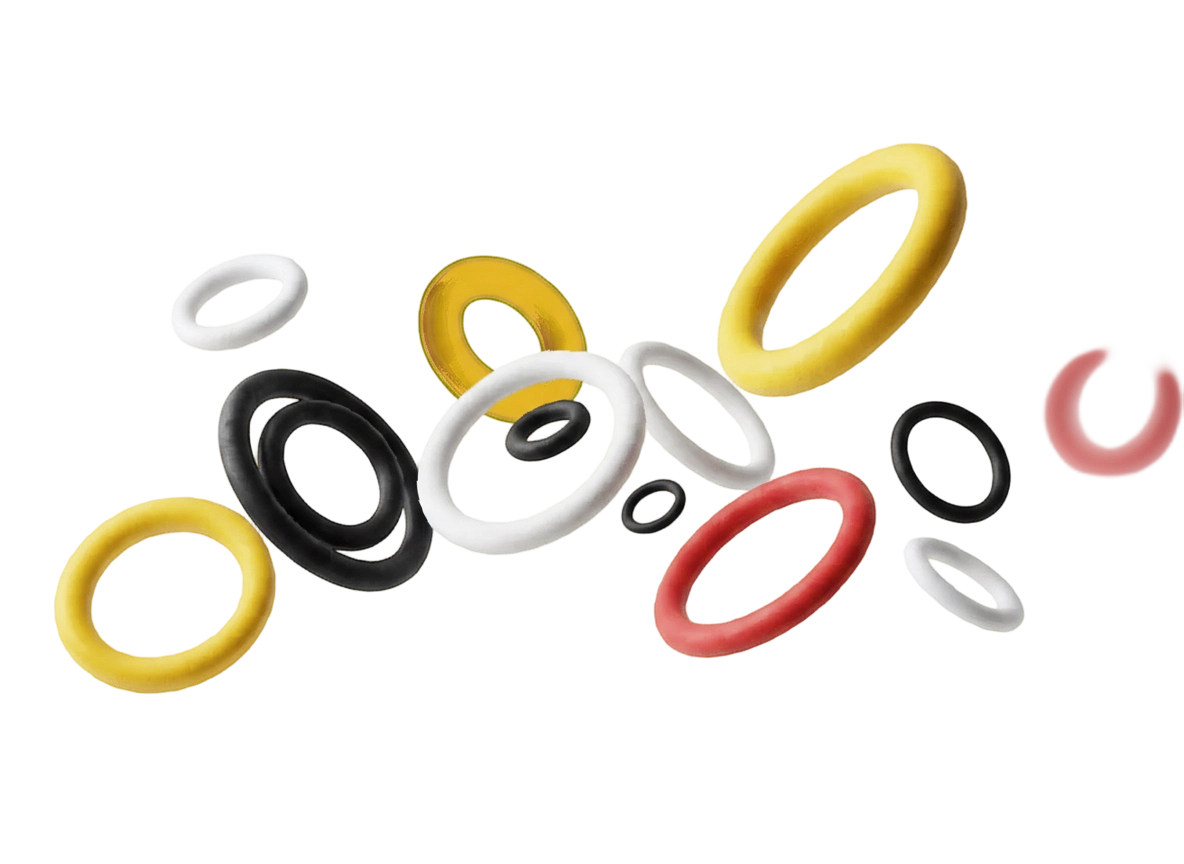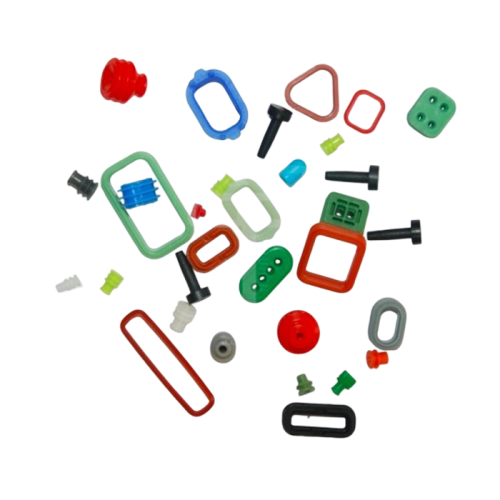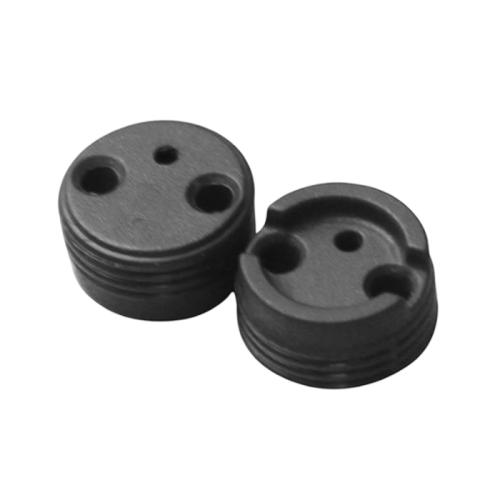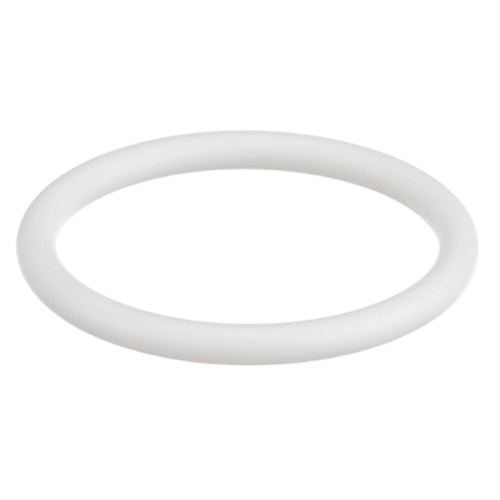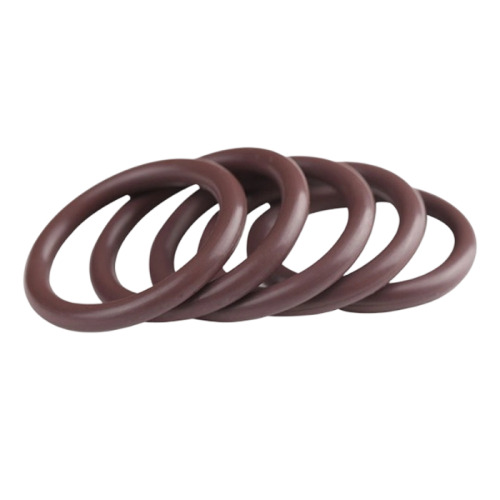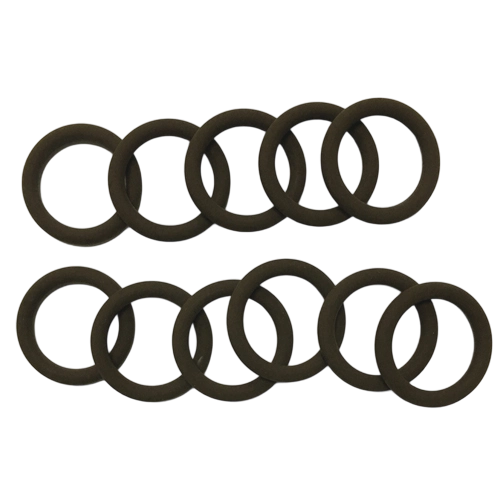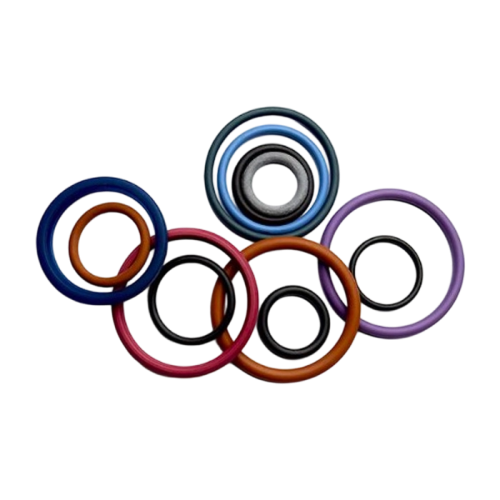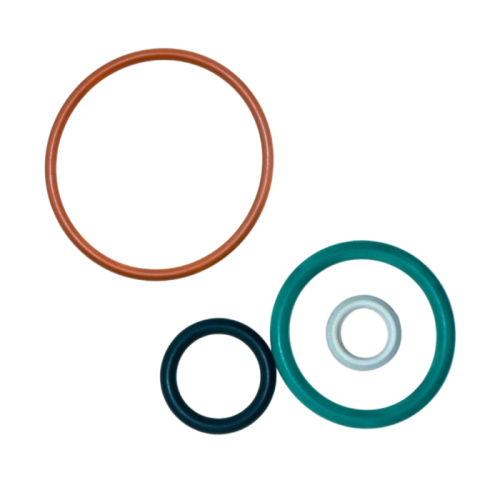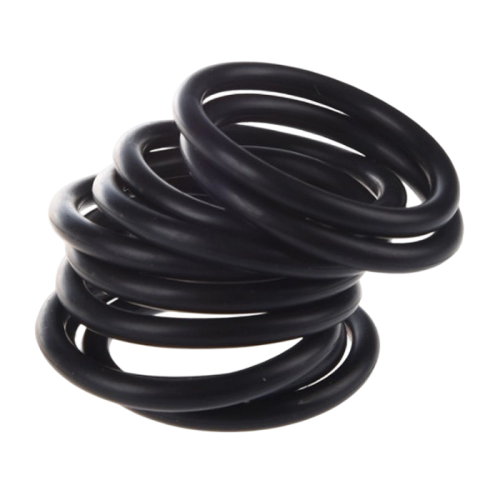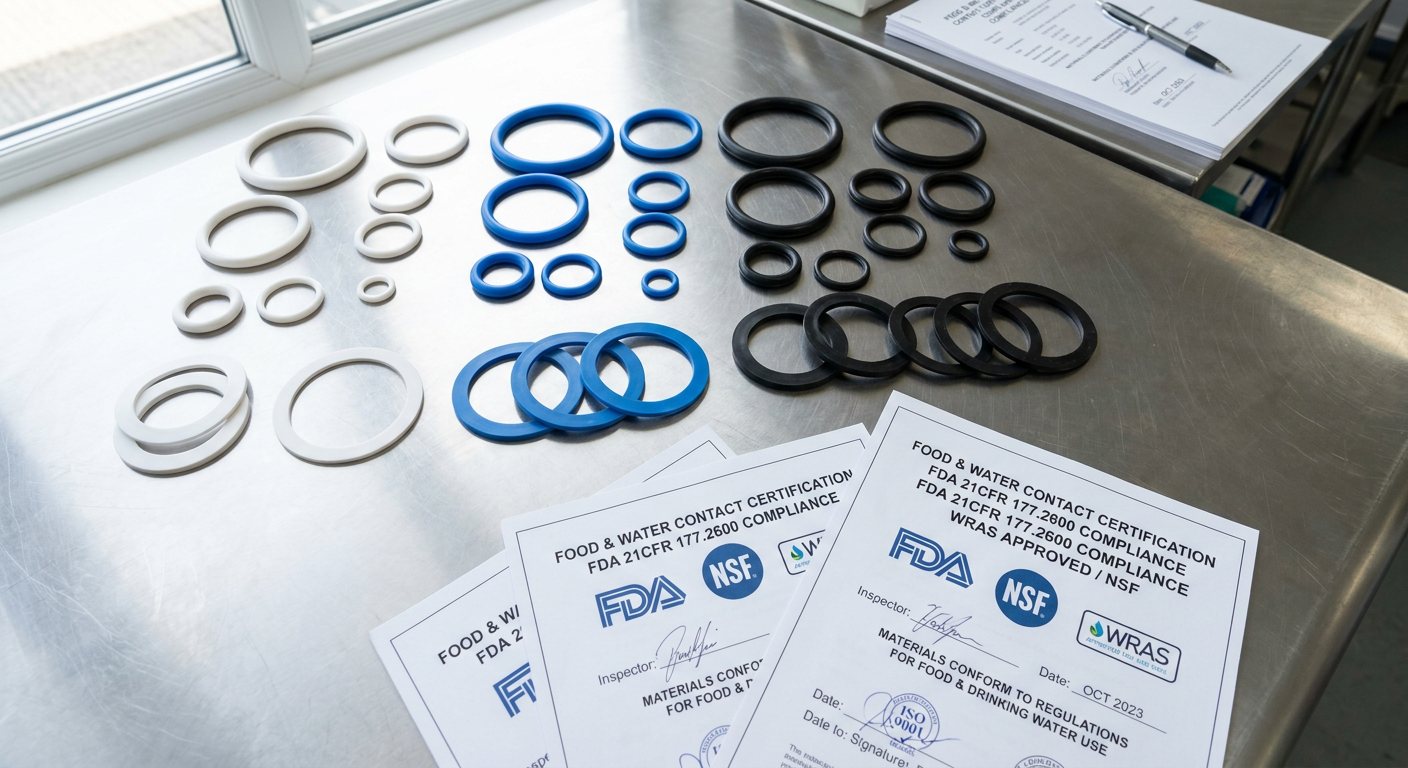
FDA and WRAS certified rubber seals are compounds tested and approved for direct contact with food or potable water — FDA 21 CFR 177.2600 governs food contact in the United States, while WRAS BS 6920 covers materials touching drinking water in the UK. They are not interchangeable: a seal can be FDA compliant and still fail WRAS, and vice versa. If your product touches both food and water, or ships to multiple markets, you usually need both certifications on the same compound — and that has real implications for material choice, cost, and lead time.
Buyers often assume “food grade” and “water grade” mean the same thing. They don’t.
FDA 21 CFR 177.2600 is a list-based standard. It tells the rubber compounder which ingredients (polymers, fillers, plasticizers, curing agents) are permitted in materials intended for repeated food contact. The finished compound is then tested for extractables in water and hexane simulants. Pass those limits and you can claim FDA compliance.
WRAS BS 6920 goes further. It tests how the rubber behaves in actual potable water over time — specifically whether the seal affects taste, odor, appearance, encourages microbial growth, or leaches metals and cytotoxic substances. A compound has to pass all five sub-tests, and the approval is granted to a specific manufacturer using a specific recipe and process. Change the supplier of carbon black? You may need to re-test.
That is why a single batch of EPDM can be FDA compliant out of the box but require six to nine months of reformulation and testing to achieve WRAS approval. The implication for buyers: ask for both certificate numbers, not just a verbal claim.
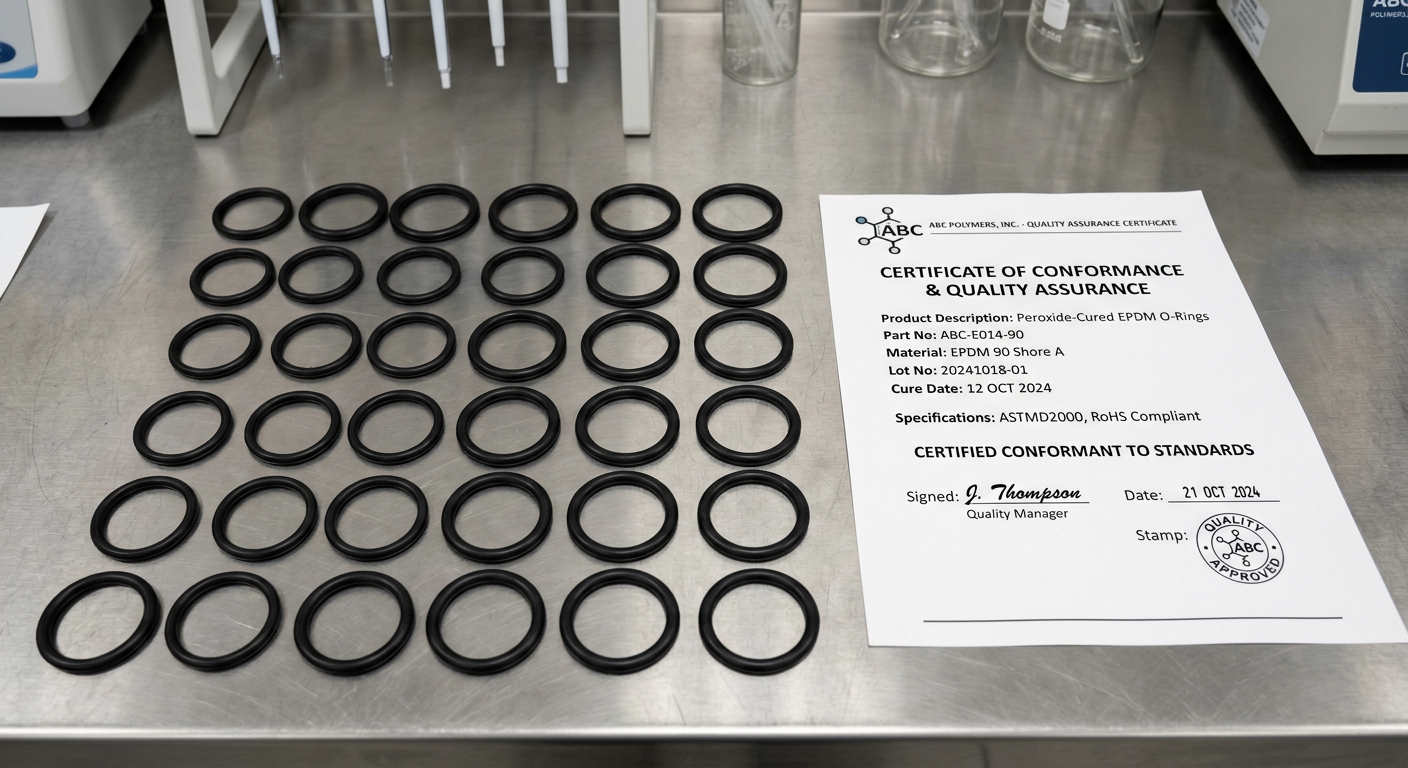
Not every elastomer plays well with water and food. The shortlist is narrower than most buyers expect.
The workhorse for drinking water. Excellent resistance to hot water, chlorinated water, and ozone. Peroxide-cured grades — not sulfur-cured — are the ones that typically pass WRAS, KTW, and NSF 61. Temperature range roughly -40°C to +150°C.
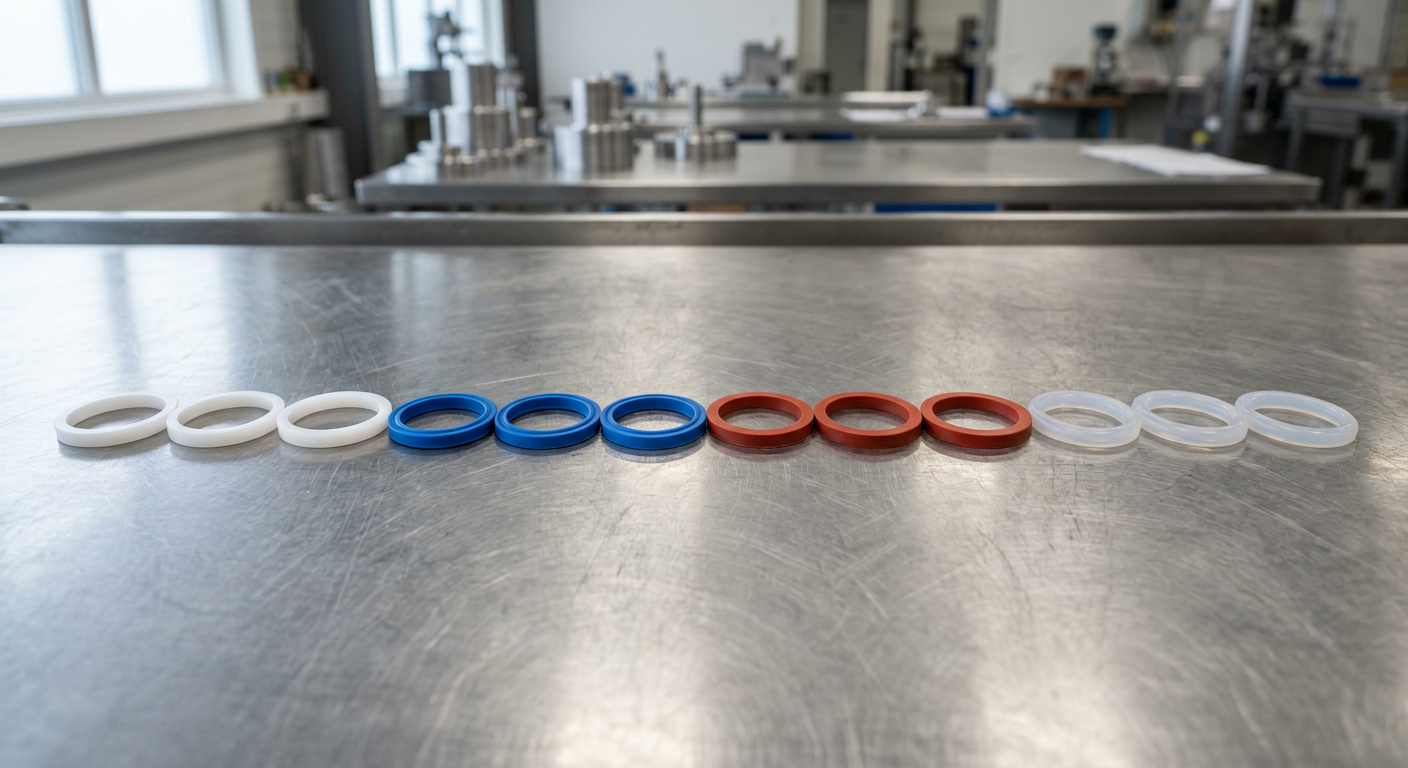
The default for food equipment where you need wide temperature range (-60°C to +200°C) and flexibility. Common in coffee machines, dairy equipment, and baby-bottle seals. Platinum-cured silicone is preferred over peroxide-cured for food contact because it leaves no by-products.
Used where the seal contacts fatty or oily foods — vegetable oil pumps, dispensers, meat-processing gaskets. White or cream-colored NBR is common to make contamination visually obvious. Avoid for drinking water; it can affect taste.
For aggressive food processing (citric acid, CIP cleaning chemicals, steam) or hot oils. FDA-compliant grades exist; WRAS-approved FKM is rarer and expensive.
Our engineering team typically recommends peroxide-cured EPDM as the starting point for any project that mixes hot water, cold water, and occasional steam cleaning — it covers the broadest application range with a single compound.
Three mistakes account for most failed audits we see.
“Food grade” alone means nothing. Always ask for the specific certificate: FDA letter from the compounder, WRAS approval number searchable on the WRAS website, or NSF listing ID. A legitimate supplier will send these without hesitation.
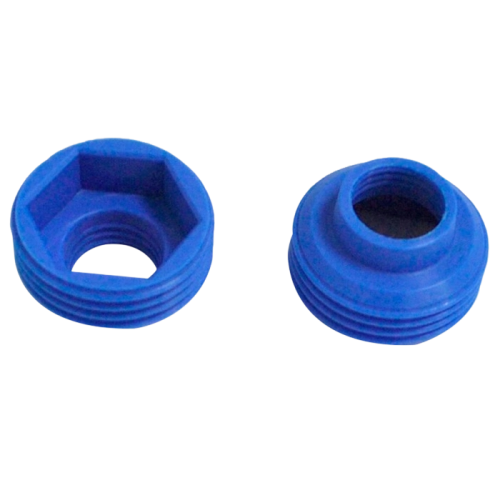
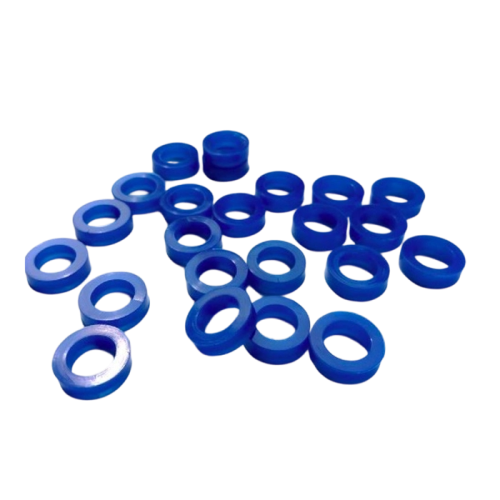
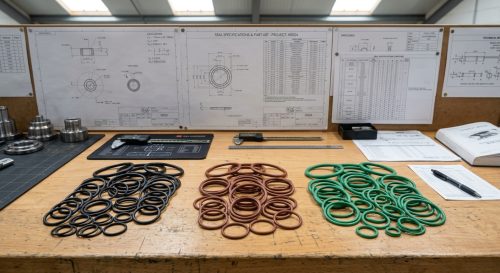
Blue rubber is popular in food plants because metal detectors and visual inspection catch fragments easily — but the color itself doesn’t make a compound food safe. The pigment must also be FDA-listed. We have seen factories use generic blue masterbatch in “food grade” gaskets, which technically voids compliance.
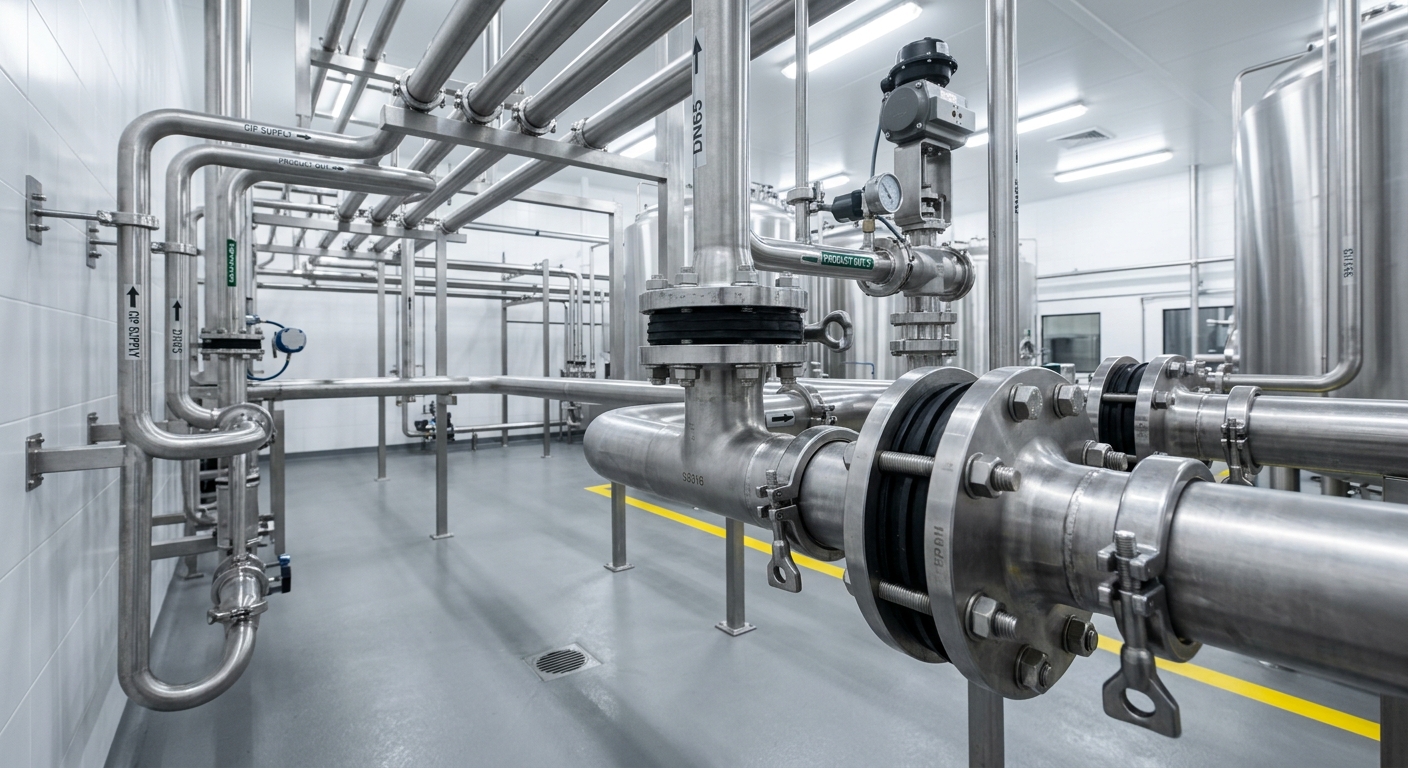
If a valve has one WRAS gasket and one standard NBR O-ring on the same water path, the whole assembly fails. Audit every elastomer in the wetted flow path, including small backup seals and dust caps.
For example, a UK kitchen-tap manufacturer once sourced WRAS EPDM main seals from us but kept using an existing supplier’s unmarked NBR O-rings on the cartridge. Their first regulatory audit caught it. Replacing the small NBR rings with matching WRAS EPDM added about 3 cents per unit — far cheaper than a recall.
A certificate proves a compound is safe at the test conditions. Real applications often exceed them, and that is where field failures start.
Standard WRAS testing runs at three temperatures: cold (up to 25°C), warm (up to 65°C), and hot (up to 85°C). If your espresso boiler runs at 120°C and 12 bar, you need a compound approved at the hot rating and validated for your pressure cycle. Ask for the temperature class on the WRAS certificate — it is the single most overlooked detail in spec sheets.
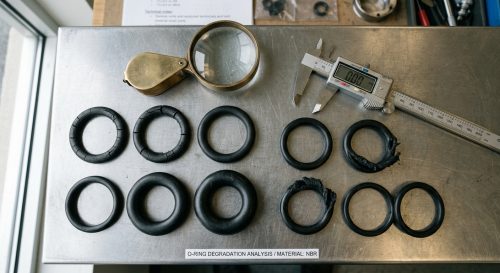
Cleaning chemistry matters just as much. CIP (clean-in-place) cycles in dairy and brewing equipment use 2-3% caustic at 80°C followed by nitric acid rinse. EPDM handles this well. Silicone tolerates it but swells slightly. NBR degrades quickly. If your customer runs aggressive CIP, choose peroxide-cured EPDM even if the food product itself looks gentle.
Quick reference for the four certifications that come up most often in B2B sourcing conversations:
See the comparison table above for region, scope, testing focus, typical materials, and renewal requirements. A few practical notes:
If you sell into multiple regions, the cost-efficient path is usually to develop one compound that passes FDA + WRAS + NSF 61 simultaneously, then use it everywhere. The unit price is slightly higher but inventory and certification overhead drops significantly.
The quotes you get back are only as good as the brief you send. A vague “food grade EPDM O-ring 20x2mm” will get you ten different prices for ten different compounds.
Include these on every RFQ:
A medical-grade water purifier OEM we work with sends a one-page material spec with every PO that locks in the compound name, certificate numbers, and hardness window. It eliminates ambiguity and protects them when their downstream auditor comes calling. Borrow the practice.
WRAS approval expires after five years. NSF requires annual factory audits. FDA compliance assumes the formula never changes — and if it does, you are technically responsible for re-testing.
In practice, raw material supply chains shift constantly. A carbon black grade gets discontinued, a plasticizer supplier changes plants, a curing agent gets reformulated. Each of these can quietly knock a compound out of compliance. Responsible manufacturers track every change and re-test when needed; cheap suppliers don’t.
When auditing a potential rubber supplier, ask:
The answers reveal more about a supplier than any glossy brochure.
Buyers often flinch at the first quote for certified compounds. The premium is real but smaller than most people think.
Rough order of magnitude versus a generic NBR O-ring at the same size:
Most of that premium goes to certified raw materials, separate compounding lines to prevent cross-contamination, and the cost of maintaining the certifications themselves — not to the rubber molding process. So tooling and high-volume piece prices are not dramatically higher than standard parts once you are in production.
The bigger cost is time. WRAS testing alone runs 8-16 weeks from sample submission. Plan certification timelines into your project schedule, not as an afterthought.
FDA and WRAS certifications protect end users, but they also protect you as a buyer — from recalls, regulatory penalties, and reputational damage. Verify certificate numbers, match the compound to your actual operating conditions, audit every elastomer in the wetted path, and pick a manufacturer that treats certification as an ongoing discipline rather than a one-time marketing claim.
Hongjie Seal supplies FDA-compliant and WRAS-approved rubber O-rings, gaskets, and custom molded parts for drinking water systems, coffee and beverage equipment, dairy processing, and household appliances. If you have a specification in hand — or just need help picking the right compound — explore our product range or contact our team with your drawing and target standards. We will come back with material recommendations, certificate documentation, and a quote within two working days.


English

French

German

Spanish
Our engineering team reviews your specs and responds within 24 hours with material recommendations and competitive pricing.