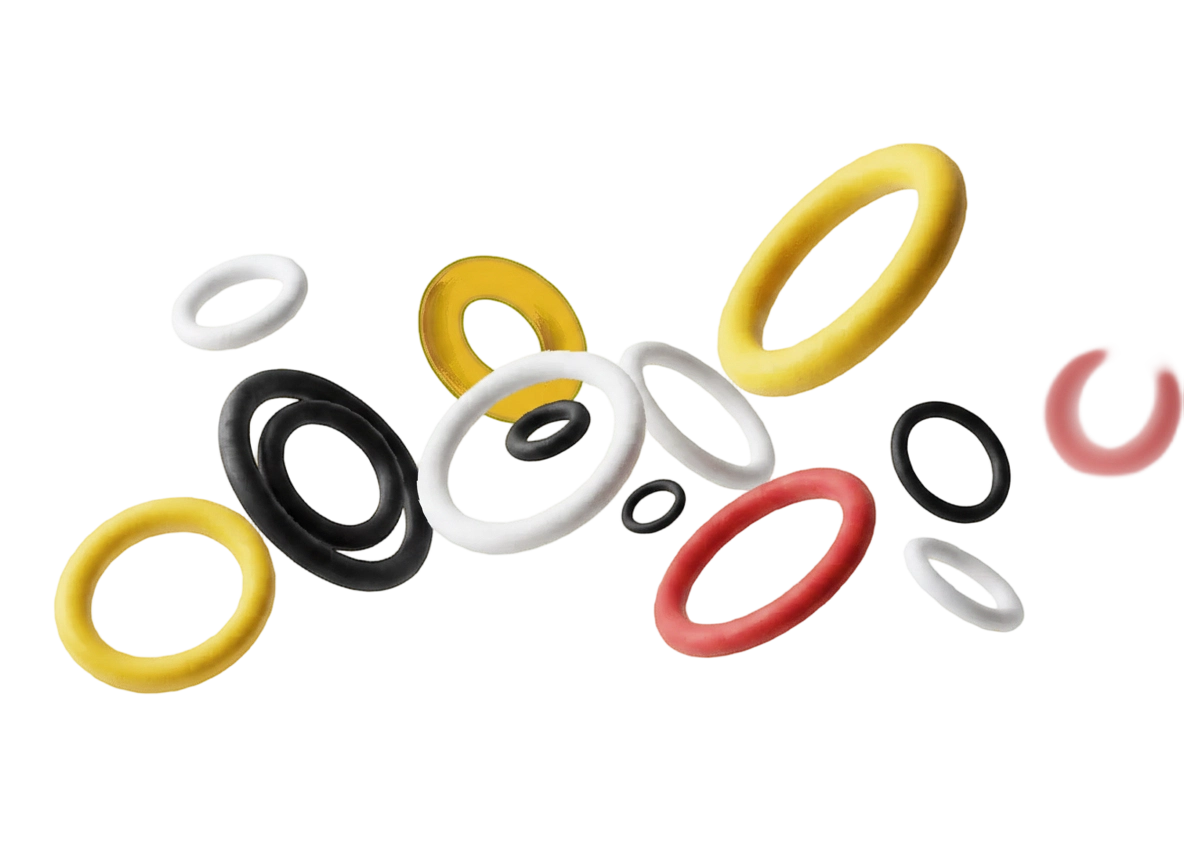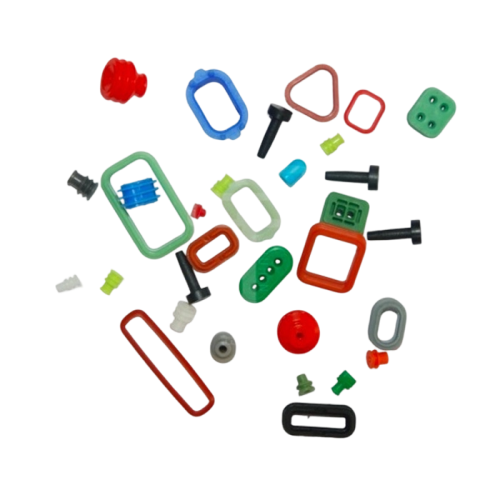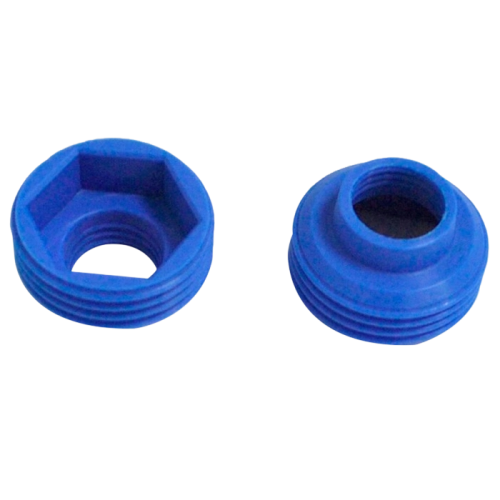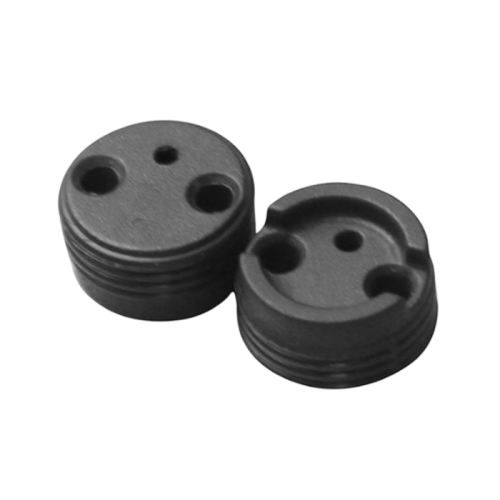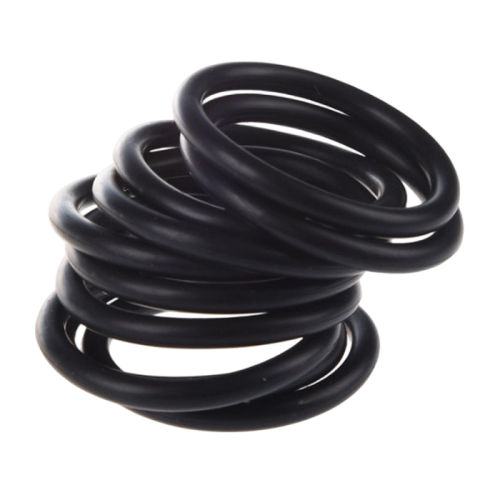

HNBR O-rings for automotive air-conditioning and HVAC circuits should be selected according to the refrigerant, lubricant, operating temperature, pressure and sealing interface. Hongjie supports application-specific HNBR compounds, standard or custom dimensions, and inspection requirements for OEM assembly, service kits and refrigeration-system connections.

Select the seal from the complete operating environment rather than the material name alone. Confirm the refrigerant, lubricant, continuous and peak temperature, system pressure, port or groove dimensions, and required validation before finalizing the HNBR compound.

Identify the refrigerant first. Do not assume every HNBR compound is compatible with every automotive AC or HVAC circuit.

Specify the compressor oil or lubricant together with the refrigerant because combined exposure can affect swelling and long-term sealing behavior.

Provide continuous and peak temperatures together with normal and peak pressure so the compound and hardness can be reviewed for the actual duty cycle.

Confirm the size standard, port geometry, groove dimensions or drawing to control squeeze, stretch and installation fit.

Select the HNBR grade and hardness after the operating media and mechanical conditions are known.

Define dimensional, leakage, pressure, temperature-cycle or other project-specific checks before production approval.

Use the actual circuit conditions to define the O-ring specification. The refrigerant, lubricant, temperature, pressure and sealing interface should be reviewed together.
| Application Specification | |
|---|---|
| Application Type | Automotive AC / HVAC sealing circuit |
| Primary Material | HNBR |
| Compound Brands | ZEON, LANXESS options available |
| Hardness | 20–90 Shore A; select for the sealing and installation conditions |
| Refrigerant | Specify by project; compatibility should be verified |
| Lubricant | Specify compressor oil or lubricant used in the circuit |
| Temperature | Provide continuous and peak operating values |
| Pressure | Provide normal operating and peak pressure |
| Dimensions | Standard size, drawing, sample, or port / groove dimensions |
| Compliance | ASTM D2000 compound support; RoHS / REACH requirements reviewed per project |
| Inspection | Dimensional and appearance inspection; project-specific performance tests where required |

A useful AC or HVAC O-ring specification starts with the media and sealing interface. Confirm the operating conditions first, then review the HNBR compound, hardness and dimensions.
Selection Decision Path
Verification Focus
Different sealing locations place different demands on the O-ring. Review each position by media exposure, pressure and temperature cycling, assembly method, interface geometry and service requirements.
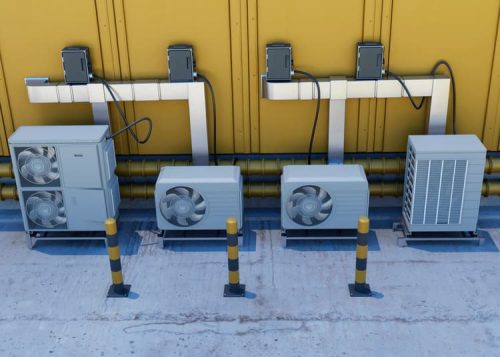
For production-line assembly, specify the O-ring by drawing, port size, compound, hardness and required inspection criteria.
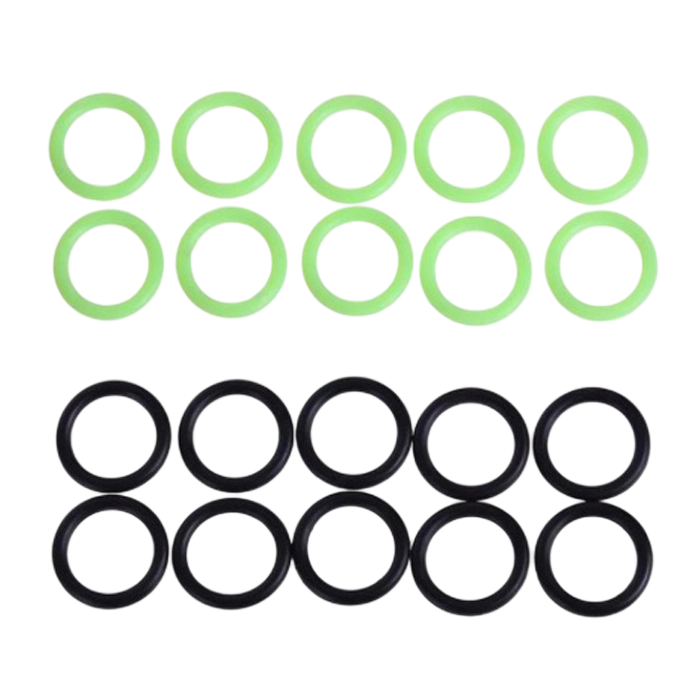
For replacement sets where color identification is part of service control, see Green HNBR O-Rings.

For stationary HVAC circuits, review the working refrigerant, lubricant, temperature range, joint design and required service life together.
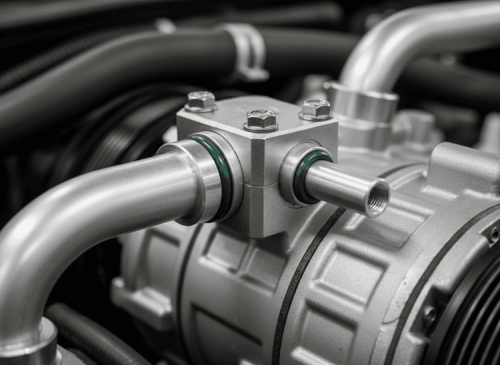
Compressor-side seals can see refrigerant, lubricant, temperature cycling and vibration, so media compatibility and groove fit should be checked together.
Tube fittings, service ports and line connections need controlled dimensions and compression to reduce cutting, twisting or under-compression during assembly.
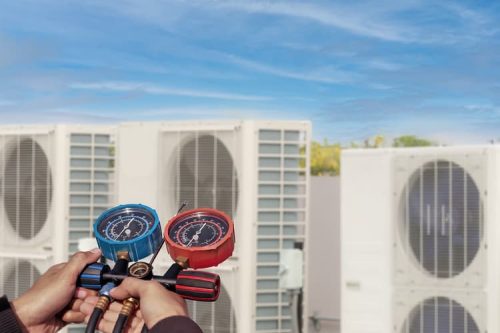
For non-standard ports or groove geometries, specify dimensions from a drawing or sample. See Custom Rubber O-Rings for custom interface development.

When an AC or HVAC connection leaks, replacing the seal with another O-ring of the same nominal size may not solve the cause. Check the material, interface, installation and operating conditions together.
Check dimensional fit, sealing surfaces, installation condition and the compound against the actual refrigerant and lubricant.
Permanent deformation can reduce sealing force after extended compression or temperature exposure. Review the compound, hardness and groove compression.
Cuts, twisting, rolling or excessive stretch during assembly can create a leakage path even when the compound itself is suitable.
An O-ring that is too large, too small or compressed outside the intended range may fail even when the material is compatible with the system.

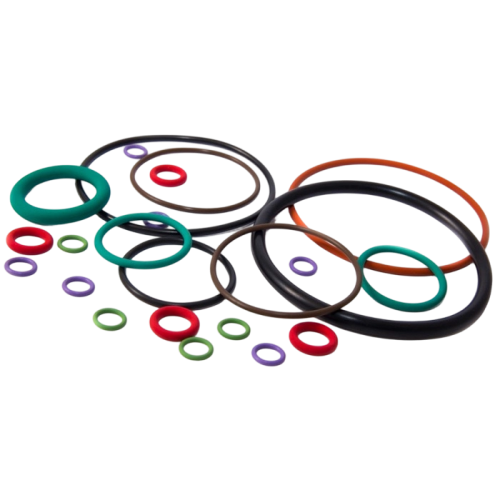
Explore complementary sealing solutions from our comprehensive product catalog.

Our engineering team reviews your specs and responds within 24 hours with material recommendations and competitive pricing.