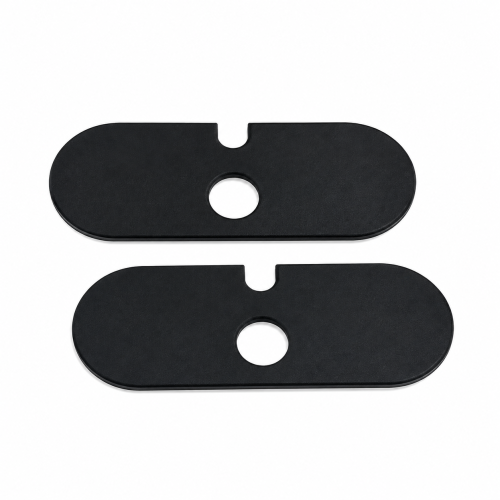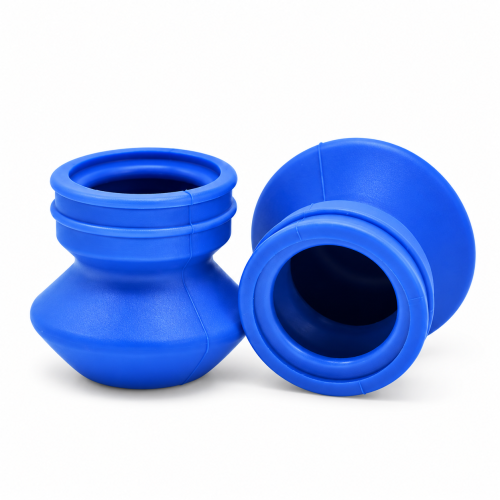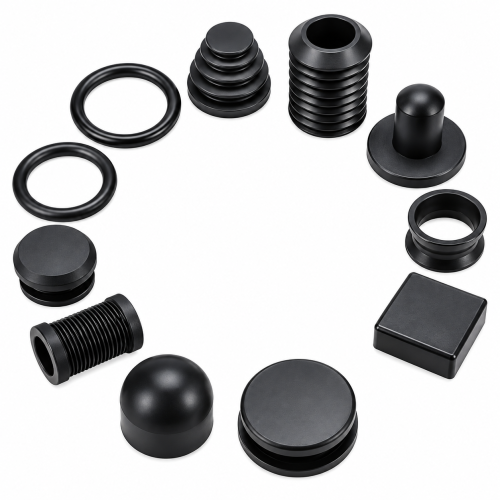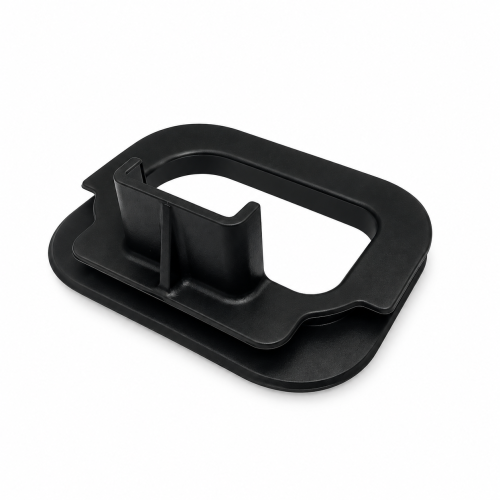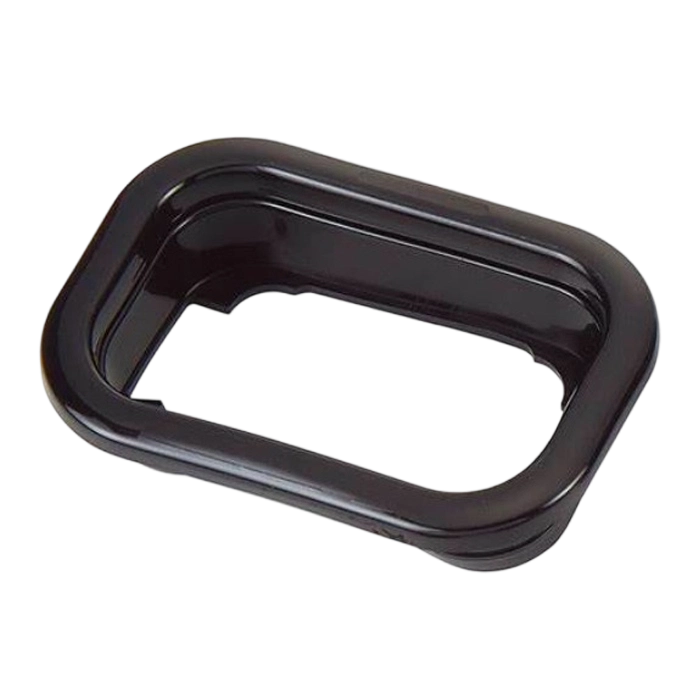
Hongjie manufactures OEM rubber grommets molded to rectangular, oval, D-shaped and other non-round panel cutouts — parts tooled directly from your cutout drawing rather than pulled off a standard-size shelf. Corner radius, panel thickness and groove profile are matched so the part seats without lifting at the corners. Send your drawing for a quote to start tooling review.

Four dimensions control fit on a non-round opening. Confirm all four before tooling starts:
| Spec | What to Provide |
|---|---|
| Cutout size & shape | Finished length × width (or profile) of the panel opening |
| Corner radius | Inside corner radius, so the molded corner seats without lifting or bunching |
| Panel thickness | Actual gauge, including coating, since it sets the retaining groove |
| Groove/lip profile | Groove width and depth matched to the panel edge for secure grip |
Shore A hardness is selected alongside these dimensions — typically 30–90 Shore A across our compound range — to balance cushioning against retention. A panel drawing, physical sample, or existing part is enough for us to check groove fit and corner seating before cutting steel.
Round holes: EPDM Rubber Cable Grommets for Panel Openings and small-wire Rubber Seal Manufacturer parts ship without new tooling. Rectangular, oval, D-shaped or keyed cutouts are molded to your non-round cutout instead, since a round profile can't follow a square or D-shaped edge evenly.
| Standard Round | Custom Rectangular/Profile | |
|---|---|---|
| Cutout | Round hole, standard OD/ID | Rectangular, oval, D-shape, keyed |
| Tooling | Ships from existing sizes | Molded to your cutout drawing |
| Use when | Cable or wire pass-through only | Panel cutout isn't round |
Compound choice follows the panel's environment, not the grommet's shape:
| Material | Best For |
|---|---|
| EPDM | Outdoor or weathering panels, ozone/UV exposure |
| Silicone | Wide operating range, roughly –60°C to +230°C |
| NBR / Neoprene | Panels adjacent to oil, fuel or hydraulic fluid |
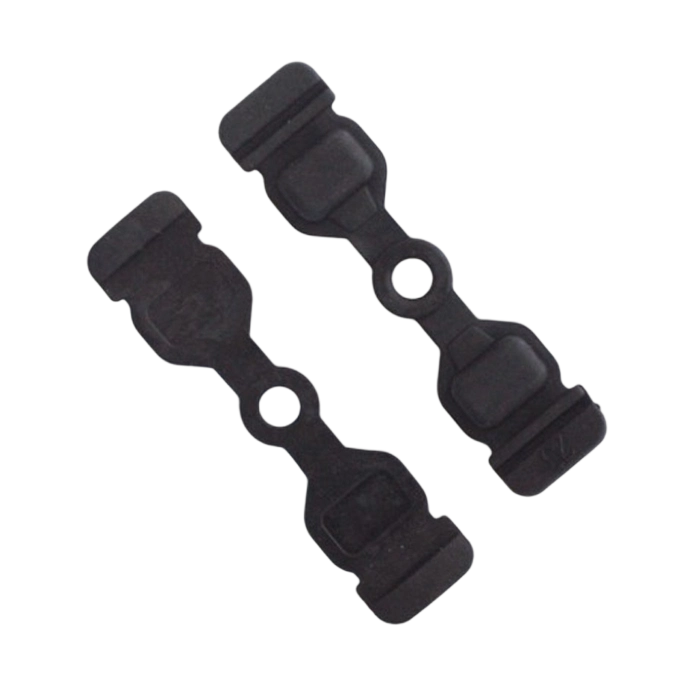
For round cable openings in these same materials, see EPDM Rubber Grommets and Custom Silicone Rubber Grommets for Cables. If the assembly also needs a flange or housing seal rather than a pass-through grommet, our Gasket Manufacturer line covers that separately.


Rectangular cutouts in sheet-metal control cabinets

Square openings around switches, connectors and inserted components

Non-round pass-throughs; harness-specific fitment is covered under Custom Rubber Grommets for Wire Harnesses
Dimensional control by opening size:
| Dimension Range | Standard Tolerance | Precision Tolerance |
|---|---|---|
| 0–10mm | ±0.10mm | ±0.05mm |
| 10–25mm | ±0.15mm | ±0.05mm |
| 25–50mm | ±0.20mm | ±0.08mm |
| 50–100mm | ±0.25mm | ±0.10mm |
Functional prototypes are available in as little as 3–5 business days from a STEP or IGES file, a panel drawing, or a physical sample. Production tooling lead time and cost depend on cutout complexity and cavity count, and are confirmed once your drawing is reviewed.
| Certification | |
|---|---|
| IATF 16949:2016 | Certified |
| ISO13485:2016 | Certified |
| UL certification | For electrical applications |
| FDA and NSF compliant materials | Available |
Send the panel cutout drawing with the length, width or profile, corner radius, panel thickness and groove details. Hongjie’s engineering team will review the fit before tooling.
For related components, see rubber grommet gaskets for mounting holes and medical silicone molded seals for OEM assemblies. Request an OEM rubber grommet quote with your drawing.
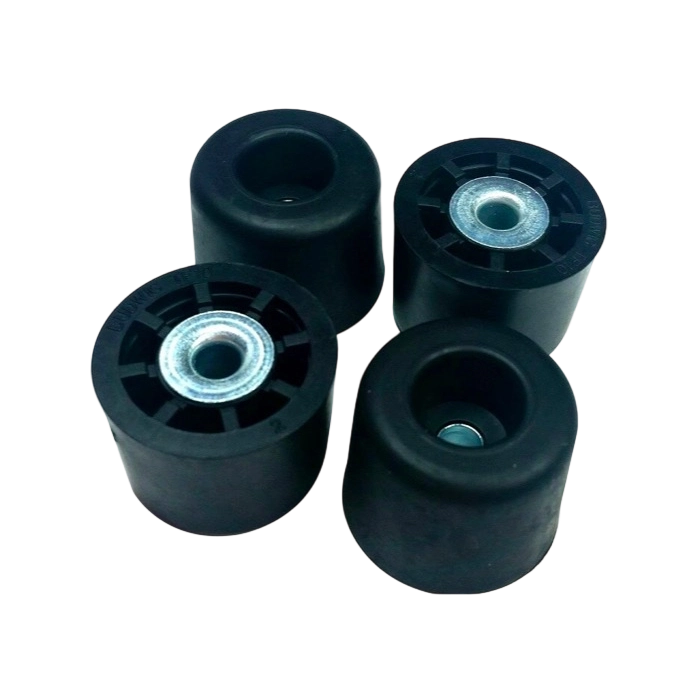
Four black rubber grommets with metal inserts, arranged in a square.
Where the pass-through also needs water or dust protection, custom waterproof rubber grommets add a compression lip to the standard grommet design.


Explore complementary sealing solutions from our comprehensive product catalog.