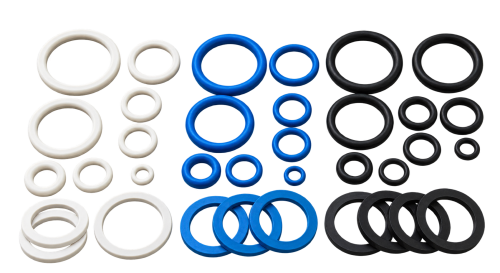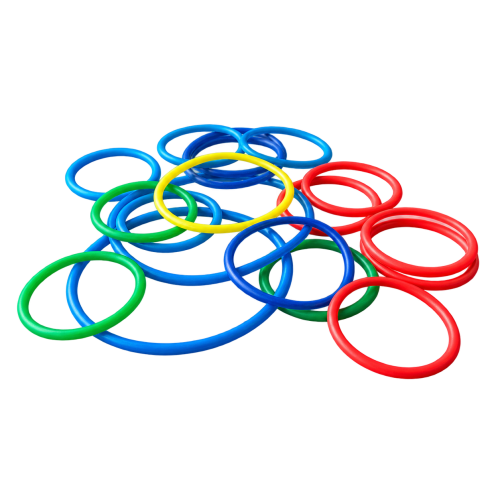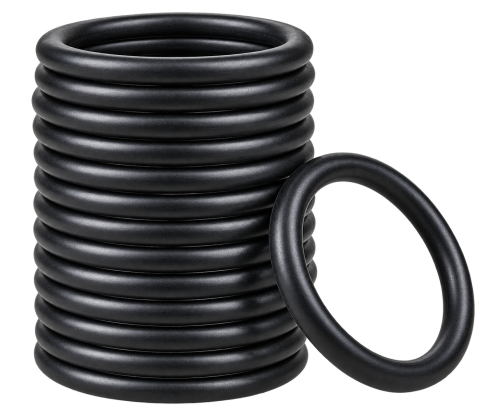
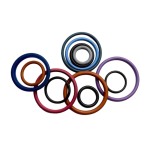
Hongjie is a direct O-ring factory in Shenzhen, China — not a distributor reselling parts molded elsewhere. Since 2001, the plant has grown into an 11,000 m² operation built to supply industrial O-rings and wholesale O-rings to OEM procurement and engineering teams who need production volume, not a single bag off a shelf.
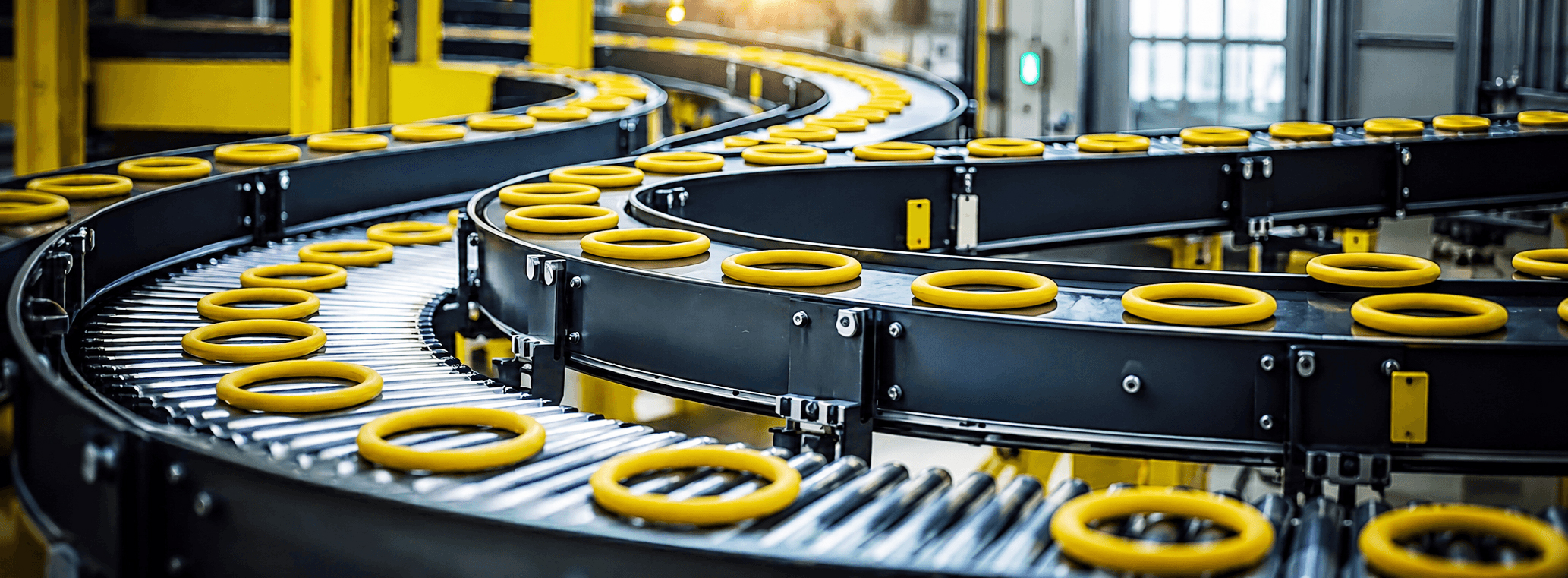
The factory maintains 3,500+ O-ring tools for AS568 and metric sizes, allowing many standard dash sizes to run without new tooling. Around 150 employees produce 50M+ precision-inspected parts annually for Tier-1 suppliers in more than 45 countries.
Injection molding, compression molding, die-cutting and extrusion are handled in the same facility, so wholesale volumes and short custom runs can stay with one supplier.
To request a wholesale or OEM quote, upload your drawing or contact the engineering team through the contact page.

The tooling library covers NBR, FKM/Viton, EPDM, silicone (VMQ), FFKM, HNBR, fluorosilicone, neoprene, SBR, polyurethane and VAMAC. Operating temperature and chemical exposure vary by compound, not by a single blanket range:
| Compound | Temperature Range | Typical Use |
|---|---|---|
| NBR | −30°C to +120°C | Oil, fuel, hydraulic fluid contact |
| EPDM | −50°C to +150°C | Water, steam, outdoor/ozone exposure |
| Silicone (VMQ) | −60°C to +230°C | Clean, food-grade, medical assemblies |
| FKM (Viton) | −20°C to +200°C | Fuel, oil, aggressive chemical exposure |
| FFKM | −20°C to +325°C | Extreme chemical/temperature environments |
| HNBR | −40°C to +150°C | Automotive AC refrigerant, oil resistance |
| Fluorosilicone | −60°C to +175°C | Fuel resistance at low temperature |
| Neoprene (CR) | −40°C to +120°C | General weather/oil resistance |
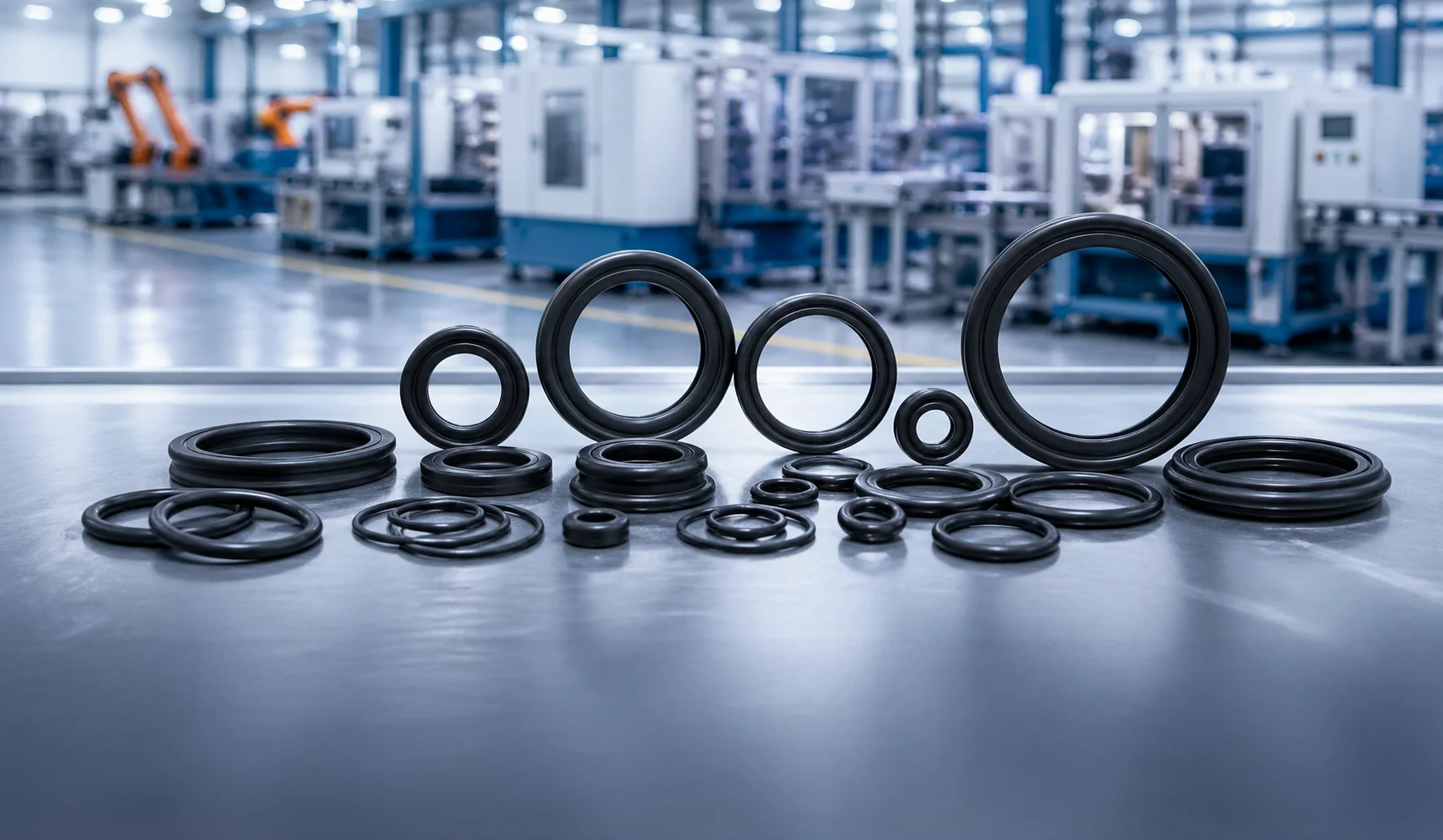
By compound and format, the tooling library also produces:

AS568, metric and JIS sizing for clean and food-grade assemblies.

High-temperature compounds rated to +325°C for aggressive chemical service.

ID from 0.60mm for compact hydraulic and pneumatic fittings.

Automotive AC refrigerant kits, −40°C to +150°C.

Full AS568A dash-number range by material.

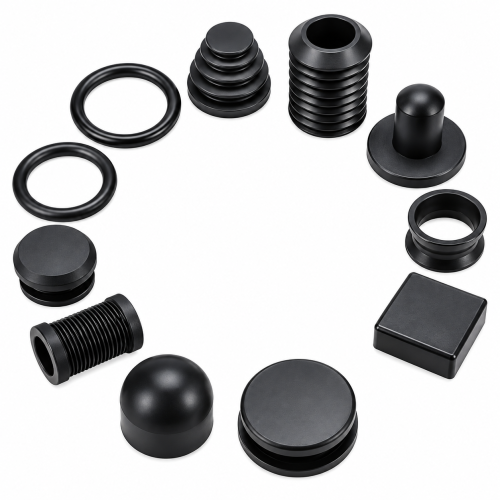
Drawing- or sample-based tooling for non-standard dimensions.
OEM supply-program volumes.
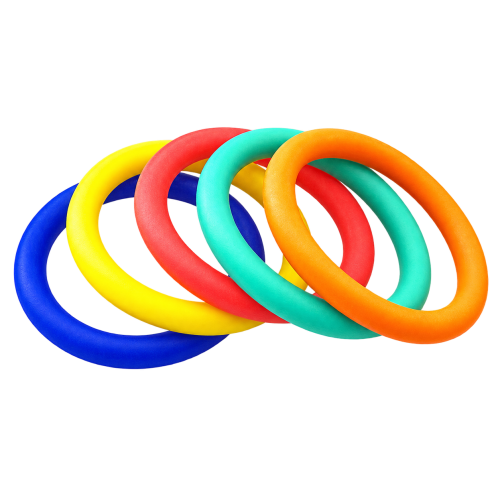
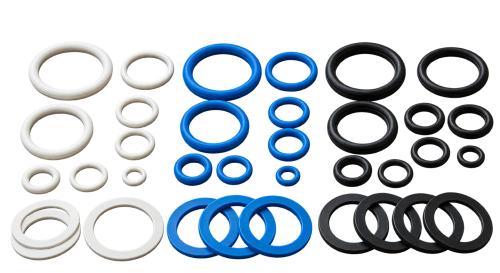
Clean assemblies where color-coding or contamination control matters.
Metric and JIS dimension tables.
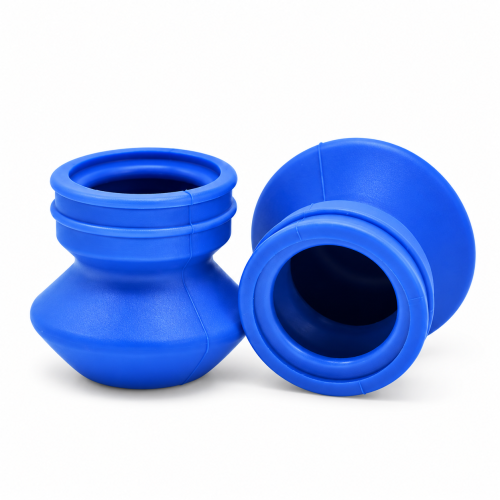
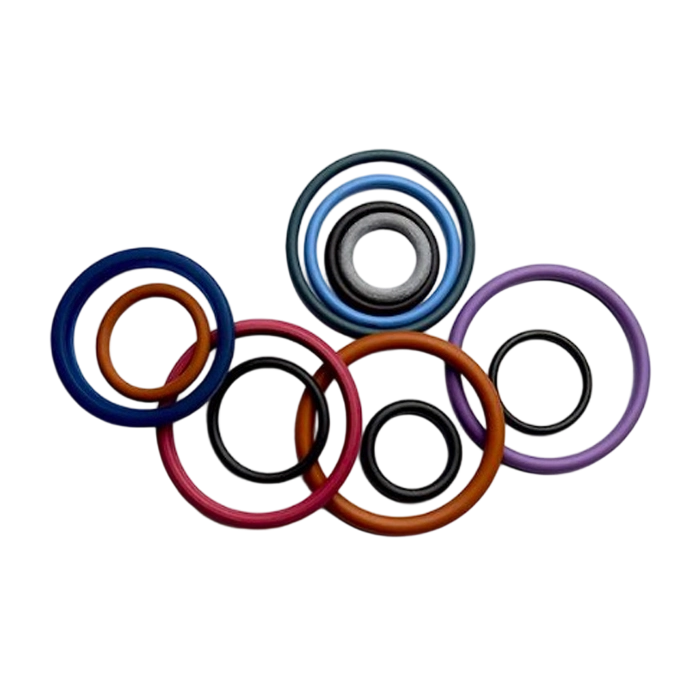
Molded selection organized by rubber compound.
Standard sizing follows AS568A and metric tables for hydraulic, pneumatic and general industrial applications. The full dash-size range is listed in AS568 O-rings by dash size and material.
Non-standard IDs, outside diameters and cross-sections are produced from a drawing or physical sample rather than selected from a fixed catalog. Dimensional tolerances are reviewed according to nominal size, groove requirements and application conditions.
| Dimension Range | Standard Tolerance | Precision Tolerance |
|---|---|---|
| 0–10mm | ±0.10mm | ±0.02mm |
| 10–25mm | ±0.15mm | ±0.05mm |
| 25–50mm | ±0.20mm | ±0.08mm |
| 50–100mm | ±0.25mm | ±0.10mm |

The plant holds IATF 16949:2016 and ISO 13485:2016 certifications, with UL-certified materials for electrical applications and FDA/NSF-compliant compounds for food, water and medical contact.
Production follows Statistical Process Control and Six Sigma methods, targeting Cpk > 1.33. Compounds are also tested against 500+ fluids, gases and chemicals before material approval.
Order terms depend on molding process and part geometry, confirmed at quote once a drawing or dash number is on file:
| Process | Typical Order | MOQ | Production Lead Time | Tooling | Incoterms | Packaging |
|---|---|---|---|---|---|---|
| Compression molding | Standard dash sizes, bulk O-rings | Confirmed at quote | Confirmed at quote | Existing tool from the 3,500+ library where size matches, or new tool quoted | Confirmed at quote | Export packaging arranged per order |
| Injection molding | Custom OEM parts, wholesale volume | Confirmed at quote | Confirmed at quote | New mold cost and timeline quoted per part geometry | Confirmed at quote | Export packaging arranged per order |
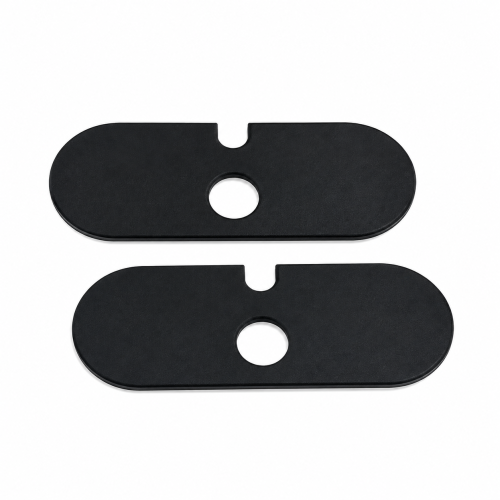
| Die-cutting | Flat gaskets, washers, short runs | Confirmed at quote | Confirmed at quote | Die cost quoted per profile | Confirmed at quote | Export packaging arranged per order |
| Extrusion | Profiles, cord stock, cut lengths | Confirmed at quote | Confirmed at quote | Die cost quoted per profile | Confirmed at quote | Export packaging arranged per order |
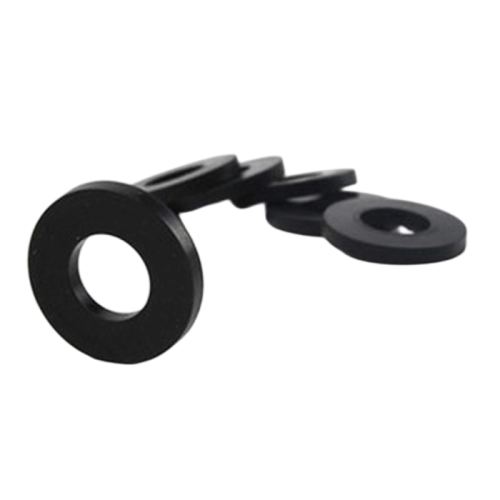
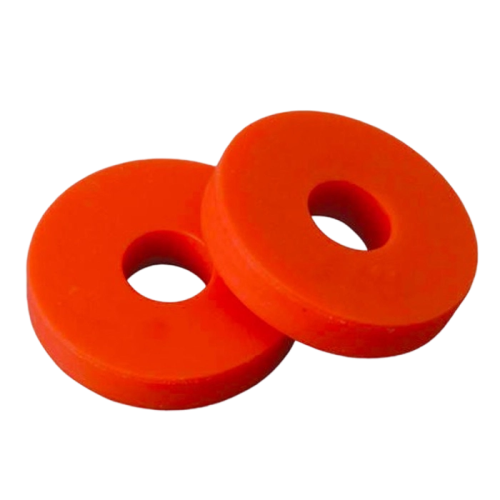
Functional prototypes come back in 3–5 business days across processes, letting engineering sign off on fit before committing tooling or production quantities. Rubber Washers and other flat-seal formats run through the same drawing-based quoting path when a project needs more than round-section O-rings.
Request a Quote to get MOQ, lead time and packaging details confirmed for a specific part.





Explore complementary sealing solutions from our comprehensive product catalog.