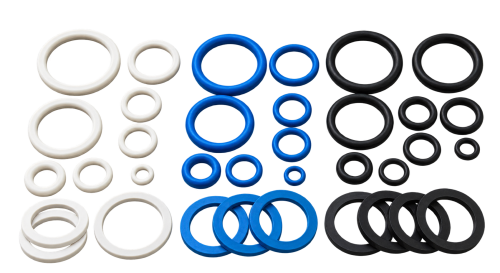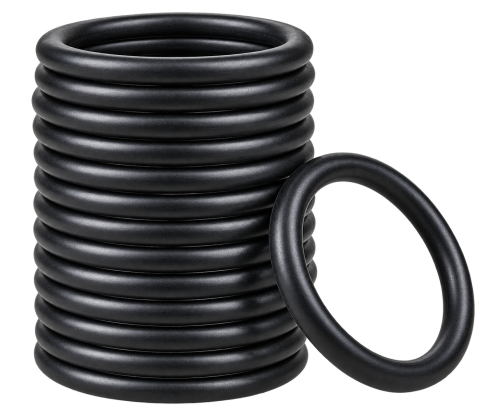
Hydraulic O-rings are specified around four variables, not a size chart alone: the working fluid, system pressure, whether the seal is static or reciprocating, and the extrusion gap created by mating hardware clearance. Get those four right and hardness, compound and backup-ring needs follow. Hongjie reviews all four before confirming a spec.
For other static sealing points in the same system, see molded rubber flange and housing gaskets.

Piston, rod and end-cap positions, where motion and gland geometry combine.

Spools, ports, plugs and cartridge interfaces, mostly static sealing.

Internal and external seals exposed to pressure cycling and vibration.

Hydraulic O-ring fitting positions such as boss (ORB) and flange ports.

| Compound | Typical Hydraulic Fluid | Temperature Range | Pressure Suitability |
|---|---|---|---|
| NBR | Mineral oil (standard hydraulic oil) | −60°C to +325°C (compound family range) | Static and moderate-duty dynamic; standard choice for most cylinders |
| FKM / HNBR | High-temperature, synthetic or fire-resistant fluid | −60°C to +325°C (compound family range) | Static and dynamic; preferred where heat or fluid aggressiveness rules out NBR |
| Polyurethane (AU/EU) | Extreme cold or heavy reciprocating motion | −60°C to +325°C (compound family range) | Dynamic duty with high abrasion/extrusion exposure |
Hardness is selected within a 10–90 Shore A range according to the application, rather than determined by compound alone. Bore finish, clearance and pressure direction all influence the final durometer.
Exact pressure ratings in bar or psi depend on the groove design and hardware clearance, so they are confirmed during application review rather than taken from a standard catalog value. For compound-specific information, see NBR O-rings, FKM O-rings and oil-resistant O-rings.
As system pressure rises, the O-ring is pushed toward the diametral clearance between the piston or rod and the bore. If the gap exceeds what the selected hardness and cross-section can support, the ring may nibble or extrude instead of maintaining a seal.
A backup ring is typically used when clearance exceeds the allowable range for the part size. The table below provides the working reference for keeping that clearance within limits:
| Dimension Range | Standard Tolerance | Precision Tolerance |
|---|---|---|
| 0–10mm | ±0.10mm | ±0.02mm |
| 10–25mm | ±0.15mm | ±0.05mm |
| 25–50mm | ±0.20mm | ±0.08mm |
| 50–100mm | ±0.25mm | ±0.10mm |
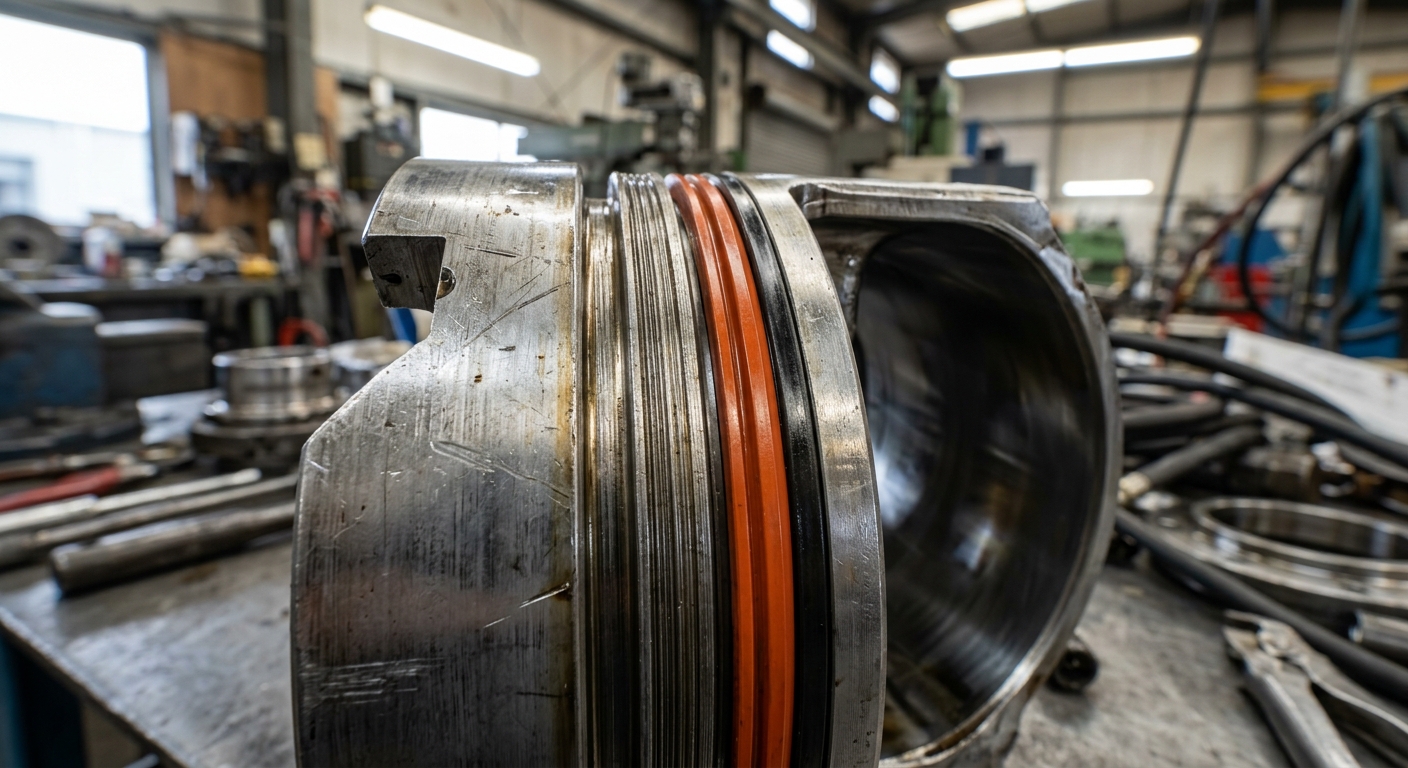
Softer compounds and higher pressure reduce the clearance an O-ring can tolerate before extrusion begins. The need for a backup ring should therefore be assessed against the actual groove dimensions and pressure profile rather than a general rule of thumb.
Premature wear, swelling and nibbling are more often linked to fluid compatibility, excessive clearance or the type of motion involved than to a manufacturing defect in the O-ring.
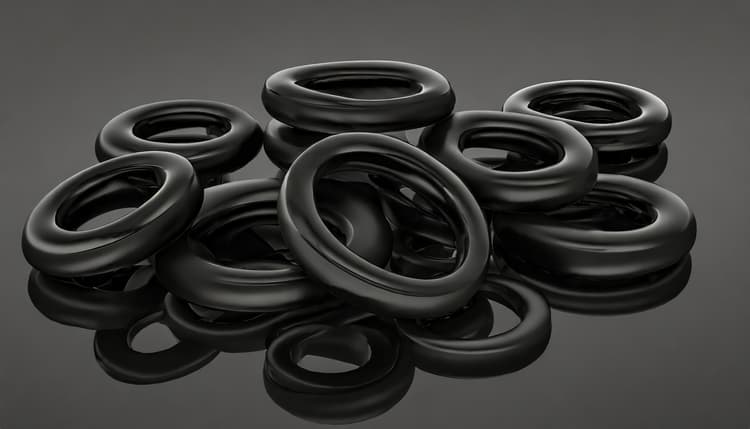
Hongjie supports AS568A and metric O-ring sizes from ID 0.60 mm × CS 0.20 mm up to ID 1,000 mm × CS 20 mm. Most hydraulic sizes can be produced using more than 3,500 existing tool profiles, while sizes outside the available range require new tooling.
Functional prototypes typically ship within 3–5 business days after the fluid, pressure, motion and groove data are confirmed. MOQ, sample cost and mass-production lead time depend on the part size, compound and tooling status, and are confirmed during quoting.
Non-standard inside diameters, cross-sections and drawing-based development are handled through custom rubber O-rings.
Production runs under IATF 16949:2016 and ISO13485:2016 certification, with resistance testing against 500+ fluids and chemicals and statistical process control targeting Cpk > 1.33. Hongjie ships 50M+ precision-inspected seals annually to global Tier-1 suppliers across automotive, hydraulic and industrial sectors.

Send the fluid, pressure, motion type and groove dimensions (drawing or gland sketch) for an engineering review and quote. Systems that seal against pressurized media through a flexible membrane rather than a ring — pump heads, pressure regulators, metering valves — are better served by Rubber Diaphragms for Pressure & Media Control.
Where the gasket sees petroleum oil, hydraulic fluid or fuel, NBR rubber gaskets are the default compound.


Explore complementary sealing solutions from our comprehensive product catalog.