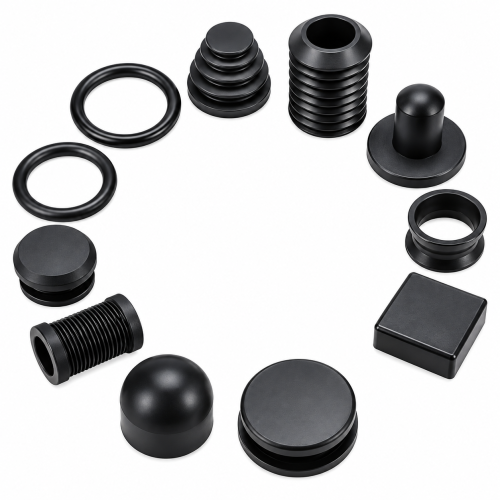

Custom-molded O-rings for acids, bases, solvents, and aggressive process chemicals — matched to the elastomer that actually survives your exposure, not defaulted to Viton because it's the only material on the shelf.

No single compound performs well against every chemical family. The right starting point is your exposure list, not a brand name.
FKM, commonly known as Viton, provides broad resistance to fuels, oils and many industrial chemicals. Viton O-rings are a common choice for mixed hydrocarbon and chemical environments. For highly aggressive chemicals combined with high temperatures, FFKM may be required where standard FKM could swell or degrade over time.
EPDM rubber gaskets perform well with polar solvents, acids and bases, but can fail quickly when exposed to petroleum oils. A compound that works well for acid service may therefore be unsuitable for an application involving hydraulic fluid.
| Compound | Typical Service Temp | Key Resistances | Avoid | Typical Durometer |
|---|---|---|---|---|
| FKM (Viton) | −20°C to +200°C | Fuels, mineral oils, most acids/bases | Ketones, esters, amines, brake fluid | 70–90 Shore A |
| FFKM | −20°C to +325°C | Near-universal chemical resistance, strong oxidizers | Very few exclusions; cost limits routine use | 70–90 Shore A |
| EPDM | −50°C to +150°C | Polar solvents, steam, dilute/strong acids and bases | Petroleum oils, fuels, hydrocarbon greases | 60–90 Shore A |
| HNBR | −40°C to +150°C | Oils, fuels, ozone, moderate acids | Strong oxidizing acids, aromatic solvents | 70–90 Shore A |
| FVMQ (fluorosilicone) | −60°C to +175°C | Fuels, oils, low-temperature flexibility | Ketones, brake fluid, strong acids | 40–80 Shore A |
HNBR handles oils, fuels and ozone exposure at moderate temperatures. It is a suitable choice when chemical resistance must also withstand abrasion and repeated heat cycling.
FVMQ (fluorosilicone) resists fuels and oils at temperatures where standard silicone may soften. It is worth considering when low-temperature flexibility and chemical exposure are both important.
For a side-by-side comparison of compounds and fluid compatibility, NBR vs FKM vs EPDM O-Ring Compound Selection explains the main trade-offs. Nitrile-specific chemistry is covered under NBR rubber O-rings.
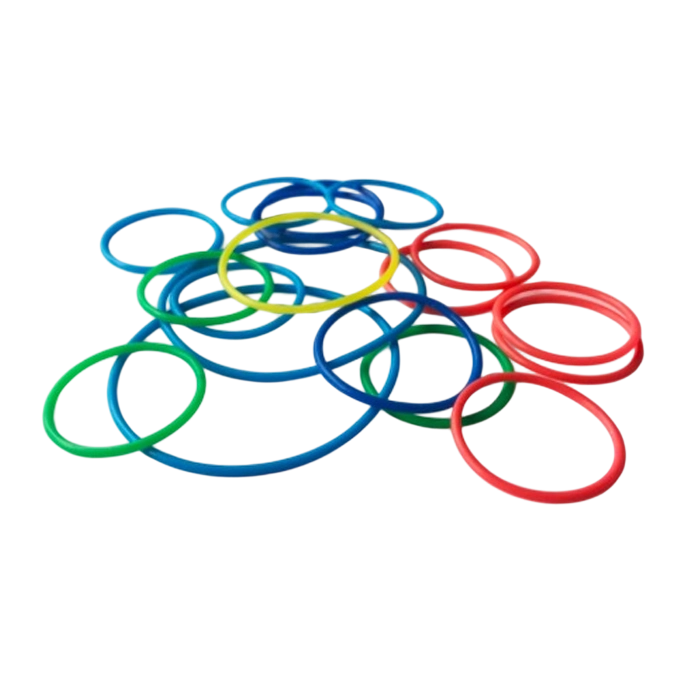
Each compound family is supported by resistance testing against 500+ fluids, gases and chemicals. The test range includes polar solvents such as MEK, toluene and acetone, as well as strong acids, bases and oxidized fuels.
Testing follows established protocols, including ASTM D471 volume-swell immersion across the compound range. Material recommendations are therefore based on measured behavior in the relevant fluid rather than a generic compatibility chart.
Rated compounds span −60°C to +325°C across the elastomer range. Chemical and thermal exposure can be evaluated together instead of being taken from separate data sheets.



AS568A and metric sizing are supported across all chemical-resistant compounds, molded to:
| Dimension Range | Standard Tolerance | Precision Tolerance |
|---|---|---|
| 0–10mm | ±0.10mm | ±0.02mm |
| 10–25mm | ±0.15mm | ±0.05mm |
| 25–50mm | ±0.20mm | ±0.08mm |
| 50–100mm | ±0.25mm | ±0.10mm |
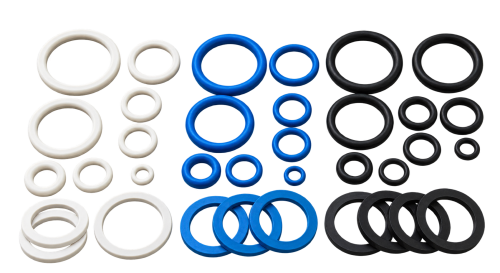
Custom profiles, durometers, and colors are molded to drawing through Custom Rubber Parts Manufacturing.
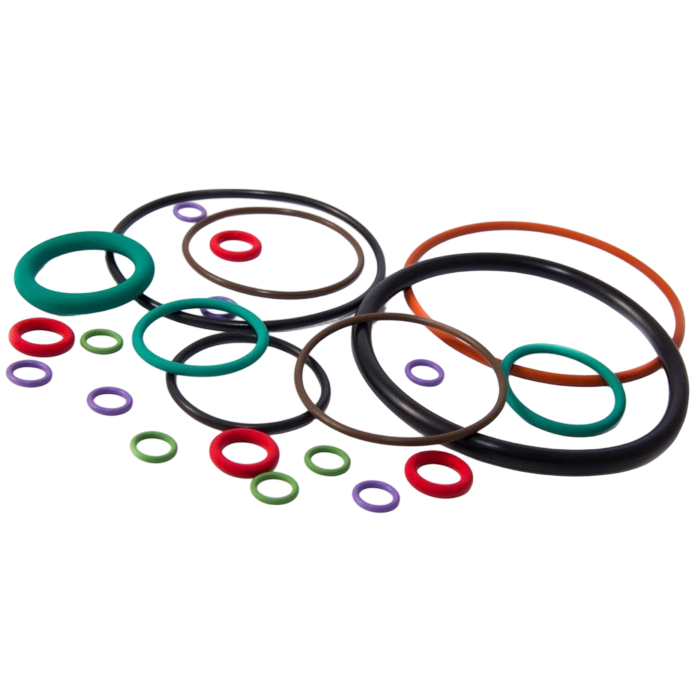
Production runs under IATF 16949 and ISO 13485 certification, with FDA- and NSF-compliant material options available for chemical processing equipment adjacent to food or medical zones. SPC-driven process control targets Cpk > 1.33, and functional prototypes ship in 3–5 business days for exposure validation before you commit to production tooling.

MOQ and production lead time are quoted per part once the exposure conditions are known — submit the fluid or chemical name, concentration, operating temperature, and system pressure alongside your drawing, and compound recommendations and pricing come back against that spec.
Start through Custom Rubber O-Rings from Drawings & Samples or contact our engineers directly.


Explore complementary sealing solutions from our comprehensive product catalog.