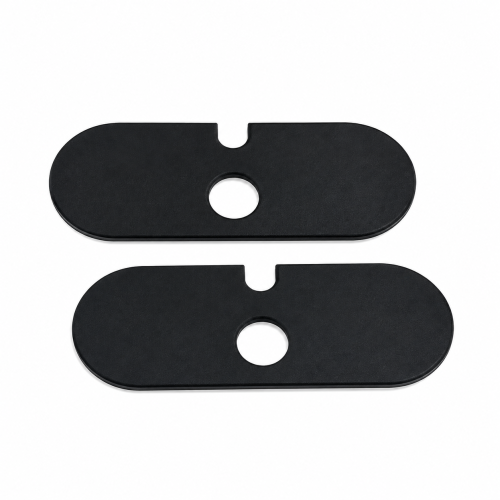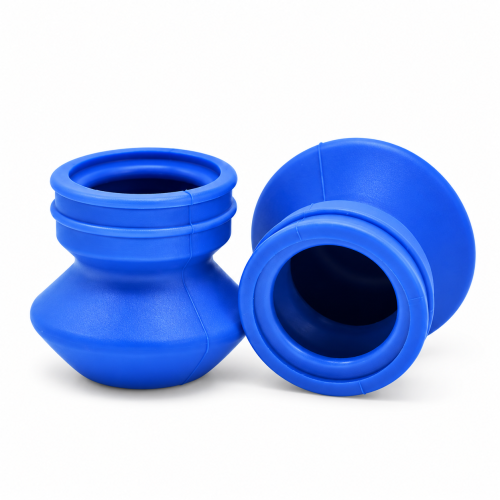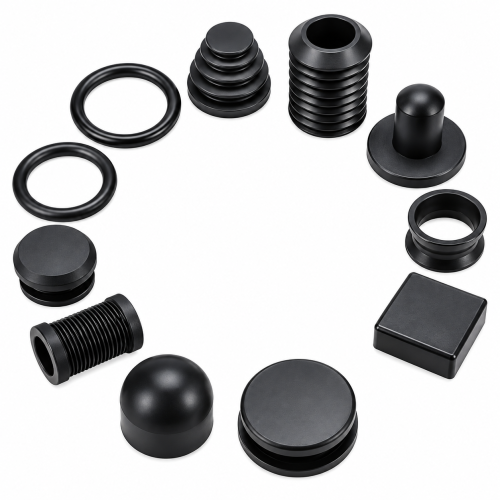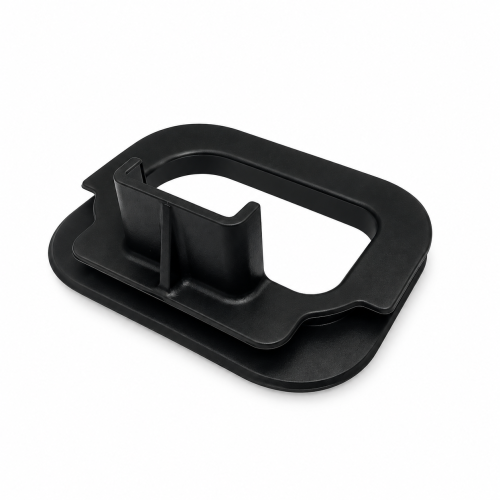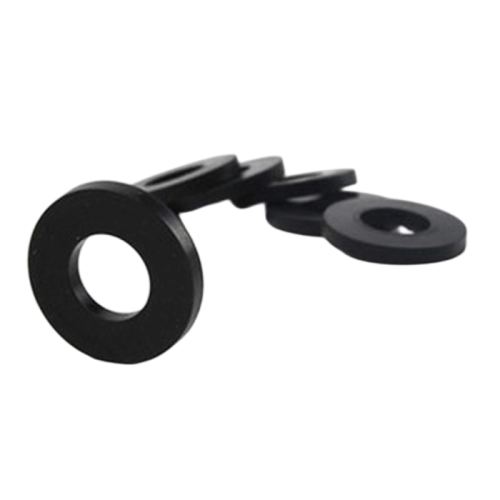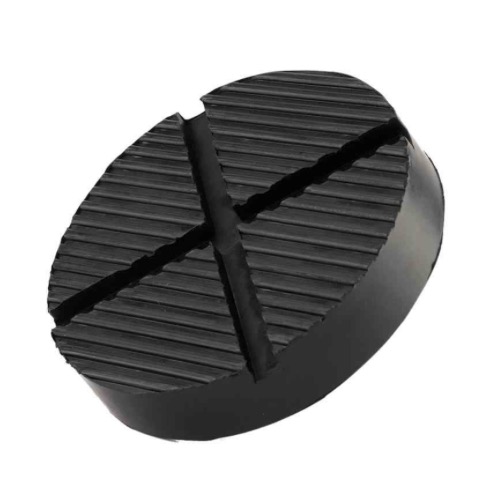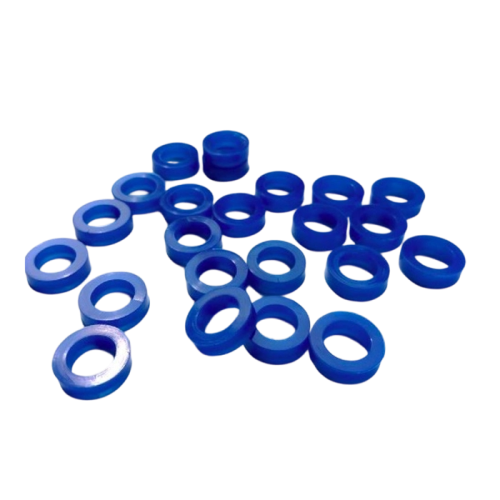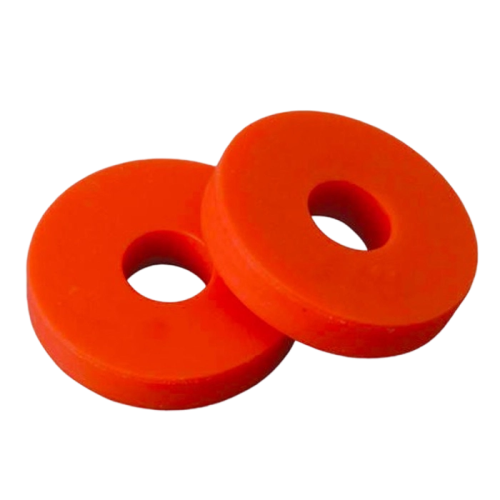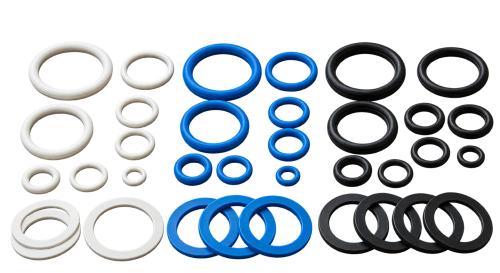
Silicone gaskets are die-cut or compression-molded sealing components that retain flexibility across a wide temperature range. They are often selected for food- or medical-contact requirements, electrical insulation, or repeated exposure to extreme heat and cold.
Hongjie manufactures silicone rubber gaskets in Shenzhen using FDA- and NSF-compliant compounds under IATF 16949:2016 and ISO 13485:2016 certified systems. Standard flat profiles and fully custom die-cut or compression-molded shapes are available.
Silicone gaskets suit joints that expand, contract or move slightly with temperature. The material remains soft and conformable, helping seal surfaces that rigid gasket materials may not accommodate.
Common applications include:
OEMs can also source related components from rubber parts for home appliances and rubber parts for electrical equipment.
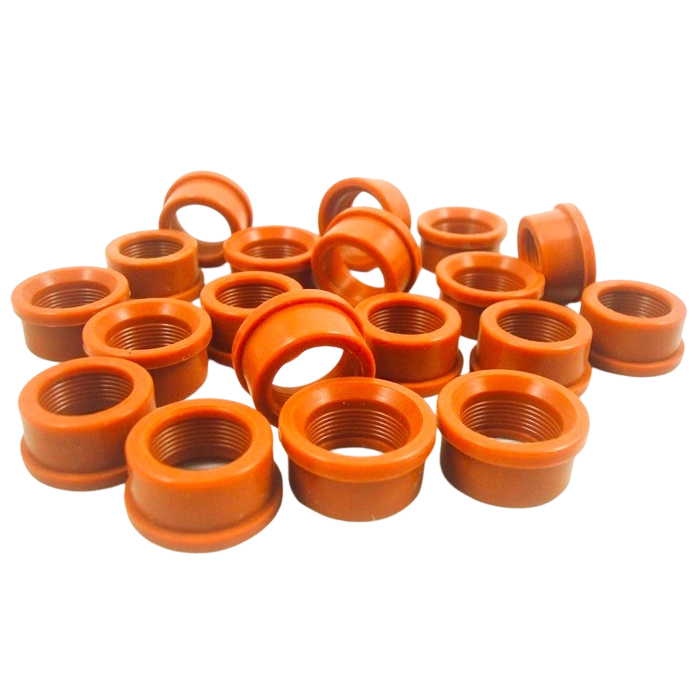

Silicone gasket hardness, thickness, and cut size are matched to the application rather than pulled from one fixed catalog. The ranges below reflect the general specification window most silicone gasket programs fall into; exact figures for a specific part are confirmed once the drawing and mating dimensions are reviewed.
| Specification | Range |
|---|---|
| Durometer (Shore A) | 30–80 Shore A, selected by compression and clamp-load requirement |
| Sheet / molded thickness | 0.5mm–12mm |
| Maximum sheet or part size | Set per die or mold — confirmed during quoting |
| Minimum order quantity | No fixed MOQ — confirmed per part during quoting |
| Dimensional precision | Down to ±0.02mm on critical features |
| Temperature rating | −60°C to +325°C across the silicone compound range |
| Prototype turnaround | Functional prototypes in 3–5 business days |
| Sizing standards | AS568A and metric dimensional standards |
Send the mating dimensions and clamp load and the engineering team returns a compound and hardness recommendation for the specific joint, along with tooling and lead-time confirmation for that part.
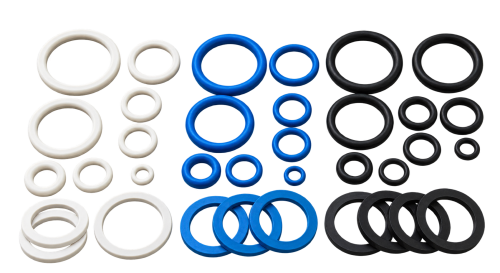
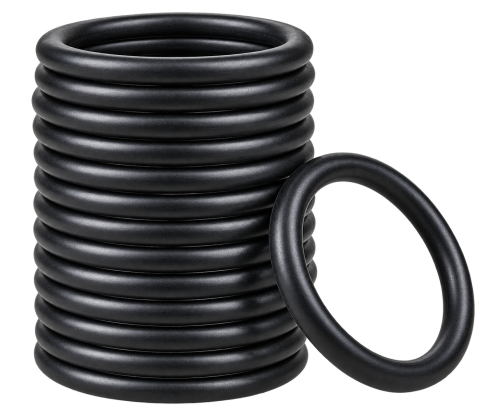
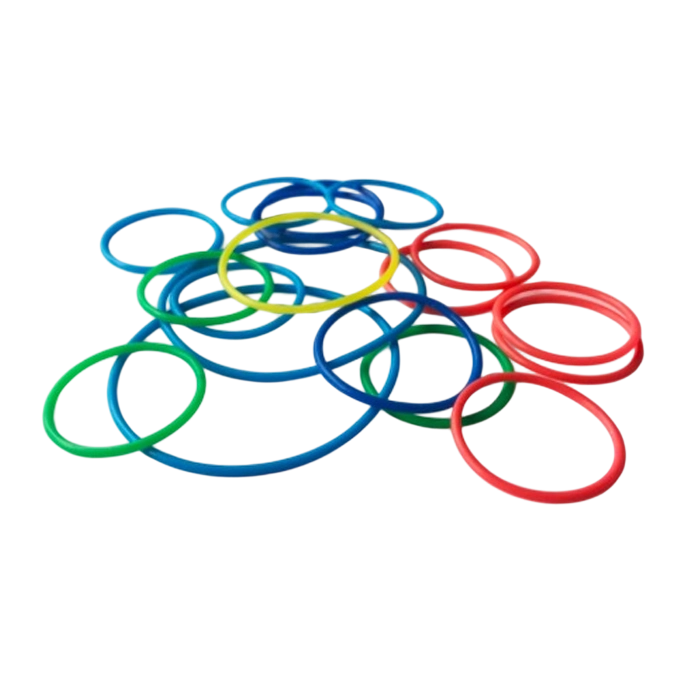
Silicone O-Rings serve round-cross-section sealing, Silicone Washers serve flat load-bearing spacers, Silicone Rubber Grommets serve wire and panel pass-throughs, and Silicone Rubber Parts serve non-sealing molded components.

Grade selection should follow the operating conditions and compliance requirements:

VMQ compounds are available for FDA 21 CFR 177.2600 and NSF/ANSI 51 requirements, with softer grades for improved conformity against food-contact surfaces and gasketed lids.

VMQ grades typically cover −60°C to around +200°C, with higher-temperature options for ovens, sterilized medical housings and outdoor enclosures.

VMQ compounds are selected for dielectric stability, with firmer grades available where the gasket must maintain its shape under clamp load.

FVMQ (fluorosilicone) provides better hydrocarbon resistance than standard VMQ while retaining low-temperature flexibility.
Silicone is not automatically the best choice for every application. Sustained high pressure, heavy abrasion or hydrocarbon exposure may call for a different compound.
For weather and ozone exposure without food, medical or electrical requirements, EPDM rubber gaskets may be more economical. For oil contact, NBR rubber gaskets generally provide better resistance at a lower material cost. Neoprene rubber gaskets are another option for general industrial service where special compliance is not required. See the comparison of rubber gasket compound families before finalizing the material.

Different silicone gasket geometries call for different production methods, and each comes with its own trade-off between tooling cost, tolerance, and volume:
The same injection and compression molding lines producing these gaskets also run broader custom molding programs and custom molded rubber parts for OEM buyers. Molded, flanged, or bolt-circle gasket shapes use compression-molded flange and housing gaskets sized to the bolt pattern and housing profile.
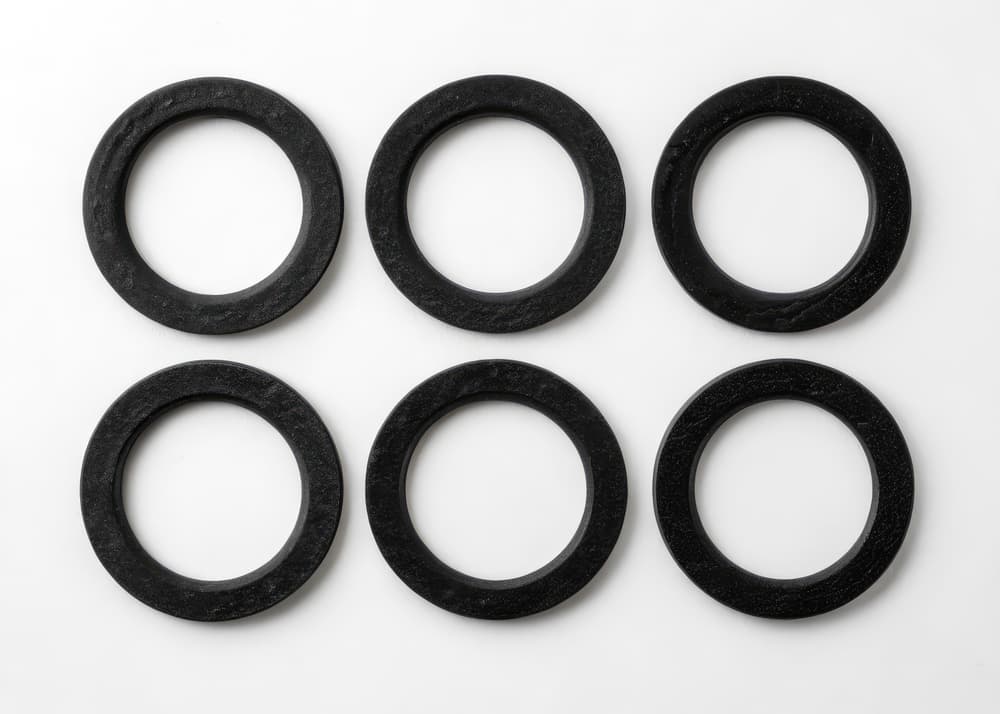
Flat gasket geometry lives or dies on tolerance — a sheet gasket out of spec by a few hundredths of a millimeter either leaks under clamp load or over-compresses and takes a permanent set. Die-cutting and compression molding hold tolerance differently, since a cutting die and a machined mold cavity behave differently under production conditions.
Blade/rule-die controlled:
| Dimension Range | Tolerance |
|---|---|
| 0–10mm | ±0.10mm |
| 10–25mm | ±0.15mm |
| 25–50mm | ±0.20mm |
| 50–100mm | ±0.25mm |
Cavity-controlled:
| Dimension Range | Tolerance |
|---|---|
| 0–10mm | ±0.02mm |
| 10–25mm | ±0.05mm |
| 25–50mm | ±0.08mm |
| 50–100mm | ±0.10mm |
A team of 25+ engineers supports drawing review, STEP and IGES modeling, and FEA simulation before tooling. This review helps identify clamp-load, compression and manufacturability issues before the mold is built.
Functional prototypes are typically available in 3–5 business days after design approval. Testing can cover hardness, tensile strength, compression set and chemical resistance, while production follows SPC methods targeting Cpk > 1.33 consistency.
VMQ compounds formulated to meet FDA 21 CFR 177.2600 for food-processing equipment gaskets and food-contact sealing surfaces.
Compounds selected to meet NSF/ANSI 51 requirements for food-service and water-contact applications.
Underwriters Laboratories safety certification for electrical applications, applied to the specific compound selected for a gasket's electrical enclosure or connector-housing use.
Quality management system covering medical device housing gaskets.

Quality management system covering automotive sealing applications, including silicone gaskets used in cabin electronics or sensor housings.
None of these certifications substitute for material testing on a specific design — they establish that the compound and the quality system producing it meet a documented standard, which is what most procurement and quality teams need before they'll approve a new supplier.
Hongjie has manufactured rubber sealing products since 2001. The Shenzhen facility covers 11,000 m², employs roughly 150 people and maintains 3,500+ existing tools.
The company delivers more than 50 million precision-inspected seals annually to Tier-1 suppliers in over 45 countries. Production operates under IATF 16949:2016 and ISO 13485:2016 certification, with FDA- and NSF-compliant material options available for applicable programs.

Drawing in hand — upload it in STEP, IGES, or another major CAD format for a direct quote. The engineering team reviews geometry, recommends a compound against the compliance requirement (food, medical, electrical, or automotive), and confirms tooling, sheet size, and MOQ for the specific part. Request a quote with the drawing attached.
Still defining the application — for gaskets where compound, durometer, or tolerance haven't been locked down yet, an engineering consult ahead of drawing finalization avoids re-tooling later. Start a project discussion with the sealing engineers to work through material and geometry options first.


Explore complementary sealing solutions from our comprehensive product catalog.