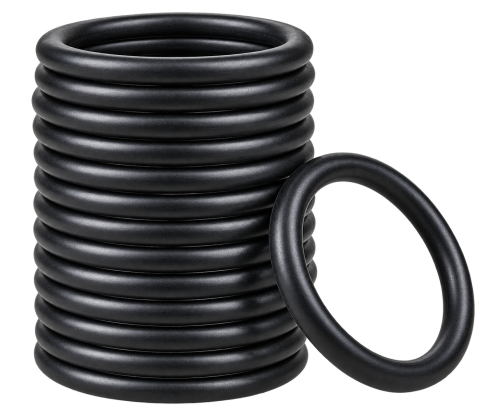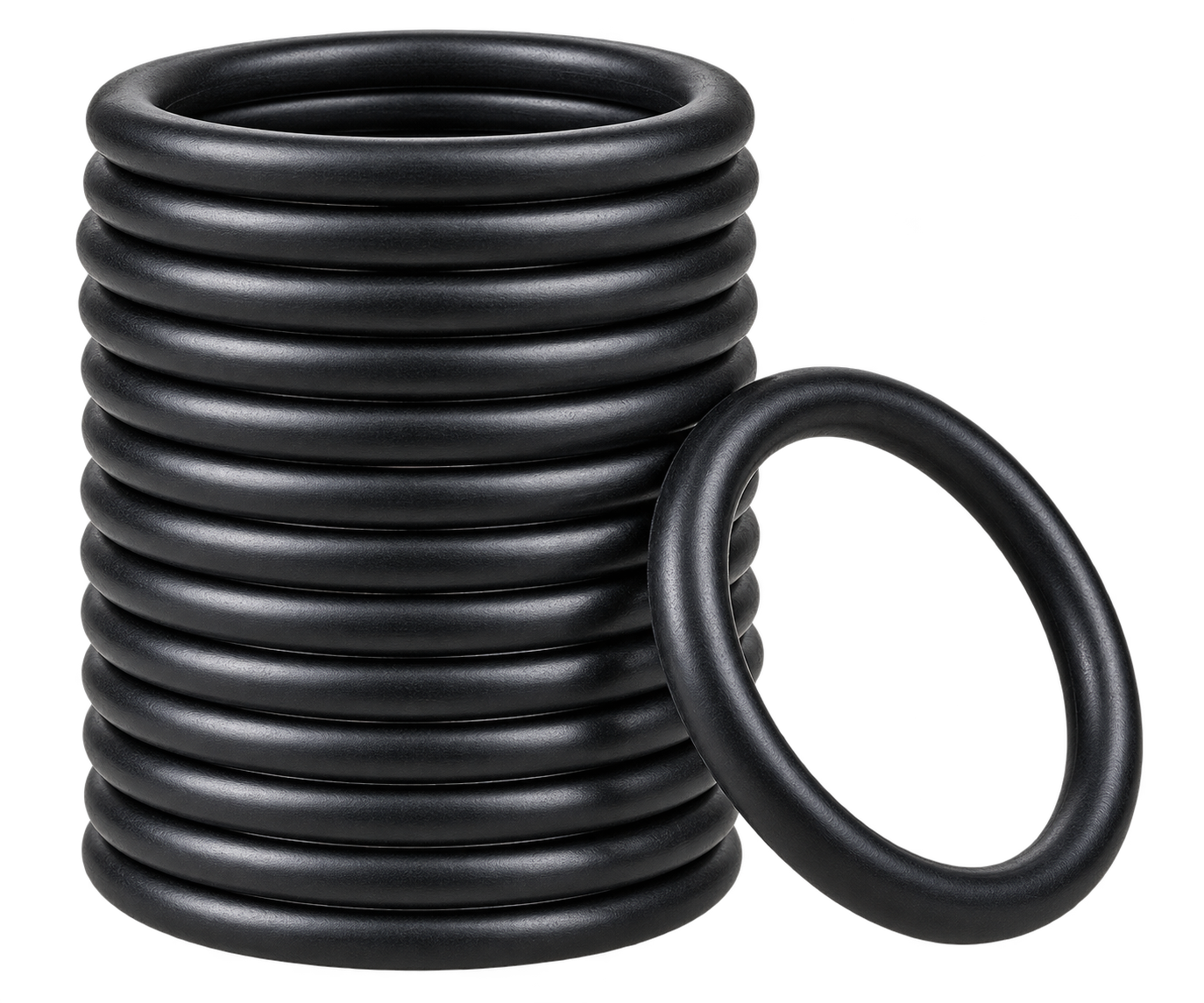
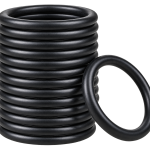
NBR (Buna-N) O-rings are commonly selected for seals exposed to petroleum oils, fuels and hydraulic fluids. They generally cost less than FKM or silicone in the same size range, making NBR a practical choice for oil- and fuel-side sealing in automotive, appliance and general industrial equipment.
Hongjie molds NBR O-rings in standard catalog sizes and custom geometries at its 11,000 m² Shenzhen facility. Production follows IATF 16949:2016 and ISO 13485:2016 certification for programs requiring documented process control.
Standard NBR compounds typically range from 40–90 Shore A and operate from about −30°C to +120°C, covering many fluid-power and engine-bay applications.
NBR is a copolymer of acrylonitrile and butadiene. The ACN content, usually 18–50% across commercial grades, affects the balance between oil resistance and low-temperature flexibility:
Hongjie molds NBR across this grade range instead of relying on one compromise compound.
NBR can degrade under prolonged ozone, UV and weathering exposure. It also performs poorly with brake fluid, ketones, esters, and chlorinated or aromatic hydrocarbons. For these conditions, FKM or EPDM is generally a better starting point.

| Spec | Detail |
|---|---|
| Base polymer | Acrylonitrile-butadiene copolymer (NBR / Buna-N) |
| ACN content | Roughly 18–50%; low ACN favors cold flexibility, high ACN favors oil/fuel resistance |
| Durometer | Roughly 40–90 Shore A, molded to your drawing or reference sample |
| Working temperature | Approximately −30°C to +120°C for standard grades; ACN selection shifts the range |
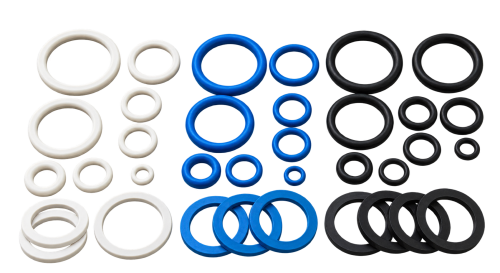
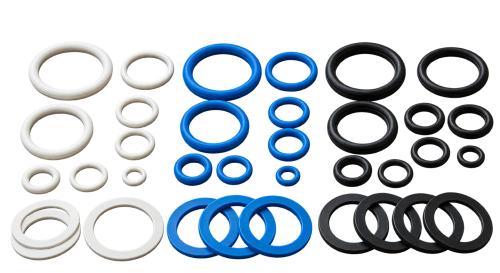
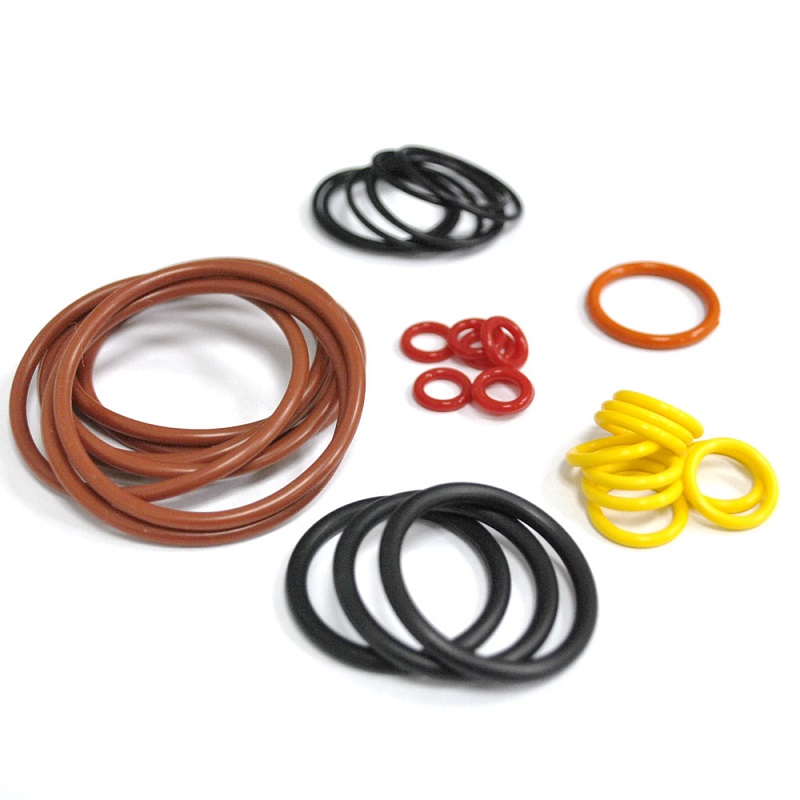
| Standard color | Black; custom colors available for line identification (see Custom-Colored O-Rings) |
| Sizing standards | AS568A, metric |
| Standard tolerance (0–10mm) | ±0.10mm |
| Precision tolerance (0–10mm) | ±0.02mm |
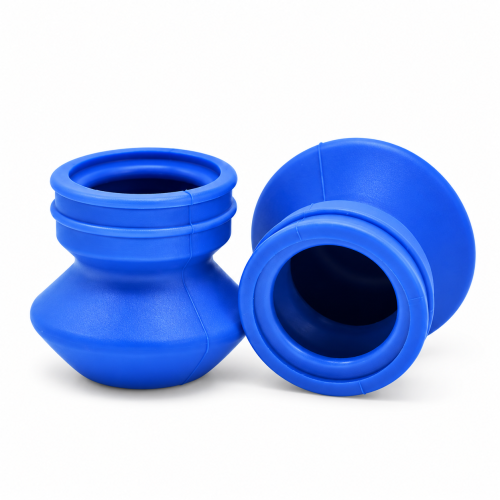
Tolerance bands widen predictably at larger sizes (±0.15mm standard / ±0.05mm precision at 10–25mm, and so on) — a precision quote is worth requesting only when your gland or bore actually needs it, since it adds cost. Need NBR in bushing form rather than a ring? See our Rubber Bushings.
Catalog sizing covers AS568A dash numbers and metric ID/CS combinations. More than 3,500 existing tools allow common sizes to bypass new-tool development.
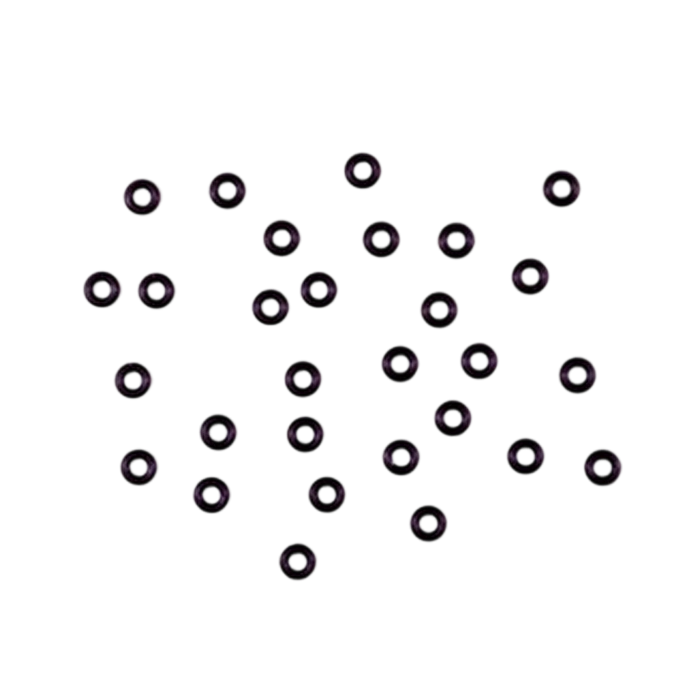
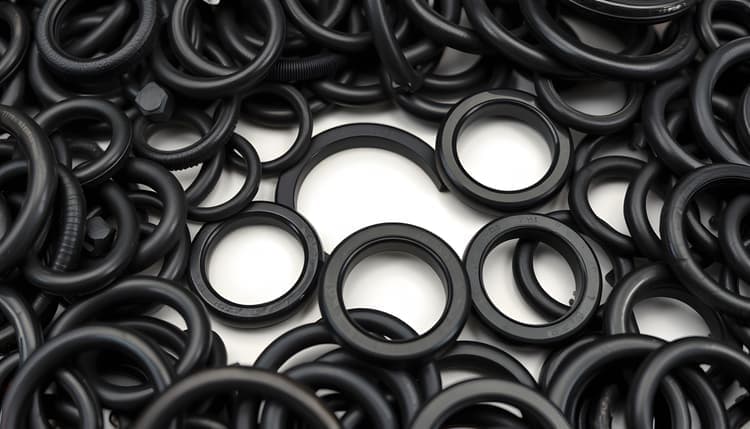
The range includes miniature parts with IDs starting at 0.60 mm, as shown in miniature NBR O-rings, as well as large industrial cross-sections molded to your drawing.
Sizes outside the catalog range, or parts with molded-in features, use custom tooling built from your CAD file. Functional prototypes are typically available within 3–5 business days. For a full dash-size breakdown, see AS568 O-rings by dash size and material.
NBR's oil and fuel resistance makes it the default across several sealing environments:

Oil-exposed static and dynamic seals

Fuel lines and fuel-system components

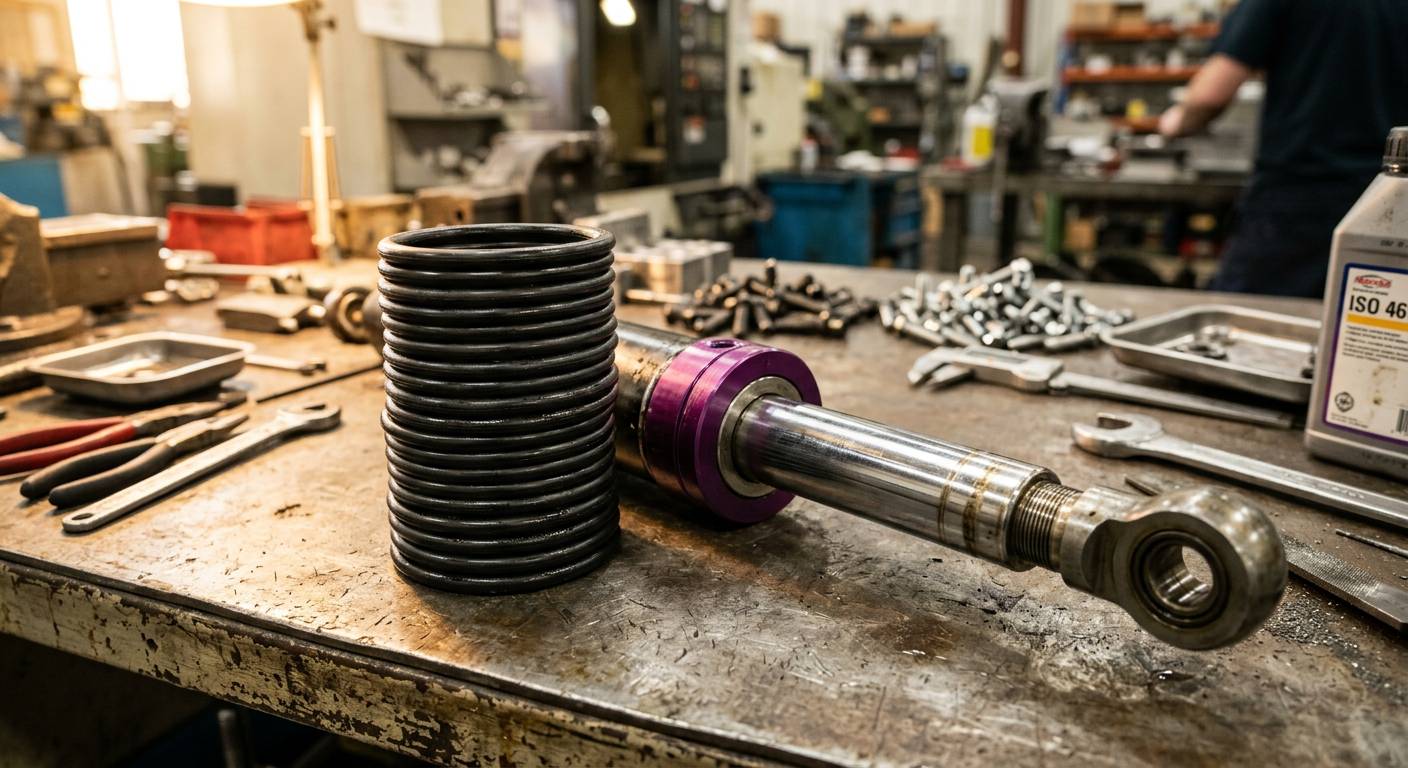
Hydraulic circuits and cylinders

Valve bodies and flow-control assemblies
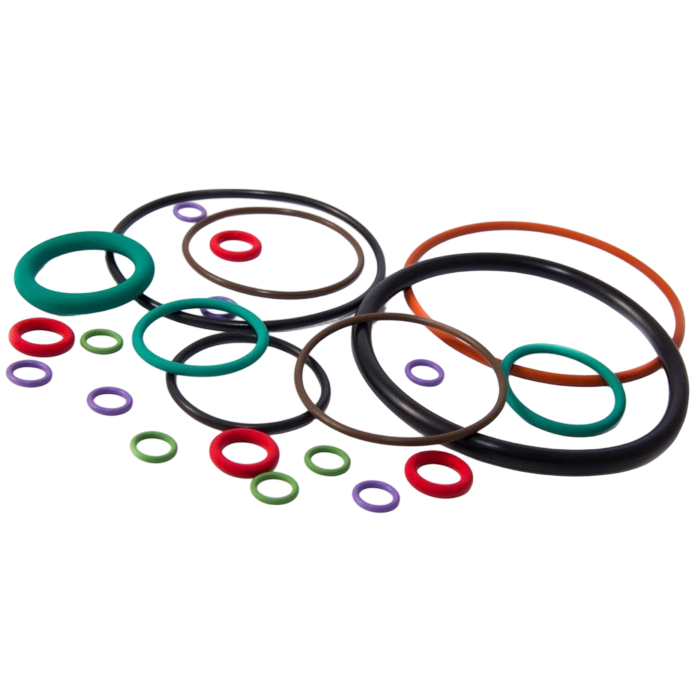
For a broader comparison, see how to choose between NBR, FKM and EPDM.


IATF 16949:2016, ISO13485:2016, UL Certified; FDA and NSF compliant material options for food or water-contact programs

Dimensional tolerance down to ±0.02mm, produced under SPC and Six Sigma methods targeting Cpk > 1.33

Hardness, tensile strength, compression set, chemical resistance, and accelerated aging testing available for validation before mass production

Injection molding, compression molding, and die-cutting, run on semi-automated lines across an 11,000 m² facility
Hongjie has manufactured rubber sealing products since 2001. A 25-person engineering team supports the process from CAD review and material selection through finished-part production.
Key production resources include:

1. Upload your drawing, reference sample, or existing dash number.
2. Consult with the engineering team on ACN content, durometer, and tolerance class.
3. Receive a functional prototype in 3–5 business days.
4. Move to production tooling once the prototype is approved.
For applications involving aggressive chemicals rather than mainly oil or fuel, start with chemical-resistant O-rings. If your drawing calls for FKM, silicone or EPDM instead of NBR, custom rubber O-rings can be molded from the same drawing.
Ready to specify an NBR O-ring? Request a quote for material and tolerance recommendations from an engineer.


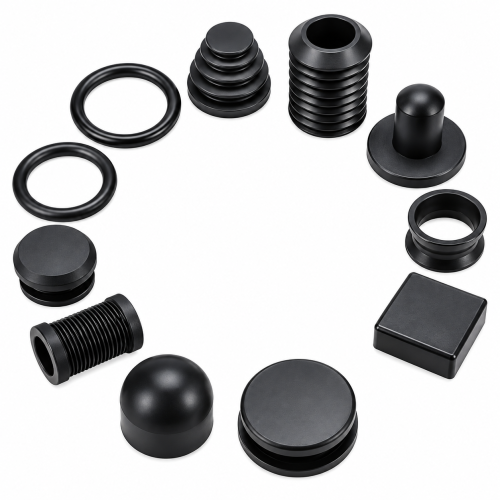
Explore complementary sealing solutions from our comprehensive product catalog.