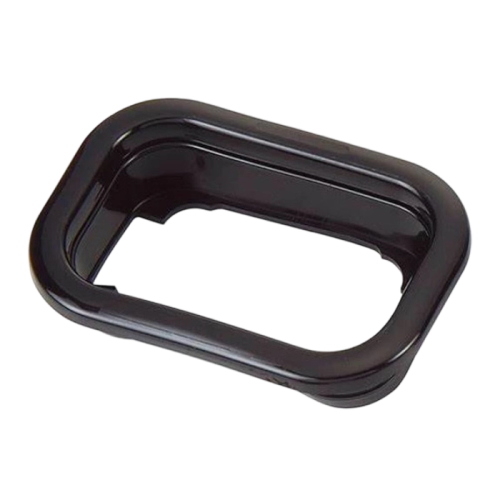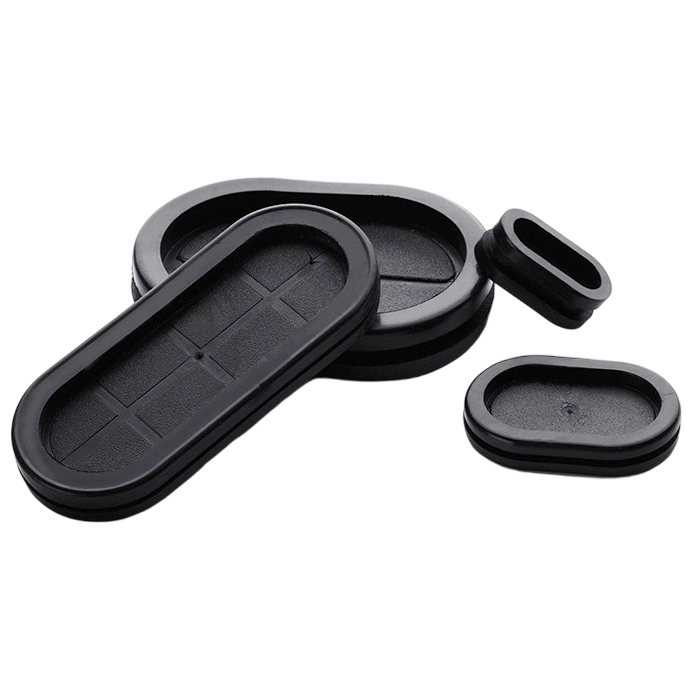
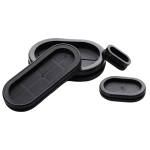
Waterproof rubber grommets use sealing lips, interference fits or closed cable-entry profiles to create a controlled sealing interface. Specify cable diameter, panel thickness, compression, exposure conditions and the required leakage or immersion test. IP ratings apply only after verification of the finished assembly.

These grommets are made for cable and wire entries in outdoor equipment, control enclosures, and industrial housings where the opening needs a defined water-sealing interface. Cable OD, panel thickness, groove geometry, compression, and the required water test are reviewed before tooling.

The cable bore is sized around the actual cable or bundle OD so the rubber maintains controlled contact around the entry point.

Panel-hole size, panel thickness, groove width, and groove depth are matched so the grommet seats correctly and stays in position.

Cable-side ribs, panel-side lips, flanges, or stepped profiles can be molded where the assembly needs a more controlled water path.

Interference is set according to cable OD, rubber hardness, wall thickness, and installation force rather than using one fixed compression value.

Specify rain, splash, washdown, or temporary immersion conditions together with the required test method, duration, and allowable leakage.

Fit and sealing are checked against the specified cable and panel. Any IP requirement should be verified on the finished assembly, not the rubber part alone.

Start with the cable and panel interface. These inputs define how the grommet fits, how much compression is available, and what type of sealing profile can be molded for the required exposure.
| Project Inputs | |
|---|---|
| Product Type | Waterproof Cable-Entry Rubber Grommet |
| Primary Use | Non-automotive cable entry and panel sealing |
| Cable Input | Cable OD or cable-bundle OD |
| Panel Input | Hole or cutout size and panel thickness |
| Sealing Interface | Cable interference, panel groove, lip or flange profile |
| Material Options | EPDM, NBR, Silicone, HNBR, Neoprene, FKM |
| Hardness | 10–90 Shore A, selected by fit and environment |
| Water Exposure | Rain, splash, washdown or temporary immersion as specified |
| Water Test | Customer-defined leakage, spray or immersion method |
| Inspection | Dimensions, cable fit, panel retention and agreed leak checks |
| Tooling | In-house tooling, 2 CNC machines operating 24H per day |
| Sample Lead Time | About 5 Days |
| Mass Production Lead Time | 12–15 Days |
| Typical Applications | Outdoor enclosures, control equipment, machinery, pumps, sensors and agricultural equipment |

Tell us how water reaches the finished assembly. Rain, directional splash, washdown, and temporary immersion can require different cable compression, panel sealing features, and verification methods.
Define direction, duration and exposure conditions
Define water depth, test time and allowable leakage
This page covers non-automotive cable entries where water sealing is a defined requirement. For ordinary panel protection without a dedicated water seal, see industrial rubber grommets. For standard cable pass-through protection, see rubber cable grommets. Vehicle body openings and wet-area harness entries belong under automotive waterproof rubber grommets.
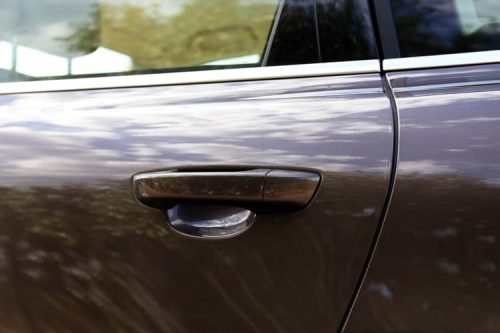
Cable entries for roadside controls, signs, monitoring units, and other housings exposed to rain and changing outdoor conditions.
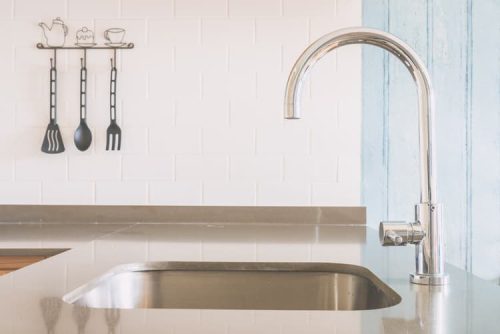
Cable pass-throughs on pumps, water-handling equipment, and related housings where splash or moisture can reach the panel opening.
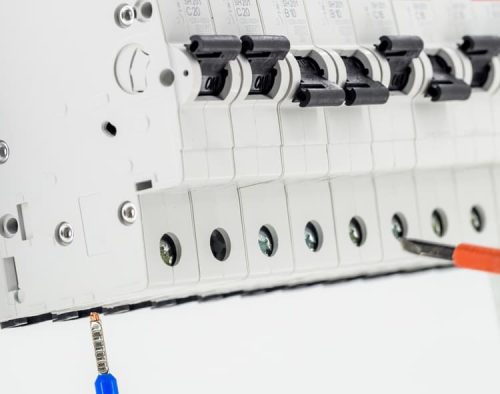
Cable entries in junction boxes, control cabinets, sensor housings, and other electrical enclosures installed in exposed locations.
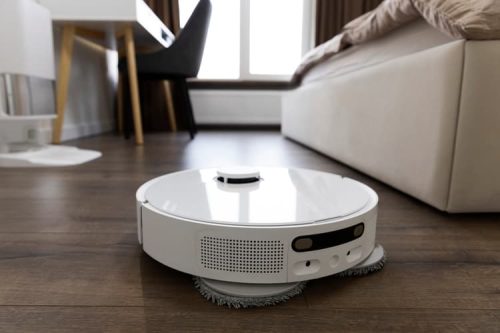
Panel entries for control units, monitoring equipment, and compact machinery housings where cable fit and moisture protection must be controlled.
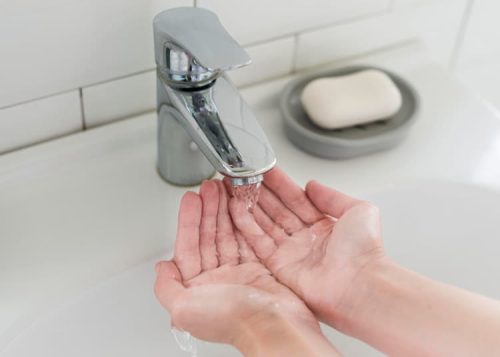
Cable-entry points on equipment that is cleaned with water or exposed to repeated splash, with the test conditions agreed before tooling.
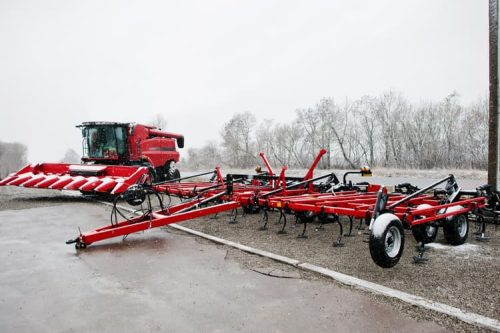
Cable entries for agricultural machinery, control boxes, sensors, and equipment housings exposed to rain, mud, dust, and outdoor temperature changes.

Custom development can start from a drawing, physical sample, cable and panel dimensions, or the complete mating assembly. Before mass production, we can review fit, retention, sealing contact, and the agreed leak-test method.
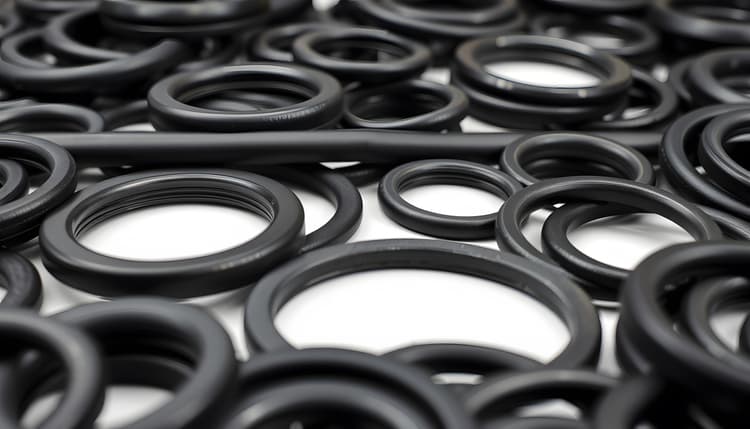
Sample parts can be checked against the specified cable OD, panel opening, panel thickness, groove, and available installation space.
Compound and hardness are selected around water exposure, temperature, oils or chemicals, cable movement, installation force, and any compliance requirement.
Provide the test method or finished assembly conditions so leakage, spray, or immersion checks can be agreed before the sample is evaluated.
In-house tooling supports geometry adjustments during development. Production inspection can cover agreed dimensions, visual criteria, cable fit, and panel retention.

Explore complementary sealing solutions from our comprehensive product catalog.
Our engineering team reviews your specs and responds within 24 hours with material recommendations and competitive pricing.