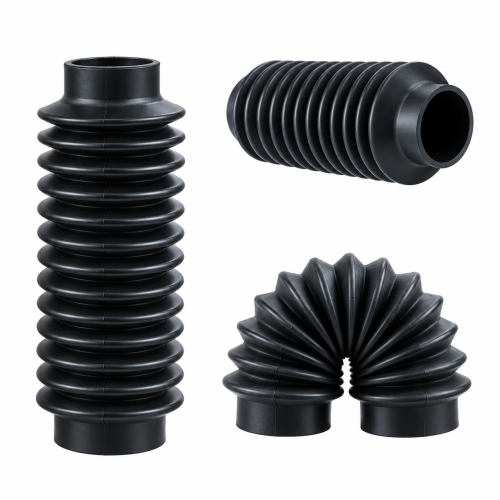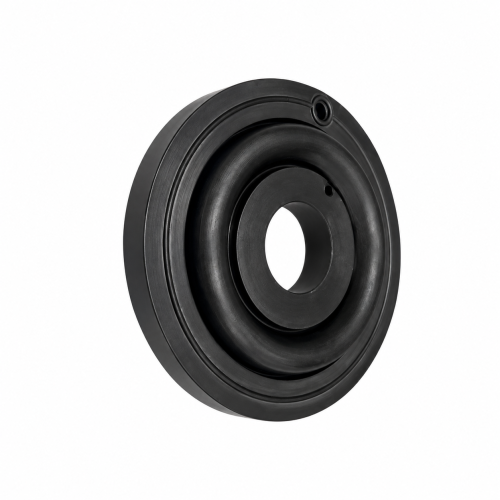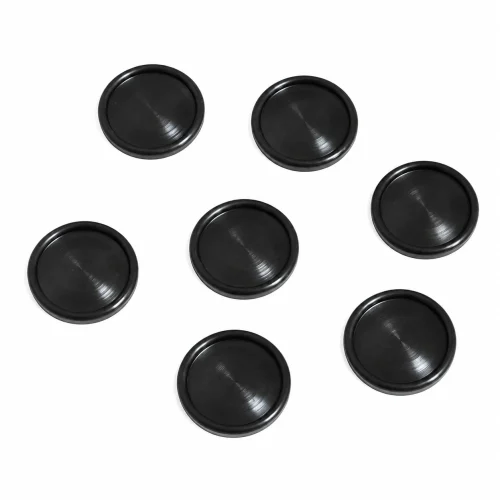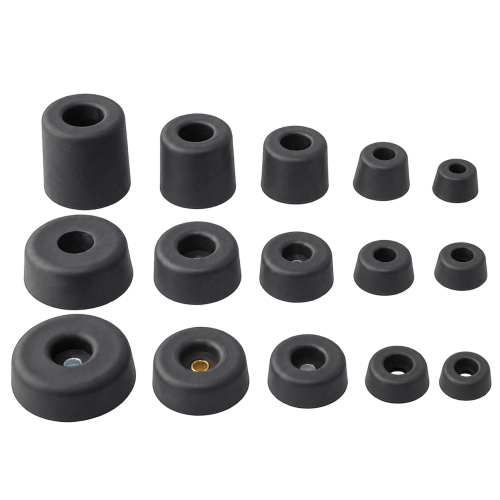

EPDM is suited to parts exposed to sunlight, ozone and rain over long periods. Common applications include window seals, HVAC gaskets, appliance door seals and outdoor equipment grommets, where resistance to cracking and hardening is important.
Since 2001, Hongjie Sealing Technology has molded, extruded and die-cut EPDM parts at its Shenzhen facility. Production follows IATF 16949:2016 and ISO 13485:2016-certified processes for automotive, medical, appliance, hydraulic and general industrial programs in more than 45 countries.
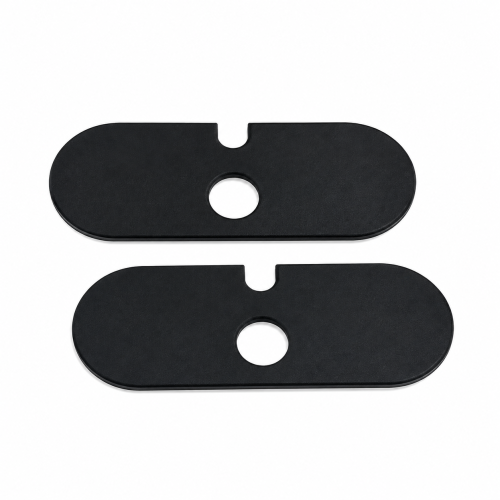
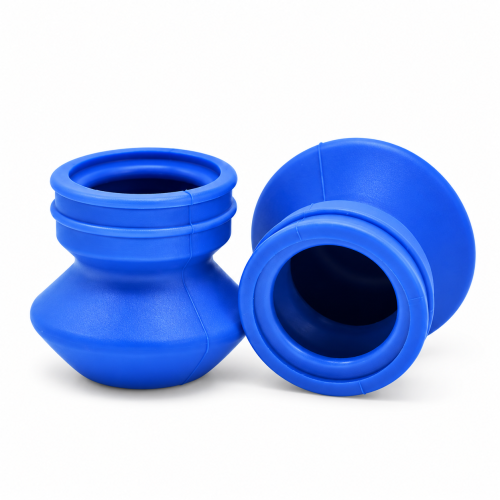
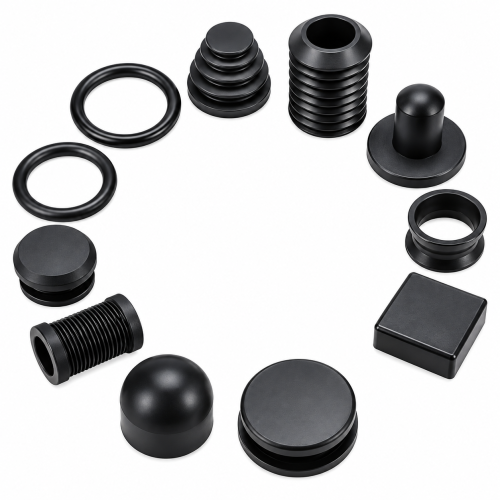
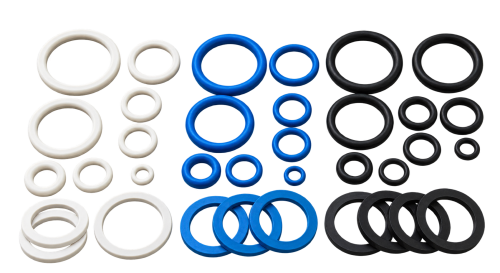
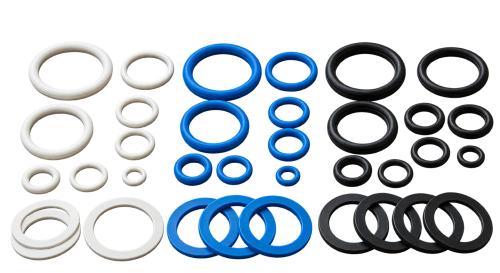
EPDM can be produced as O-rings, gaskets, grommets, seals, washers, bushings and rubber-to-metal bonded assemblies. Parts are made from a drawing or physical sample, with engineering review to identify fit or material-selection issues before tooling begins.

EPDM's polymer backbone is what makes it weather-stable where general-purpose rubbers fail. Buyers typically spec it for the behaviors below, and it's just as important to know where EPDM is the wrong choice:
| Property | EPDM Behavior |
|---|---|
| Ozone / UV / weathering | Excellent — resists cracking and surface chalking under long-term outdoor exposure |
| Water / steam resistance | Very good — a common choice for water seals, washing appliance gaskets, and plumbing components |
| Operating temperature | Wide service band, with good resistance to heat and cold cycling; standard EPDM formulations are commonly cited in the industry at roughly −50°C to +150°C, though exact limits shift with cure system and compound |
| Durometer range | Typically specified between 30 and 90 Shore A depending on the sealing or cushioning function required |
| Compatible media | Water, steam, polar fluids, mild alkalis and acids |
| Poor fit for | Mineral oils, fuels, and most hydrocarbon-based fluids — FKM or NBR are better choices there |
EPDM is not suitable for seals exposed to oil or fuel. For petroleum-based fluids, NBR or FKM may be a better choice. Our guide to NBR, FKM and EPDM compound selection compares oil, fuel and chemical resistance before tooling begins.
Across the full compound library — including NBR, FKM/FFKM, EPDM, silicone, HNBR, fluorosilicone, neoprene, SBR, polyurethane and VAMAC — engineering support includes material compatibility and dimensional testing. This helps identify a material mismatch before mass production rather than after the parts are released.

EPDM is molded, extruded or die-cut into the geometry your application requires, from standard sealing rings to custom profiles and bonded assemblies.
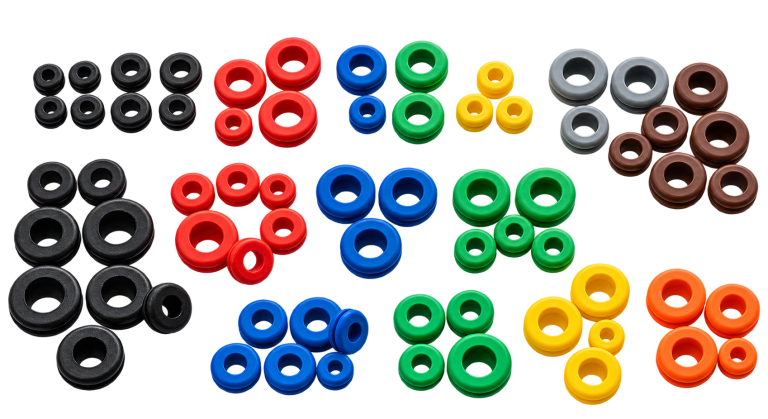

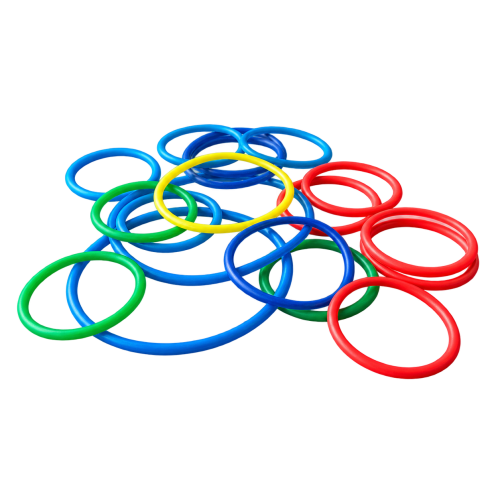
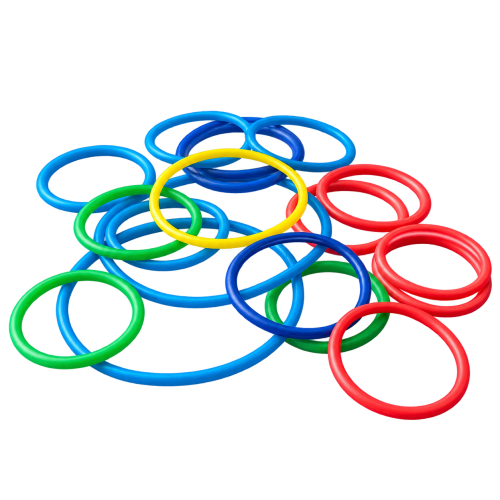
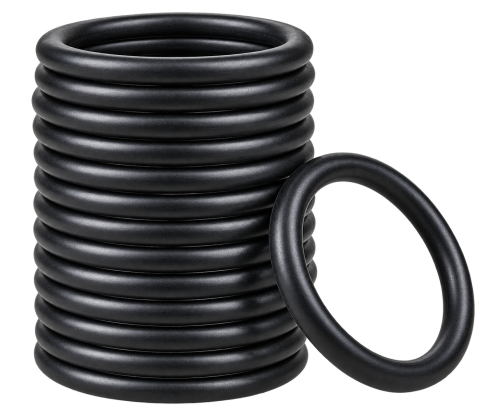
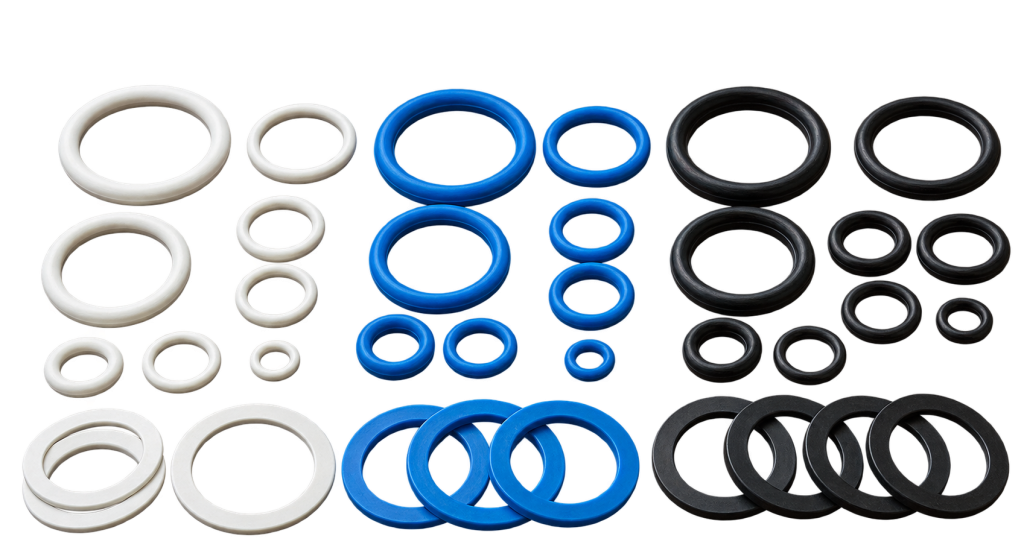
Sealing rings molded in AS568A and metric sizes from your drawing or matched to a physical sample.

Flat, molded and die-cut flange or housing gaskets sized to the mating surface and sealing conditions.

Panel and wire-pass-through grommets for weatherized enclosures, outdoor housings and cable routing.
Molded sealing profiles for doors, panels and enclosures exposed to sustained UV, ozone and outdoor weathering.
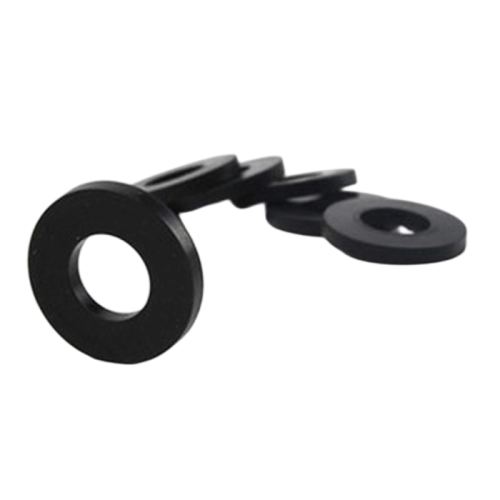
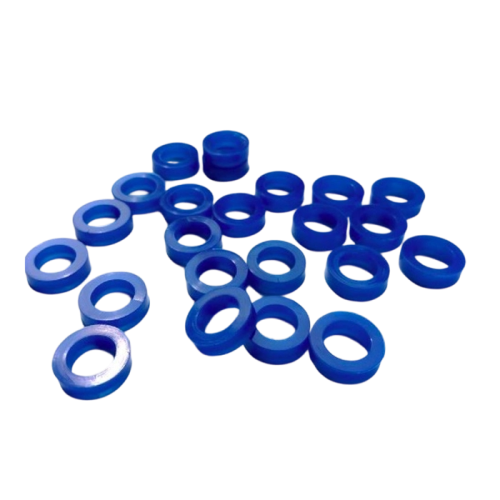
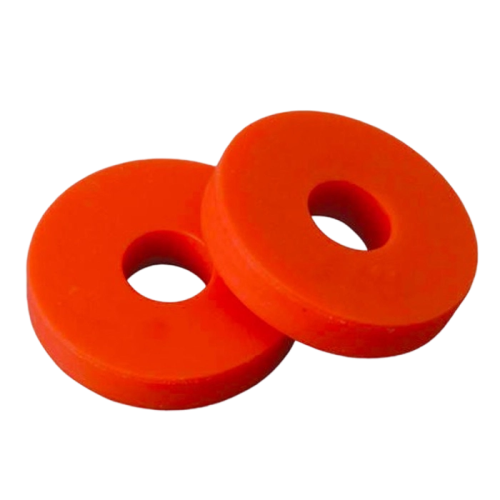
Die-cut or molded sealing washers produced to the required outside diameter, thickness and durometer.
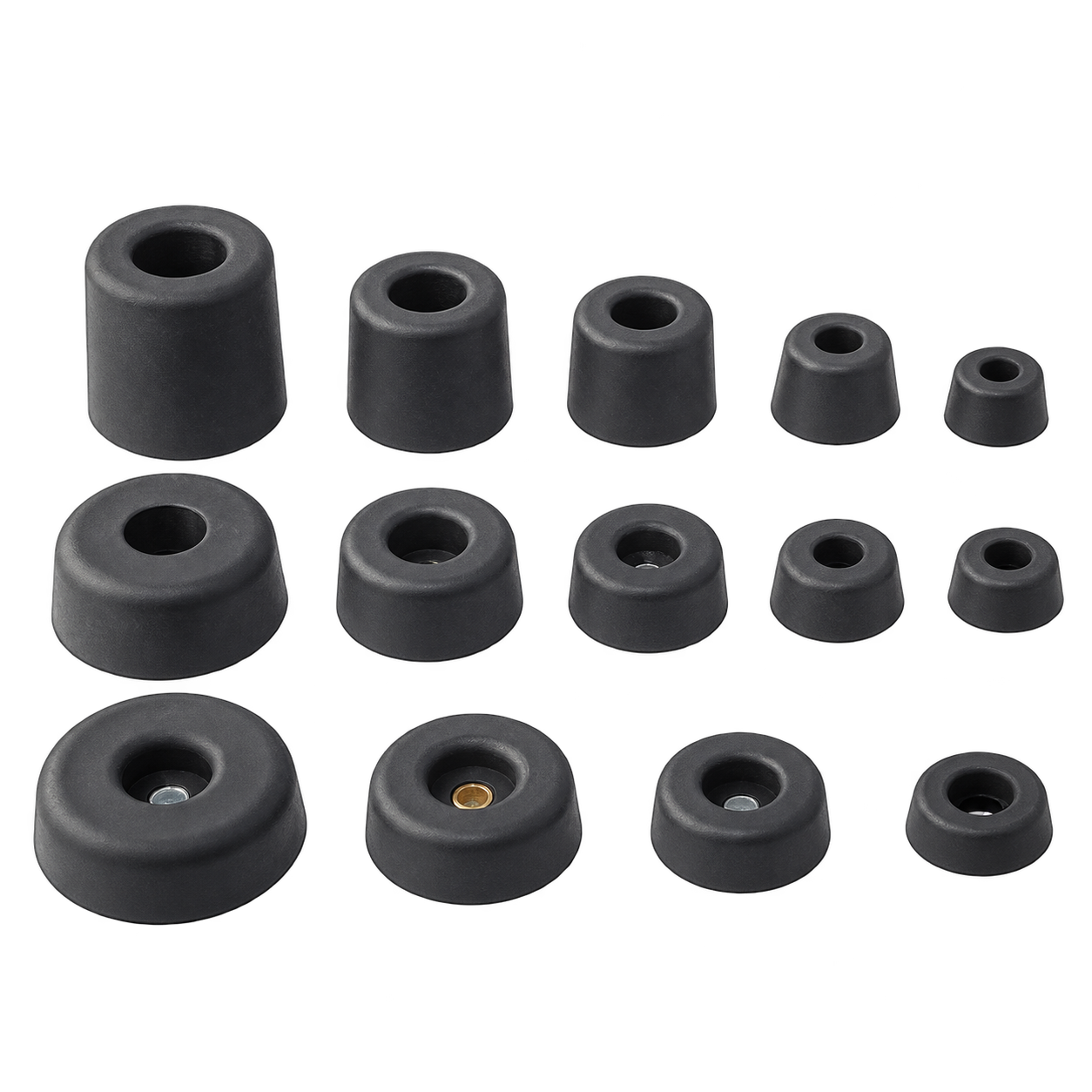
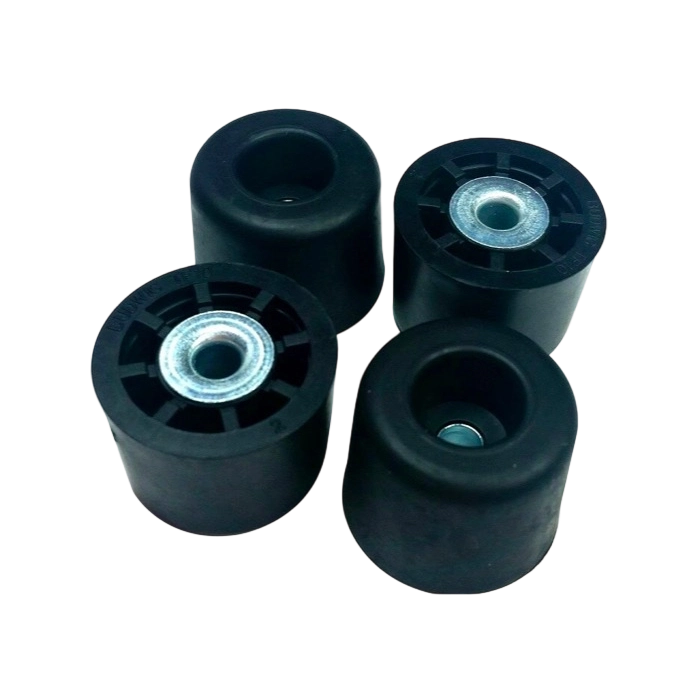
Vibration-isolating and mounting bushings for outdoor-exposed assemblies and equipment supports.
Continuous EPDM sealing strips and channel profiles cut to length for weatherstripping and long sealing runs.
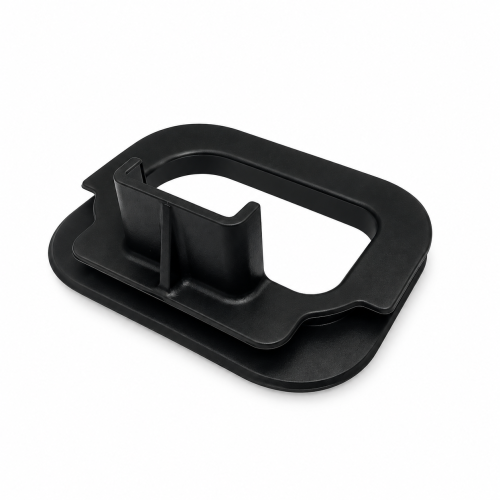
Brackets, mounts and complex EPDM components molded to drawing for equipment-specific geometries.
Multi-material assemblies combining EPDM with a metal insert in one molding step for added rigidity or positioning.

We select the process by geometry and volume, not the other way around:
Injection molding provides tighter cavity-to-cavity consistency for volume production, while compression molding can reduce tooling investment for EPDM parts with larger cross-sections. See our comparison of injection and compression molding for rubber parts for more detail on tooling cost and cycle time.
The custom rubber parts program also covers PSA lamination, kitting and export packaging for buyers combining multiple EPDM part types in one order.
EPDM parts still need to hold dimension against a mating groove, panel cutout, or bore — weather resistance means nothing if the part doesn't fit.
| Dimension Range | Standard Tolerance | Precision Tolerance |
|---|---|---|
| 0–10mm | ±0.10mm | ±0.02mm |
| 10–25mm | ±0.15mm | ±0.05mm |
| 25–50mm | ±0.20mm | ±0.08mm |
| 50–100mm | ±0.25mm | ±0.10mm |
Hongjie holds precision tolerances down to ±0.02 mm on features from 0–10 mm, verified through SPC-monitored, semi-automated production. Functional EPDM prototypes are typically ready within 3–5 business days, allowing fit and material selection to be checked before production tooling is approved.
Our team of more than 25 engineers supports STEP and IGES files, FEA simulation for gland and groove designs, and EPDM material selection. Groove-seated EPDM O-rings follow the same squeeze and fill principles as other compounds; the relevant dimensions are covered in the O-ring gland design guide.
Production lead time, tooling cost and MOQ depend on the part geometry, cavity count and target volume. These details are quoted after drawing review rather than fixed in advance. Start a project discussion with your drawing to receive a project-specific quotation.


Automotive quality management certification

Medical device quality management certification

Safety certification for electrical applications

Available for food- and water-contact EPDM parts

Statistical process controls applied across production runs
Potable water and drinking-water systems often require certification beyond baseline FDA and NSF compliance — the FDA & WRAS Certified Rubber Seals Guide lays out which standards apply by material and application, and what documentation procurement should expect at sign-off.

EPDM components are supplied for applications that require resistance to weathering, ozone, water and temperature cycling.

Weatherstripping, grommets and mounts exposed to ozone and temperature cycling under the hood and around door seals.

Device seals and gaskets produced with ISO 13485 traceability across the full production lot.
Door seals for washing machines, dishwashers and outdoor equipment exposed to repeated water and detergent contact.
Low-pressure water and mild-fluid seals where EPDM is suitable. Oil-side hydraulic circuits typically require NBR or FKM.
Enclosure grommets and panel seals for outdoor-rated equipment exposed to long-term sunlight and rain.
Weatherproofing grommets and gaskets for junction boxes, control panels and outdoor electrical enclosures.
Engineered EPDM components for selected aerospace sealing requirements and specialized assemblies.
INDUSTRIES SERVED
Using one EPDM supplier for O-rings, gaskets, grommets and bonded brackets can consolidate tooling, quality documentation and inspection under a single supplier qualification.
Hongjie operates injection molding, compression molding, extrusion, die-cutting and rubber-to-metal bonding from one 11,000 m² facility with roughly 150 employees. More than 3,500 existing tools can shorten development for parts close to standard sizes.
Hongjie has delivered more than 50 million precision-inspected seals to Tier-1 suppliers in over 45 countries. The compound library also includes more than 200 proprietary formulations beyond EPDM when other parts of the assembly require a different material.

Send us your drawing, a physical sample, or a rough sketch of the part you need in EPDM. Our engineering team will confirm compound fit, review tolerances against your application, and quote tooling for prototype-through-production volume. Request a quote for EPDM rubber parts and we'll respond with next steps for prototyping.


Explore complementary sealing solutions from our comprehensive product catalog.