If you're producing large volumes of small, precise rubber parts, injection molding is almost always the better choice — it gives tighter tolerances, less flash, and faster cycle times. If your run is smaller, your part is oversized, or your budget can't absorb a big tooling investment, compression molding usually makes more sense. The right answer depends less on which process is “better” and more on your part geometry, volume, and tolerance requirements — let's break down exactly how to decide.
Most buyers assume molding is molding. It's not. The mechanics behind injection and compression molding are fundamentally different, and that difference shows up in your part quality, cost, and lead time.
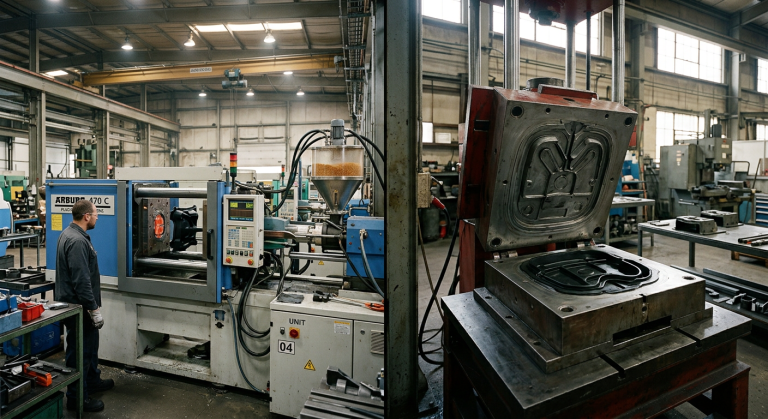
In compression molding, a pre-measured slug of uncured rubber (called a preform) is placed directly into an open mold cavity. The mold closes, heat and pressure cure the rubber, and excess material squeezes out as flash. It's a simple, almost brute-force process — which is exactly why it's been the go-to method for decades on large or thick-walled parts.
In injection molding, uncured rubber is heated to a flowable state and injected under pressure through a runner system into a closed mold. The mold stays shut the entire cycle, so there's far less flash and much more control over how the material fills tight corners and thin walls.
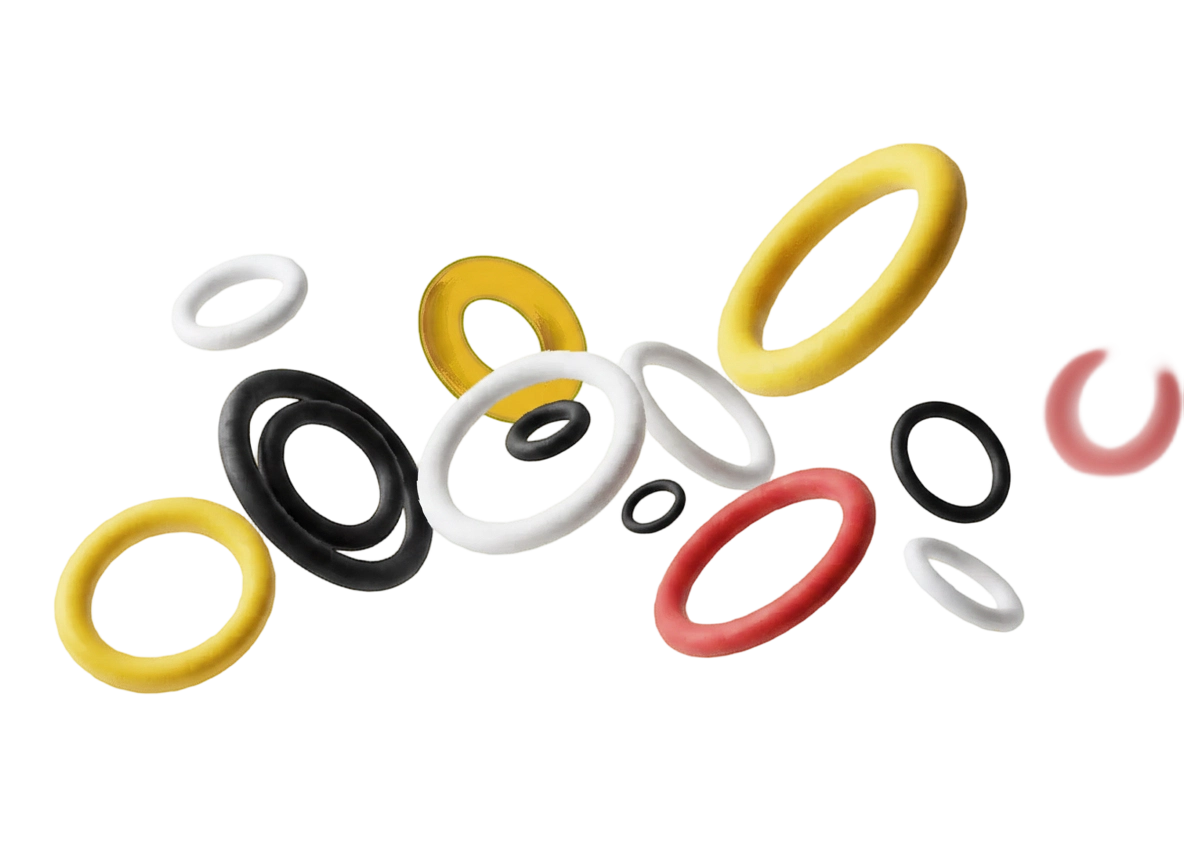
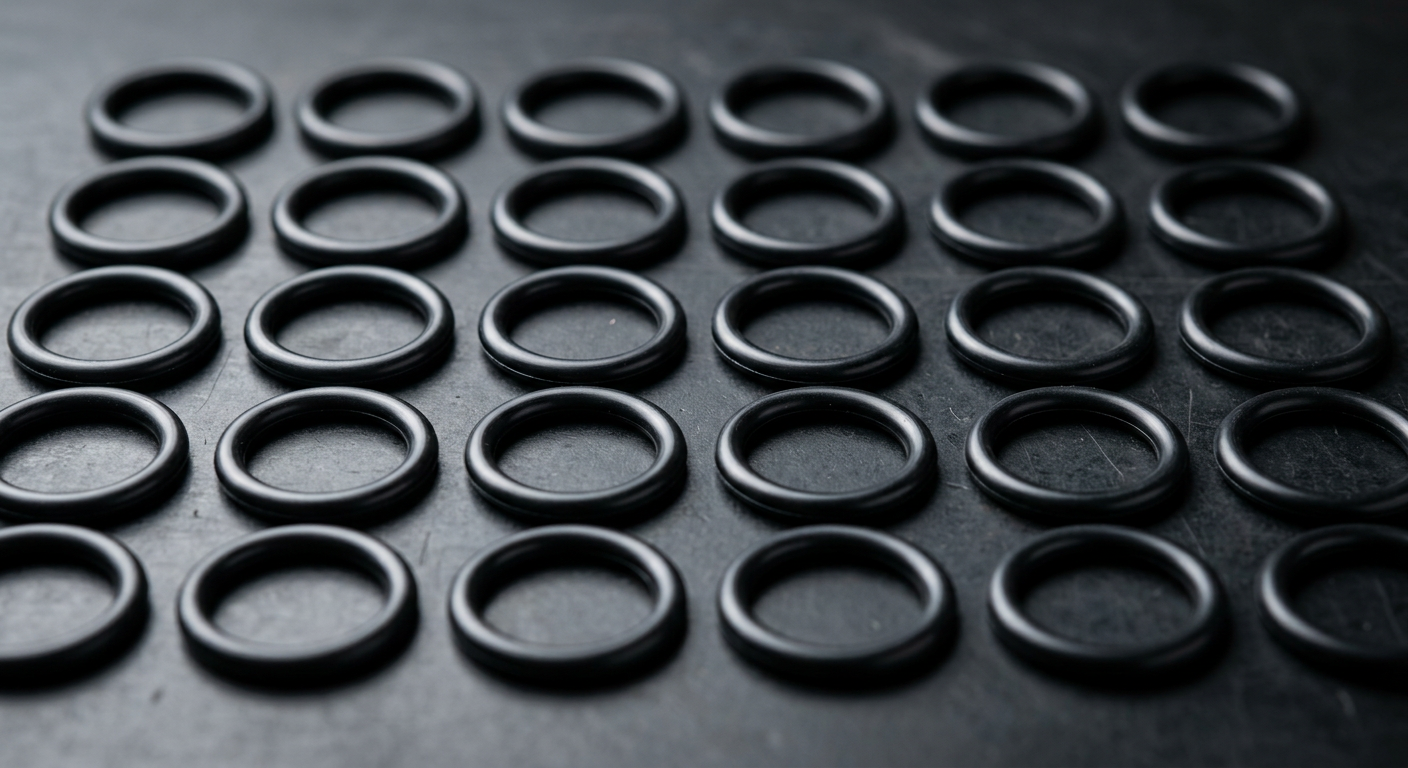
For precision components like O-rings and custom seals, that closed-mold injection process translates directly into better sealing performance — less flash means less post-processing variability, and tighter fill control means fewer voids. If you've ever dealt with premature seal failure, inconsistent molding is often a hidden contributor — worth reviewing our breakdown on why rubber O-rings keep failing.
Here's the part most buyers get wrong: they compare tooling cost alone and assume compression molding is always cheaper. It's not that simple once you factor in labor and scrap.
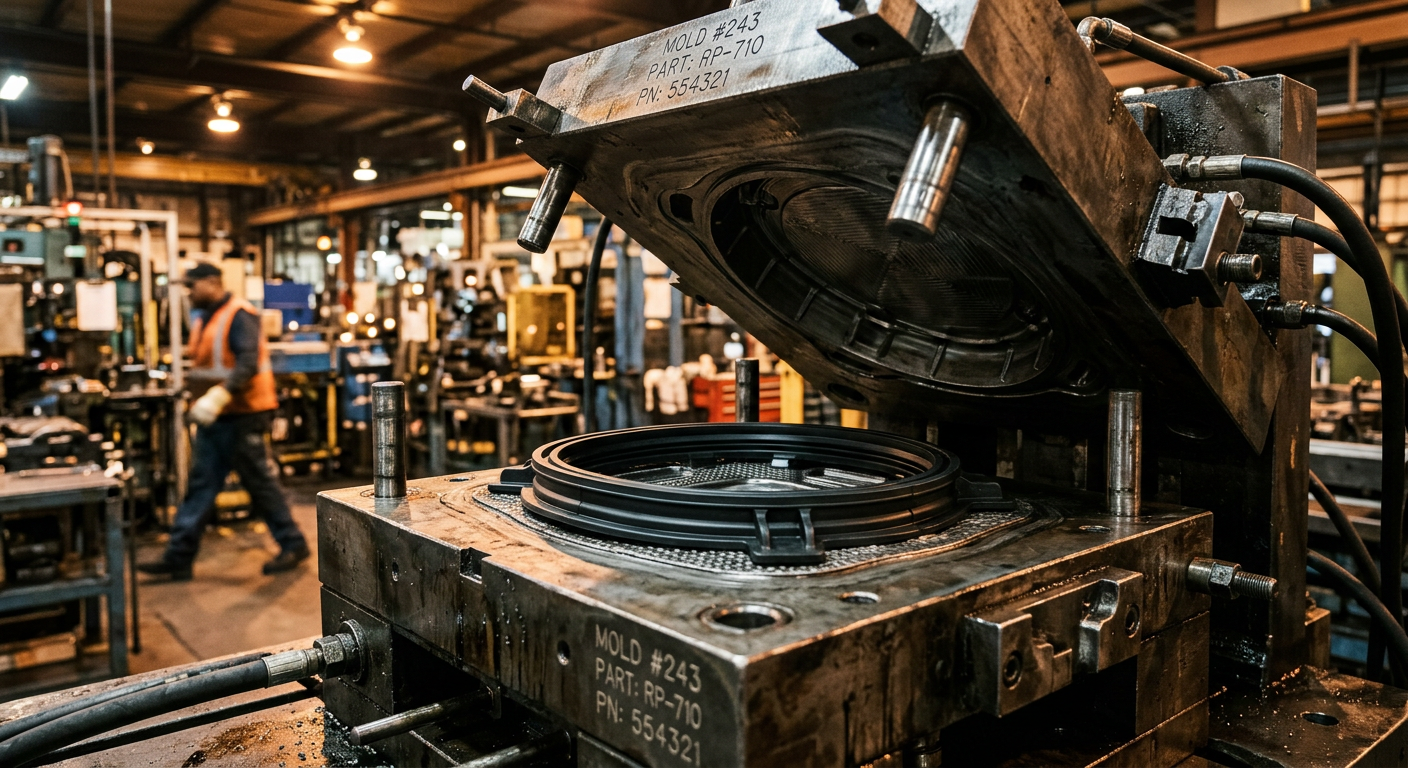
Compression tooling is simpler to machine — fewer moving parts, no runner system — so mold cost can run 30-50% lower than an equivalent injection mold. But compression molding is more labor-intensive per part. Someone has to weigh and place preforms, and deflashing is often a manual or secondary operation. At low volumes, that labor cost is negligible. At 20,000 pieces, it adds up fast.
Injection molding flips the equation. The mold costs more upfront because it needs a runner system, sprue bushing, and often more precise cavity machining. But once it's running, cycle times are short and the process needs minimal operator intervention. The break-even point between the two processes typically falls somewhere between 3,000 and 8,000 pieces, depending on part size and complexity.
A hydraulic equipment manufacturer we worked with needed 15,000 NBR seals per year for a valve assembly. Compression molding would have meant a cheaper $2,800 tool but higher per-unit labor and inconsistent flash trimming across batches. We quoted injection molding at $6,500 tooling — and the customer broke even on the higher tooling cost within the first production run, then saved on unit cost every year after.
Not every rubber part needs aerospace-grade tolerances — but if yours does, compression molding will frustrate you. The open-mold, flash-based process introduces variability that's hard to eliminate even with tight process control.
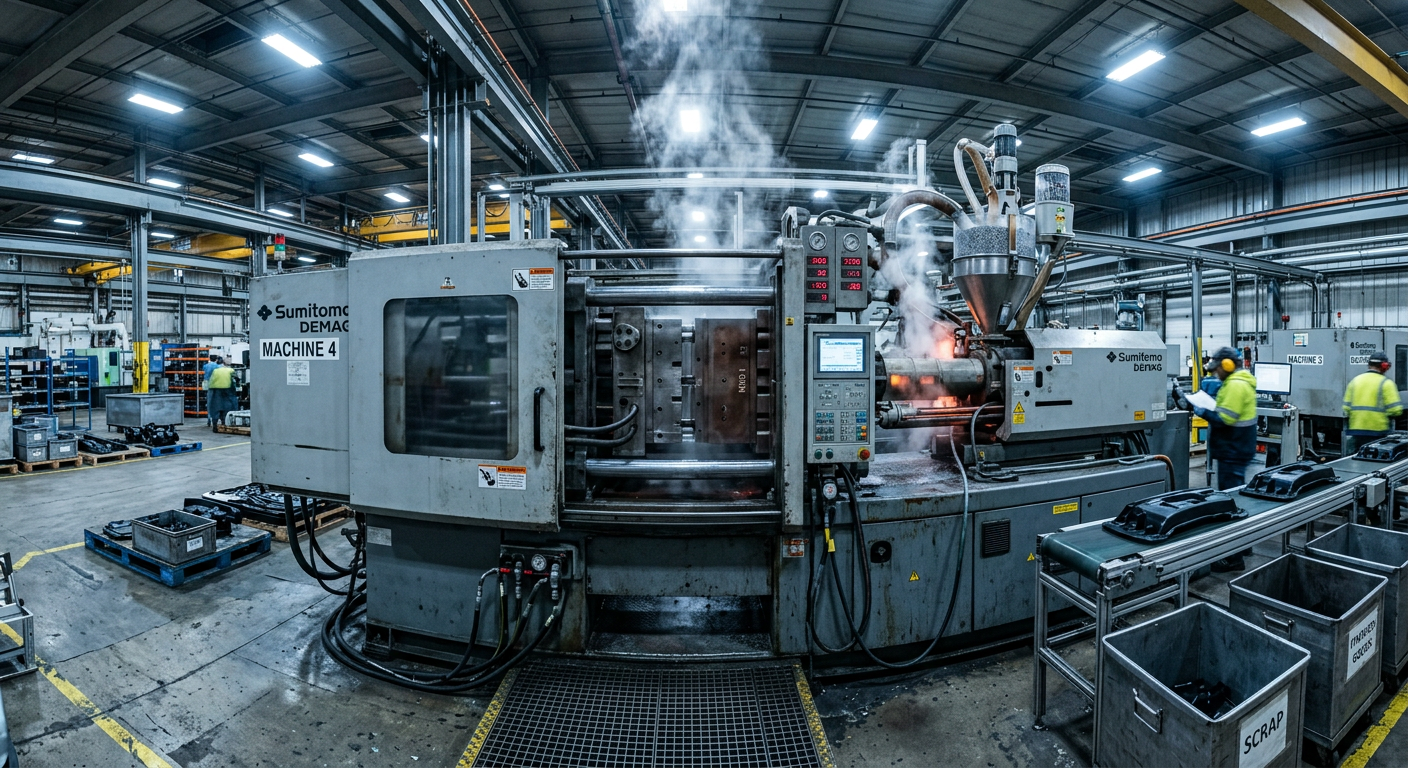
Injection molding typically holds tolerances around ±0.05mm to ±0.1mm on critical dimensions. Compression molding is more commonly ±0.1mm to ±0.3mm, and can drift wider on larger parts due to shrinkage variation across the mold.
Where this actually matters: dynamic seals, precision O-rings, and any part mating with a machined metal surface where clearance is critical. Where it doesn't matter as much: large flat gaskets, thick diaphragms, or bushings where a bit of dimensional variance won't affect function.
If your part has a tolerance callout tighter than ±0.15mm on any critical feature, lean toward injection molding. If your drawing tolerances are generous — common for gaskets and large industrial seals — compression molding can meet spec without a premium.
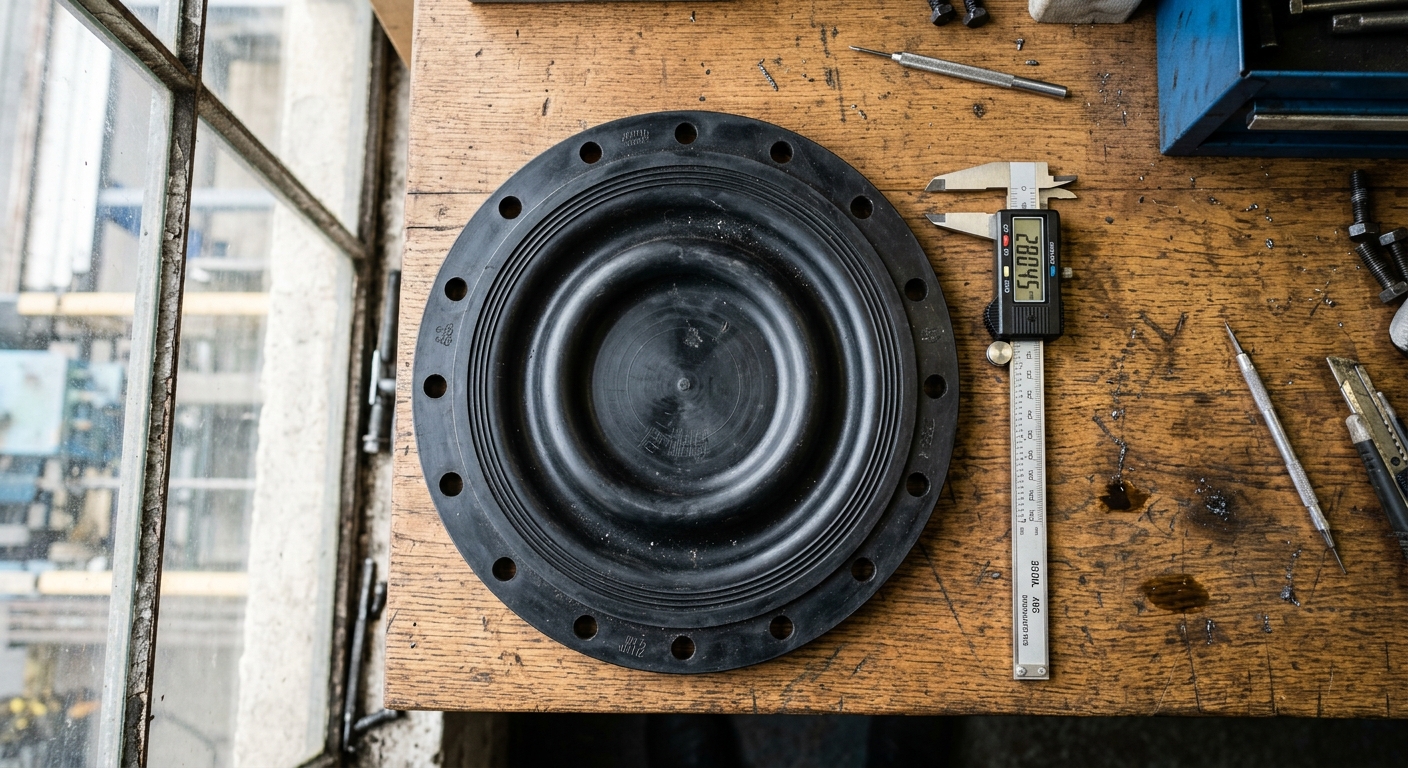
Bigger isn't always better for injection molding — in fact, for large or thick rubber parts, injection molding can actually work against you. Long flow paths mean the rubber can partially cure before it fills the cavity, leading to short shots or uneven density.
Compression molding handles large, thick-walled, or simple-geometry parts more gracefully because the material is already distributed across the cavity before pressure is applied — there's no long flow distance to worry about.
Common parts where compression molding is the practical choice:
If your part falls into one of these categories, don't force it into injection tooling just because it feels like the “more advanced” process. It isn't always the right fit.
Both processes work with the full range of common sealing elastomers — NBR, EPDM, silicone, FKM/Viton, neoprene, HNBR, and FFKM — but flow behavior varies by compound, and that affects which process suits which material.
Silicone, for example, has excellent flow characteristics and is commonly injection molded even for fairly complex geometries. FKM and FFKM compounds, being stiffer and more expensive, are often compression or transfer molded for lower-volume runs to avoid wasting costly material in runner systems — injection molding runners create scrap that isn't always reclaimable, and at $150+/kg for FFKM, that waste matters.
EPDM and neoprene are flexible enough for either process, so the decision usually comes down to volume and tolerance rather than material limitation.
If you're molding high-value fluoroelastomers in small batches, ask your manufacturer about compression or transfer molding options before defaulting to injection — it can meaningfully reduce material cost per part.
Tooling lead time is often the real bottleneck, not the molding process itself. Injection molds take longer to design and machine because of the runner and gate system — typically 3-5 weeks versus 2-3 weeks for a comparable compression mold.
But once tooling is done, injection molding production runs faster per part, which can offset the longer tooling lead time on larger orders. For urgent, one-off, or bridge-production needs, compression molding (or even a hybrid transfer molding approach) can get you parts faster when tooling speed matters more than long-term unit economics.
When you're working with an engineering team early in the project, flagging your real deadline upfront lets them recommend the process that fits your timeline — not just the one that looks best on paper.
Flash removal is where quality control quietly breaks down on compression-molded parts. If deflashing is done by hand or with cryogenic tumbling that isn't well-calibrated, you'll see inconsistency between batches — nicked edges, uneven parting lines, even micro-tears near critical sealing surfaces.
Injection molding, by contrast, produces near-net-shape parts straight out of the mold, so there's less room for human error introduced at the trimming stage. That said, injection molding has its own risk points — gate marks and weld lines can create weak spots if the mold design isn't optimized.
Ask any supplier — including us — how they inspect for these specific defects, not just general dimensional checks. A reliable partner should be able to walk you through their inspection process for whichever molding method your part requires.

Our engineering team reviews your specs and responds within 24 hours with material recommendations and competitive pricing.