There is no single correct rubber gasket thickness: the right number depends on flange flatness, bolt load, and how much compression the material needs to seal reliably. Every gasket material has a compression range where it seals well without extruding or taking a permanent set, and that range is part of the manufacturer's spec sheet, not a guess. Pick thickness and hardness together, then confirm the manufacturing method can hold the tolerance your application needs. Specify thickness without checking those three variables and you're essentially guessing, which is how leaks and extrusion failures end up on a warranty claim six months later.
Key takeaways
Grab a thickness number off a supplier's standard size chart and you've skipped the part of the job that actually matters. Thickness controls how much material is physically available to flow into surface imperfections and fill the microscopic gaps on a flange face. Too little material, and the gasket simply can't bridge those irregularities no matter how hard you torque the bolts.
Go too thick in the other direction and you get a different problem: the gasket compresses unevenly across its surface, and under pressure it risks extrusion or blow-out because the compression ratio drifts outside the safe window for that material. Thickness, hardness, and material aren't three separate line items on a spec sheet. They're one system. Change one and the other two need to shift with it, which is exactly why a “standard” thickness pulled from a catalog so often fails in the field.
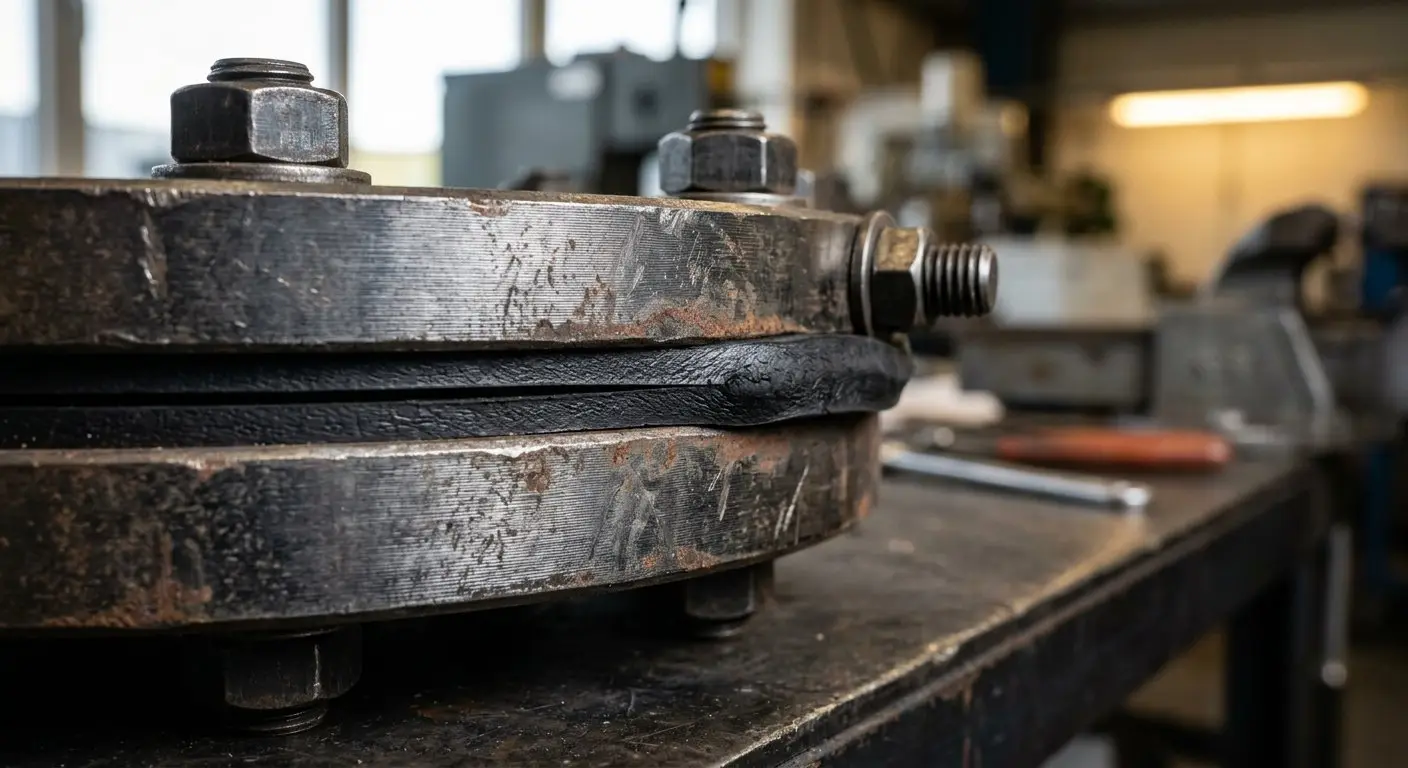
Common commercial sheet gasket stock runs roughly 1/16 in to 1/8 in (about 1.5mm to 3mm), with thinner options down to fractions of a millimeter and thicker slabs available for specialty jobs. That's a reasonable starting menu if you're buying a generic flat gasket for a low-pressure cover plate.
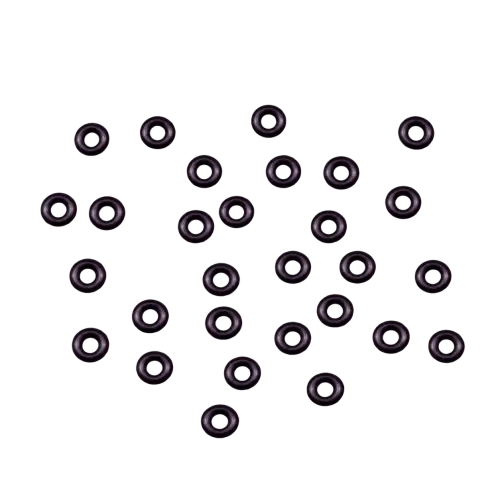
But molded gaskets and O-ring cross-sections follow entirely different sizing logic than die-cut sheet material; an O-ring's cross-section is dictated by gland geometry, not by a thickness chart at all. Treat published thickness ranges as a shortlist to start from, not a finished spec. The real answer to “what thickness should I use” always comes back to your flange condition, your bolt load, and your pressure, which is covered in the next section.
Before you write a thickness number on a drawing, you need two pieces of information: how flat the flange actually is, and how much clamping force you can realistically generate. Skip this step and you're specifying blind.
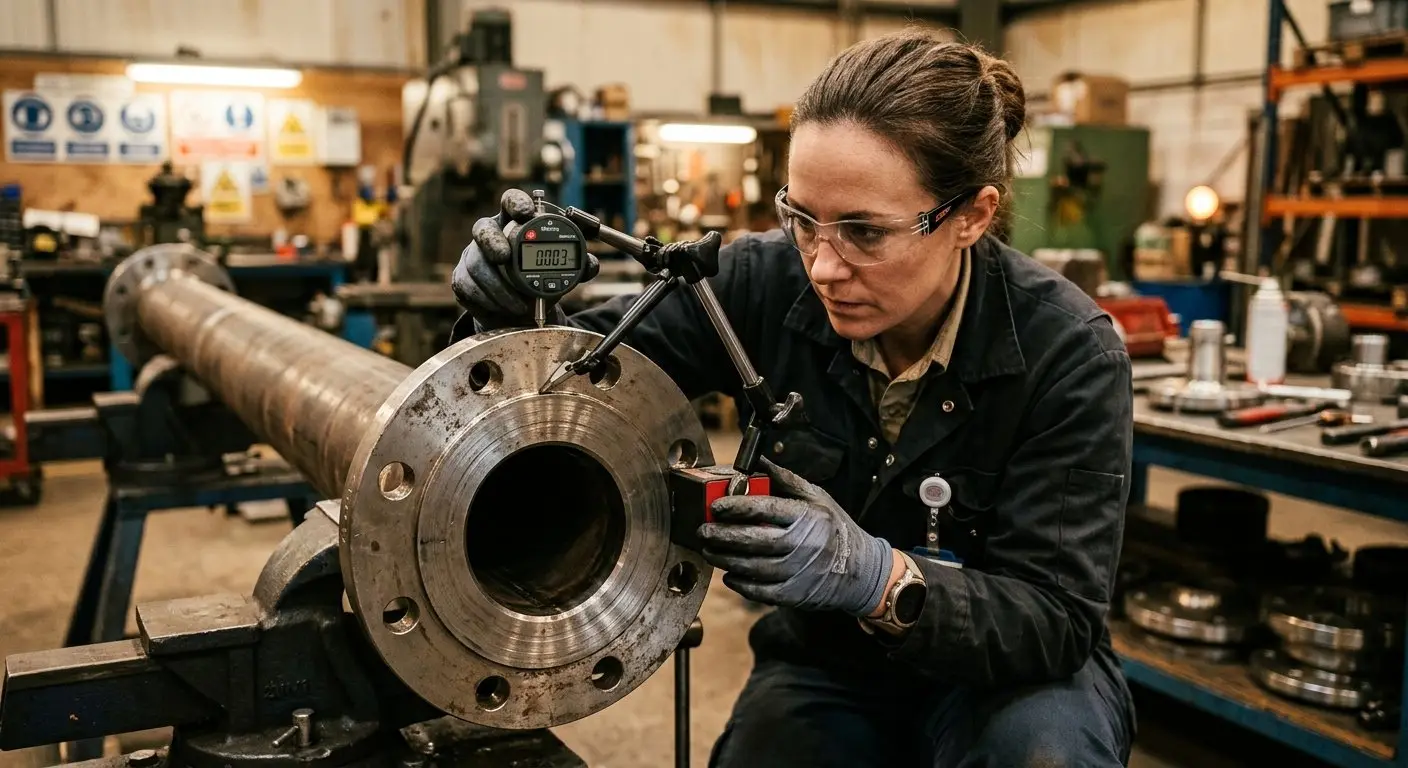
Both extremes fail, just on different timelines. A gasket that's too thin doesn't have enough material to bridge surface defects on the flange, and under pressure it's more likely to get squeezed out of the joint entirely, a failure mode known as extrusion. Thin gaskets also leave less margin if the flange shifts or vibrates in service.
A gasket that's too thick creates the opposite set of problems. It's harder to compress uniformly across the whole sealing surface, so some areas end up over-squeezed while others barely seal. Thicker material also experiences more compression set over time, meaning it loses its ability to spring back and eventually opens a leak path. On top of that, thicker gaskets need more bolt torque to hit the same percentage compression, which can overload lighter flanges or plastic housings that weren't designed for that clamping force.
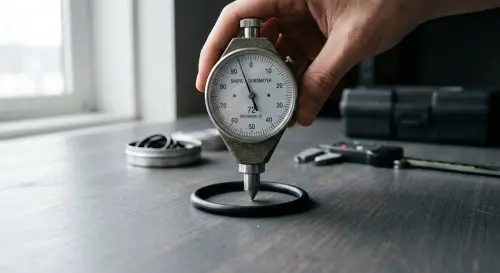
A 70 Shore A EPDM gasket at 3mm behaves nothing like a 50 Shore A silicone gasket at the same 3mm thickness under identical bolt load. The softer compound compresses more easily and seals low-pressure gaps well, but it may extrude sooner once pressure climbs. The harder compound resists extrusion better but needs a flatter flange to make full contact.
As a rule, softer, lower-hardness compounds pair with slightly greater thickness to generate adequate sealing force without overstressing the flange. Harder compounds can often run thinner because they resist extrusion, but that only works if the flange is flat enough to seal without the extra material bridging gaps.
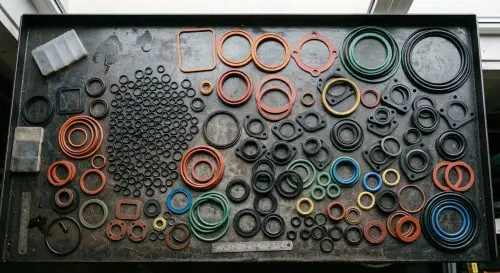
Temperature resistance belongs to the material, not the thickness. Hongjie's compounds are rated from –60°C to +325°C depending on which material you select, across NBR, EPDM, FKM, HNBR, Silicone, Fluorosilicone, Neoprene, SBR, ACM, and AEM compounds. Pick the material for the temperature and chemical exposure first, then size the thickness around that choice, not the other way around.
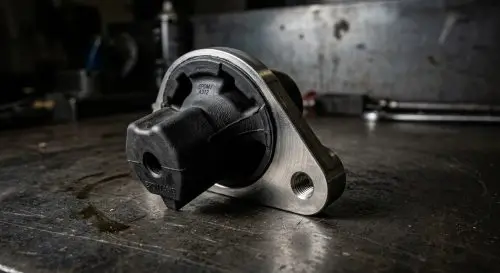
Nobody talks about this and it's often where the real leak problem comes from. Die-cut gaskets inherit whatever thickness tolerance the raw sheet stock had, and that tolerance is usually loose and inconsistent across a single roll, let alone between batches. Compression and injection molding form the part in a precision cavity instead of cutting it from stock, which gives you much tighter and more repeatable thickness control.
That difference matters most on pressure-critical joints, medical devices, or compact electronic housings where a few hundredths of a millimeter can shift the compression ratio enough to change whether the IP rating actually holds. Precision molding can deliver tolerances down to ±0.02mm, which is the kind of margin you need when the flange gap and bolt load leave almost no room for error.
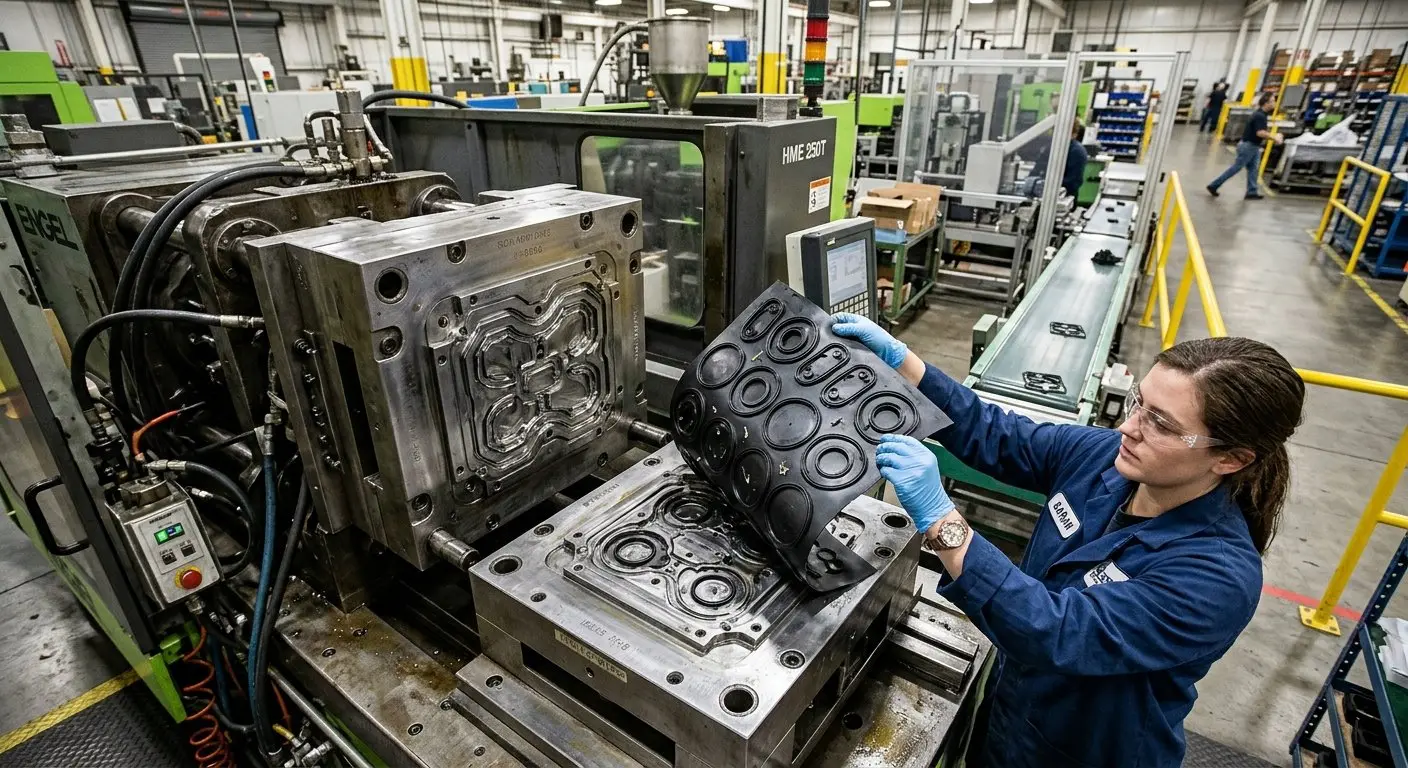
Theory is fine, but here's how it actually plays out across the industries that buy these parts most:
A gasket that seals perfectly on installation day can still fail down the road, and thickness is often the hidden reason. Compression set is the permanent loss of a gasket's ability to spring back after sustained clamping, and thicker gaskets along with higher operating temperatures generally accelerate it.
If the thickness and compression ratio were pushed toward the edge of the safe range at the start, thermal cycling in service can be enough to open a leak path that wasn't there during initial pressure testing. Chemical exposure makes it worse: a compound that swells or softens on contact with a process fluid changes its effective compression behavior over time, which is why Hongjie tests chemical compatibility against 500+ fluids, gases, and chemicals before recommending a material for a given application. Choosing material and thickness together with some margin below the maximum safe compression ratio gives longer service life than chasing the thinnest spec that technically passes an initial leak test.
Here's a repeatable sequence you can run through before a drawing or RFQ goes out the door:
If you'd rather not run that worksheet alone, Hongjie's engineering team offers a 24-hour evaluation on custom-molding specs, with functional prototypes available in as little as 3-5 business days and standard prototypes in 5-7 days. Production runs get 100% inspection on critical dimensions, with AQL 1.0, 0.65, 0.15, or C=0 inspection options depending on how tight your tolerance needs to be. If your current thickness spec is causing leaks or extrusion, it's worth reviewing related failure patterns in common O-ring failure root causes or checking how gland geometry interacts with squeeze in the O-ring gland design guide, since the compression logic overlaps closely with flat gasket sizing.

There isn't one universal standard. Common sheet gasket stock runs roughly 1.5mm to 3mm (1/16 in to 1/8 in), but the right thickness for your application depends on flange flatness, bolt load, and the material's safe compression ratio, not a fixed catalog number.
Silicone is a type of rubber (VMQ), so the real comparison is between specific compounds. Silicone handles wider temperature swings and is common in medical and food contact uses, while NBR, EPDM, or FKM may suit oil, weather, or chemical exposure better depending on the application.
ASTM publishes several standards relevant to rubber gaskets, including material classification and testing methods for hardness, compression set, and fluid resistance. Check the current ASTM standard applicable to your material and application, since specific standard numbers and requirements can be updated over time.
Standard sizes vary by gasket type: flat sheet gaskets typically range from about 1.5mm to 3mm thick, while O-ring cross-sections follow gland dimensions rather than a thickness chart. Molded gaskets are often sized to the specific flange, housing, or compression stop rather than a generic standard.


Our engineering team reviews your specs and responds within 24 hours with material recommendations and competitive pricing.