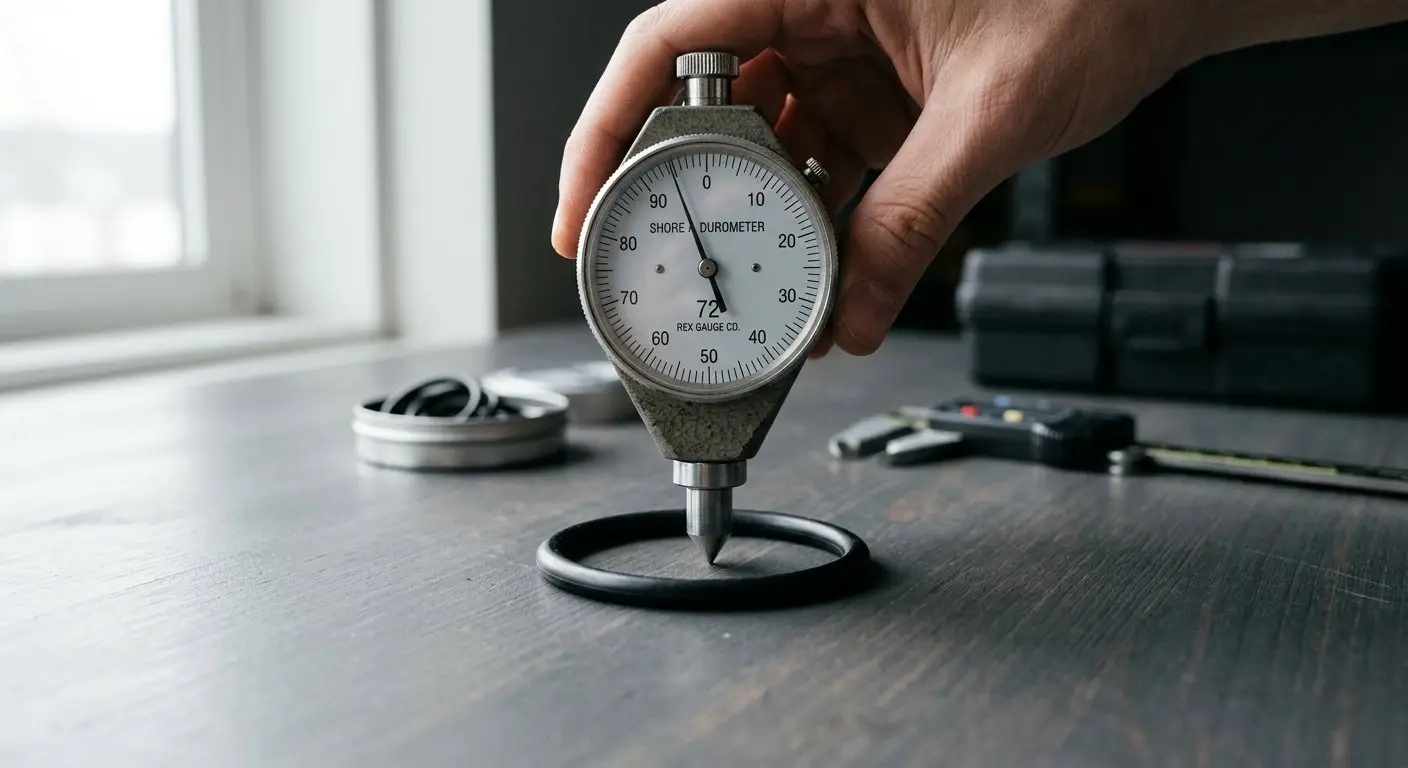
Shore A hardness measures how much a rubber compound resists indentation on a 0-100 durometer scale, with most sealing applications falling between 50 and 90 Shore A. A lower number means a softer, more conformable seal; a higher number means a firmer seal that resists extrusion and wear. The right value always depends on the material, the gland design, and the operating pressure, not the number alone.
Key takeaways
Shore A is read with a durometer: a spring-loaded indenter pressed into the rubber surface for a few seconds, giving a reading on a scale from 0 (very soft) to 100 (very hard). That's it. It's a surface indentation test, nothing more. It tells you nothing directly about tensile strength, elasticity, chemical resistance, or how long the part will last in service.
Most sealing-grade elastomers used in O-rings and gaskets sit between 40A and 90A. Below 20A, the material behaves more like a gel than a usable seal. Above 95A, it starts acting closer to a hard plastic, losing the elastic recovery that makes rubber useful as a seal in the first place.
Shore D is a separate scale built for harder materials: hard plastics, some rigid polyurethanes, and compounds that would barely register meaningful variation on the A scale. If a rubber sample reads near 90A and still feels too soft for your application, the fix usually isn't pushing toward 95A or 99A. It's reconsidering whether you need a D-scale material or a completely different polymer altogether.
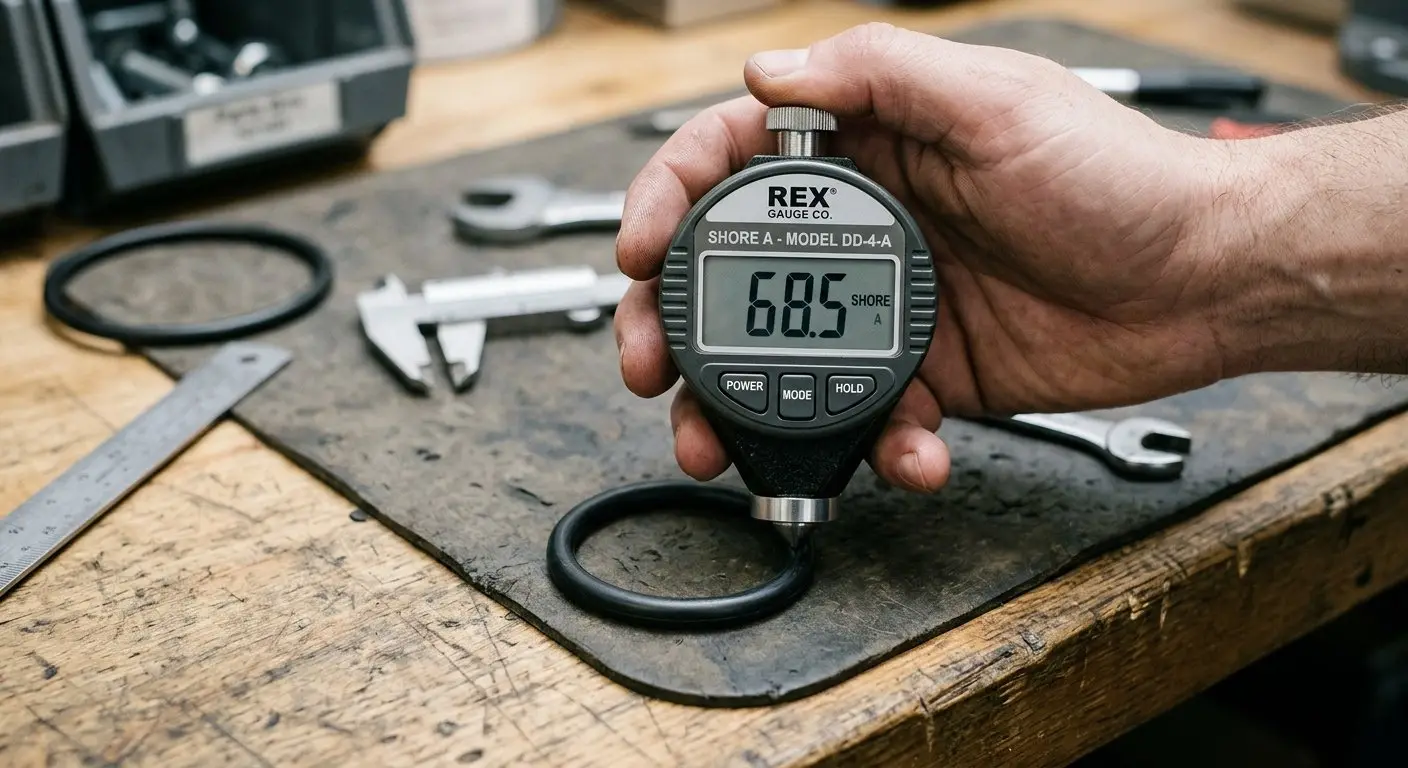
Shore D is harder, by design, because it's a different measurement scale rather than a higher number on the same scale as Shore A. A material rated 90A sits near the top of what the A scale can meaningfully measure, but it's still softer than even a low Shore D reading on a D-scale material.
This distinction trips up a lot of buyers. Someone specifies '95A' thinking they're asking for an extremely hard rubber, when what the application actually needs is a Shore D material like a rigid polyurethane or a thermoplastic. The result: parts that still deform under load because the spec never left the A scale when it should have. If your application needs near-rigid performance, say so explicitly and ask whether Shore D is the more appropriate scale, don't just keep climbing the A scale.
Datasheet numbers mean little until you've felt them. Here's a quick reference you can use with your thumbnail or a sample part before committing to full qualification.
Use this as a sanity check whenever a sample arrives. If a part specified at 70A feels closer to the 90A description in your hand, something went wrong in the batch, and it's worth flagging before it goes into a test rig, let alone production.
This is the part most listings skip entirely. Hardness isn't a cosmetic spec, it's a starting point for matching a seal to its job. Here's a practical breakdown.
If you're sourcing a custom O-ring or gasket and aren't sure where your application falls, the custom O-rings and rubber seals catalog is a reasonable place to see how these ranges map to standard profiles before committing to a one-off geometry.
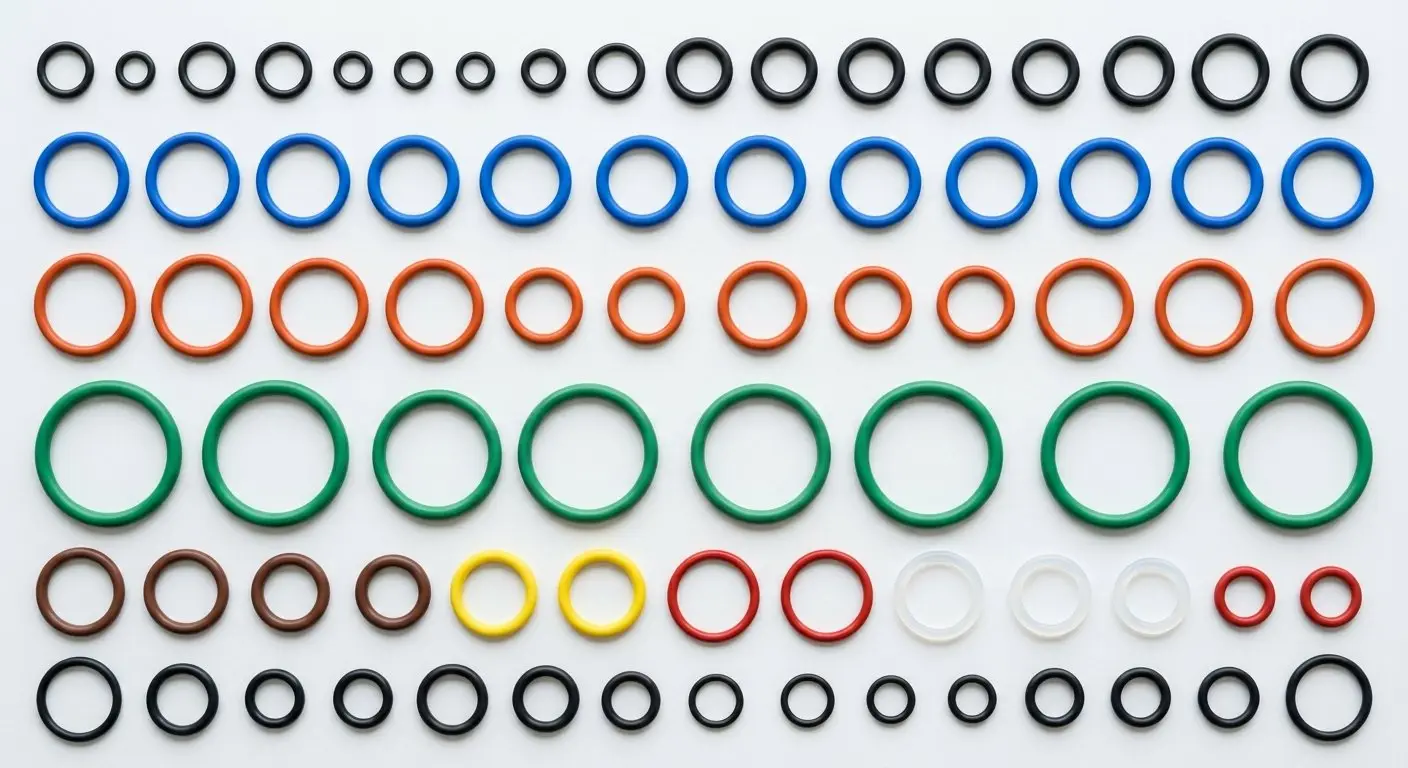
Here's where hardness-only thinking falls apart. Two seals can both read 70 Shore A on a durometer and behave completely differently in service, because the number says nothing about the polymer chemistry underneath it.
The takeaway: the Shore A number tells you nothing about chemical compatibility or temperature range. Treat it as one spec among several, never the whole spec. Hongjie molds across NBR, FKM, EPDM, FFKM, HNBR, silicone, fluorosilicone, neoprene, polyurethane, and more, with compounds rated from -60°C to +325°C and chemical compatibility testing run against 500+ fluids, gases, and chemicals, which is exactly the kind of cross-check a hardness number alone can't give you.
Picking the hardest available compound isn't automatically the safer choice, and this is where a lot of specs go wrong. Softer compounds conform to surface imperfections better, which is why a lower-hardness seal often leaks less on a rough or slightly out-of-round flange than a harder one would.
Harder compounds resist extrusion into the gland gap under pressure, but they need more installation force, and if squeeze is miscalculated, they can take a permanent set into the wrong shape of groove. Compression set, the seal's failure to spring back after sustained squeeze, is a completely separate property from hardness. A soft compound with poor compression set can fail faster in service than a harder compound with good compression set, even though the softer one looked like the safer bet on paper. That's why hardness should be chosen based on pressure and surface finish first, with compression set and chemical resistance validated separately rather than assumed to track along with a single durometer number. For more on how seals fail when this gets missed, see why rubber O-rings keep failing.
Imagine a buyer who specs a 70A O-ring, gets it qualified, then swaps it into a new housing with a slightly deeper groove and starts seeing leaks. The compound didn't change. The groove did, and hardness interacts with that groove in ways a standalone number never captures.
A softer O-ring needs a slightly tighter squeeze ratio to generate enough sealing force to hold against pressure. A harder one needs less squeeze but more installation force to seat it correctly. Groove fill percentage compounds this: a hard material at high gland fill risks hydraulic lock, where the seal has nowhere to go and transmits full pressure into the housing instead of sealing against it. A soft material at low fill risks extrusion, getting pushed out through the gap it's supposed to be sealing.
If a seal keeps failing at the same hardness spec across different housings, the groove dimensions, not the compound, are usually the real problem, which is why a hardness value only means something when it's read together with the groove drawing rather than listed alone on a purchase order. The O-ring gland design guide covers squeeze, stretch, and fill ratios in more depth if you're validating a new housing.
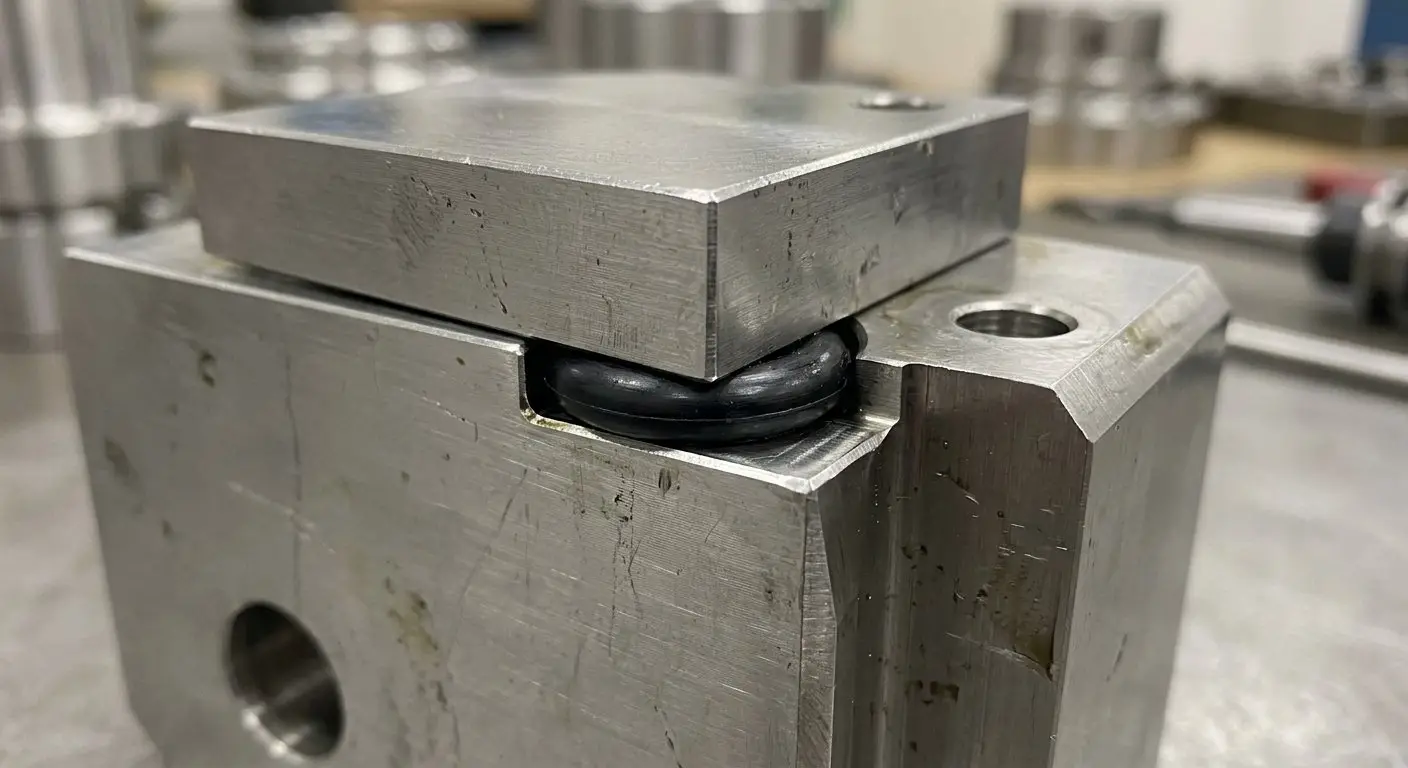
Molding tolerance on Shore A isn't fixed across the board, and most buyers never think about it until a batch starts behaving inconsistently. It varies by compound, by cure system, and by how tightly the molder controls their process. Tighter tolerance requires real compound-level process control, not just careful mixing.
Batch-to-batch hardness drift happens for mundane reasons: filler variation, cure time shifts, temperature inconsistency during molding. A part that tests fine on the first sample run can drift outside spec three production lots later if nobody is watching for it.
For critical sealing applications, ask the supplier how they control durometer consistency across production lots, not just on the first sample. Hongjie targets Cpk 1.33 process consistency and runs 100% inspection on critical dimensions, and can provide material documentation, dimensional inspection reports, control plans, sample records, and PPAP-related documents when qualifying a program. Request a hardness test report alongside dimensional and material certs whenever you're bringing on a new supplier, not just a certificate of conformance that says the part passed.
Writing '70A' on an RFQ and nothing else is how mismatched parts happen. Here's what to include instead.
Hongjie precision-molds FKM, FFKM, EPDM, and NBR, and offers a broader material range beyond those four for applications that call for it, so if you're still deciding between material families as well as hardness, that's a conversation worth having before the RFQ goes out, not after. Check the engineering support page for how spec review works, or just reach out directly through contact us with your gland drawings and application details.
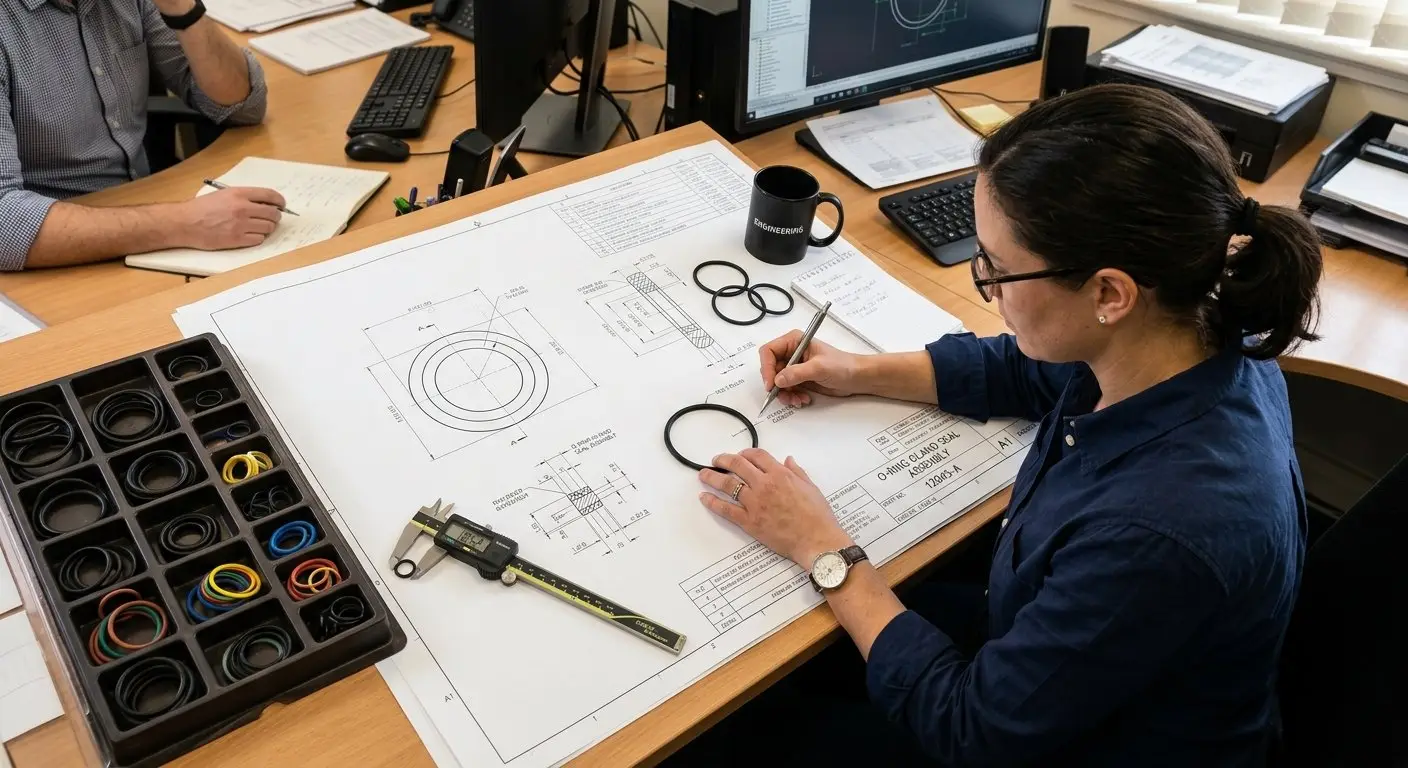
Shore D is a separate scale built for harder materials and isn't a continuation of Shore A. A material rated 90A is near the top of what the A scale measures but is still softer than a low Shore D reading, which is why specs near 95-99A sometimes signal the part actually needs a Shore D material instead.
Silicone (VMQ) seals are commonly molded in the 40-80 Shore A range, with 60-70A being typical for general sealing use. At a given hardness, silicone usually has lower tear strength and abrasion resistance than NBR or HNBR at the same number, so it's chosen more for its wide temperature range than for mechanical toughness.
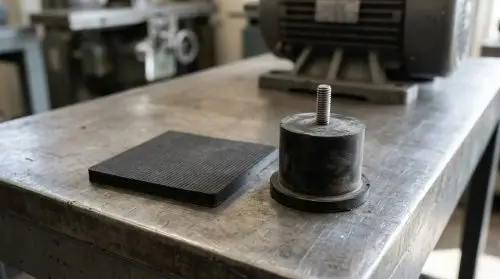
50 Shore A feels similar to a pencil eraser or a running shoe sole: soft enough to dent easily with a fingernail, but still clearly elastic rather than gel-like. It's a common choice for dynamic seals and vibration-damping parts that need flexibility over extrusion resistance.


Our engineering team reviews your specs and responds within 24 hours with material recommendations and competitive pricing.