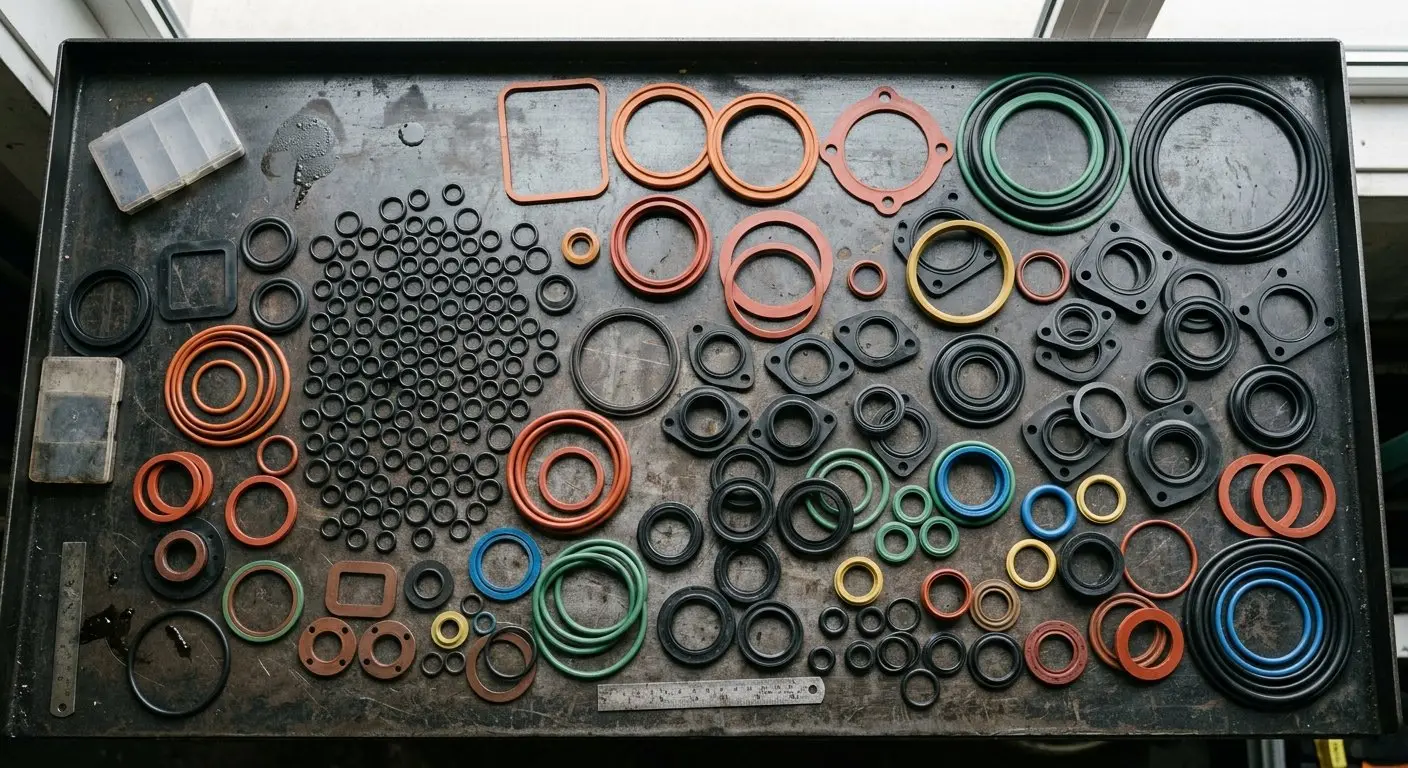
EPDM is the better default for water, steam, weathering, and ozone exposure, while silicone wins for extreme temperature range, medical or food contact, and electrical insulation. Neither is a universal upgrade over the other: the right choice depends on what fluids, temperatures, and mechanical loads the seal actually sees. Picking based on a general reputation for 'quality' rather than the actual service conditions is how gaskets end up swollen, torn, or leaking within months.
Key takeaways
Before you look at a single data point, hold this mental model: EPDM is a hydrocarbon-based elastomer built to shrug off water and weather. Silicone is a silicon-oxygen backbone built to shrug off heat and stay inert against biological material. They solve different problems, and that's the whole story in one sentence.
EPDM performs well against water, steam, ozone, UV light, and mild acids or bases. Where it struggles is anything petroleum-based: mineral oils, greases, fuels, and most solvents will swell and soften it fast. Silicone (VMQ) covers a genuinely wide temperature span and is biologically inert, which is why it dominates medical and food-contact parts. But it's mechanically softer: lower tear strength, lower abrasion resistance, and it doesn't like oils much either, just in a different way than EPDM does.
Both materials share one blind spot, and it trips up a lot of sourcing decisions: neither resists petroleum-based fluids well. If your seal sees hydraulic oil, diesel, or fuel vapor, you're not choosing between silicone and EPDM at all. You're looking at FKM or NBR instead. Keep that boundary in mind before you go further, because it eliminates half the debate immediately.
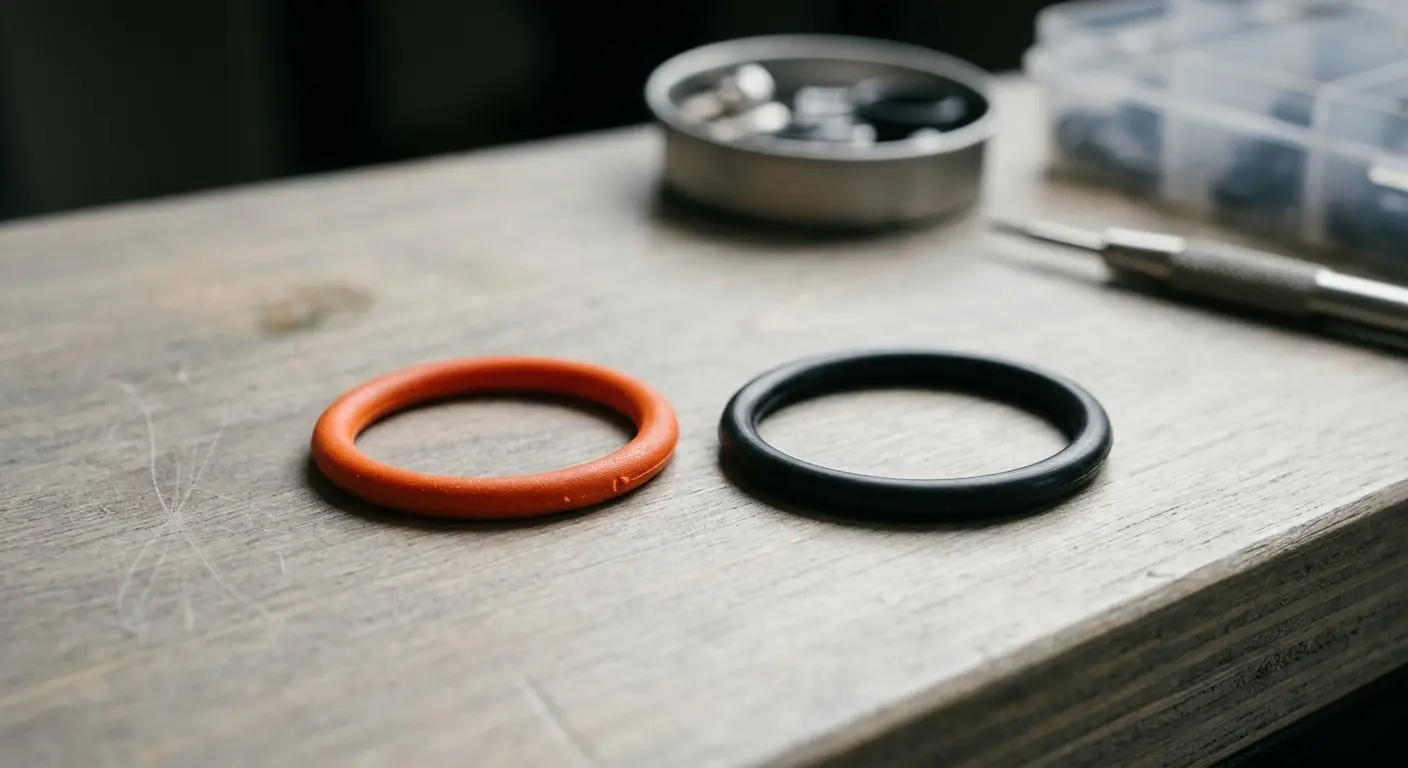
Chemical resistance is where silicone and EPDM part ways the fastest, so that's the column worth reading first. Here's the structured version most sourcing teams actually need before they email a supplier.
| Property | EPDM | Silicone (VMQ) |
|---|---|---|
| Chemical resistance | Strong vs water, steam, ozone; weak vs oils/solvents | Strong vs ozone, UV; weak vs oils, acids, abrasion |
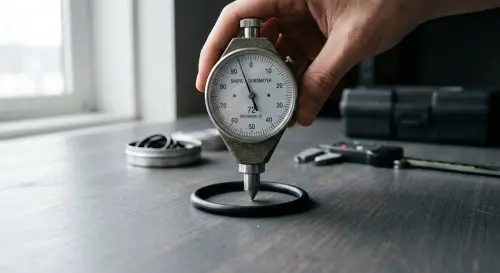
| Hardness (Shore A) | Available across a broad range, from soft sealing grades to firmer industrial compounds | Available across a broad range, typically softer and more flexible at the low end than comparable EPDM grades |
| Compression set | Generally better retention under sustained load | Can relax faster, depends on compound grade |
| Tensile/tear | Higher tear resistance | Lower, more prone to nicking on install |
| Compliance | Commonly used for potable water and outdoor applications where NSF or WRAS compliance is required | Commonly used for medical and food-contact parts where FDA or USP Class VI compliance is required |
Hongjie's compound portfolio overall is rated from -60°C to +325°C, which represents the outer envelope across the full range of materials Hongjie molds, including FKM, FFKM, EPDM, and NBR, rather than a figure specific to any single compound. For builds that need to meet FDA, NSF, WRAS, REACH, or RoHS requirements, material compliance is checked against the applicable standard for the target market, and Hongjie is WRAS Approved for UK and European water industry work. Resistance testing is run against 500+ fluids, gases, and chemicals before a compound gets recommended for a specific job, which matters more than any generic spec sheet.
EPDM wins outright when the seal faces outdoor weathering, ozone, steam, or potable water. Think roofing membranes, HVAC gaskets, plumbing fittings, outdoor electrical enclosure seals. Silicone wins when the seal needs to survive wide temperature swings, stay flexible at sub-zero temperatures, or stay biologically inert, which is why medical devices, infant products, and food-contact parts lean silicone almost by default.
Both materials share the same weak spot against petroleum-based fluids, as covered above, so that failure mode isn't a reason to pick one over the other. Asking 'which is better' without naming the fluid and the temperature is a bit like asking which shoe is better without saying whether you're running a marathon or swimming laps. In practice, the deciding factor is usually the single harshest condition the seal will see in its service life, whether that's a chemical splash, a sustained temperature spike, or a sterilization cycle, not the average operating condition.
Silicone and EPDM are chemically inert to each other. You can run a silicone gasket next to an EPDM part in the same housing and neither one degrades the other. That part isn't the real question most buyers are actually asking.
The real compatibility question is almost always about the fluid in the system, not whether the two rubbers tolerate sitting next to each other. If a spec calls for 'an EPDM equivalent,' the answer is rarely silicone. It's usually another EPDM compound at a different hardness, or a different elastomer entirely like NBR or HNBR, depending on what property actually needs to improve.
Imagine a buyer running a pump that sees mostly water but occasional oil contamination during maintenance cycles. That's a common reason this question comes up. The fix isn't mixing silicone and EPDM parts in the same assembly. It's usually switching to a single more chemically resistant material like HNBR or FKM that handles both conditions without compromise. Hongjie precision-molds across NBR, FKM, EPDM, Silicone, FFKM, HNBR, Fluorosilicone, Neoprene, SBR, Polyurethane, VAMAC, and XNBR, so a mixed-service problem usually has a single-material answer rather than a two-material workaround.
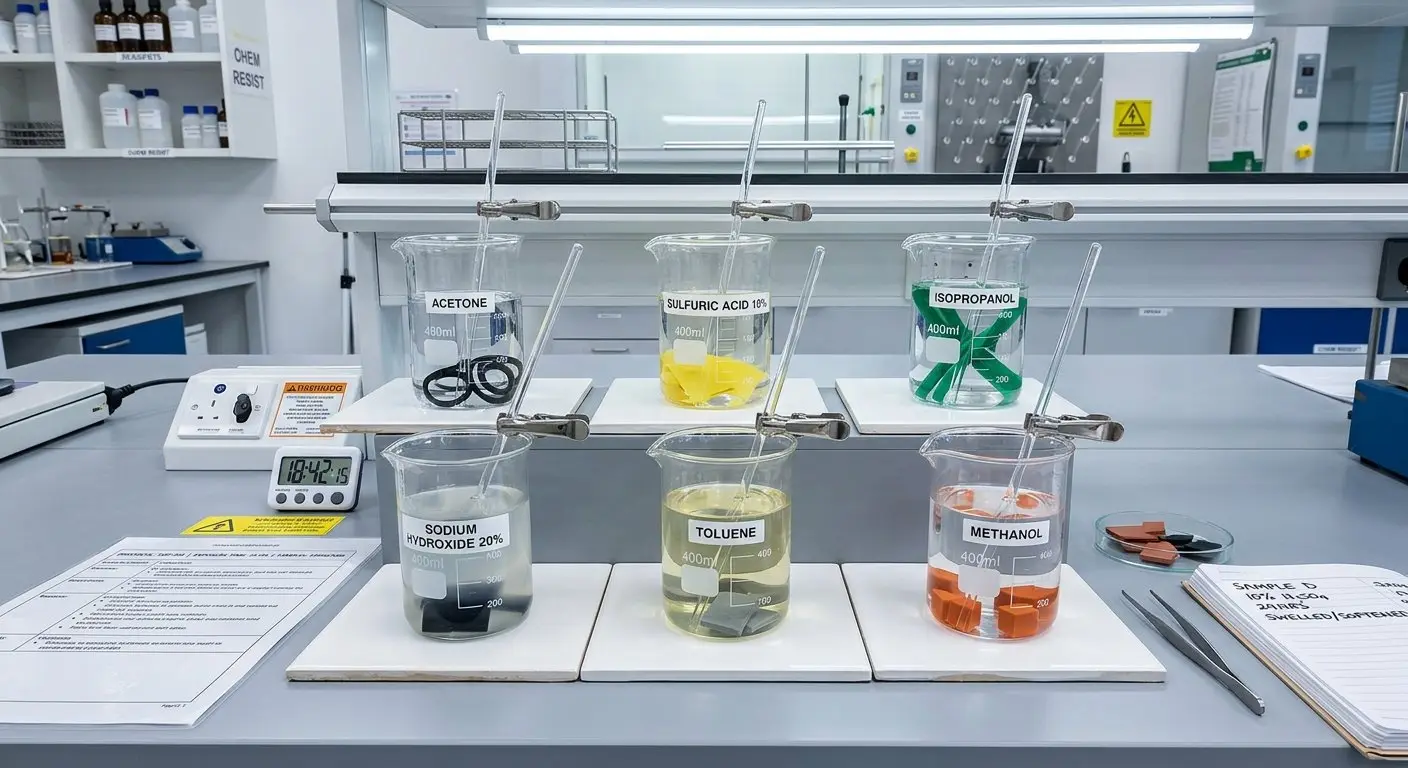
Hongjie serves these and other markets, including Aerospace, Hydraulic & Pneumatic, and Oil & Gas, across its full product range.
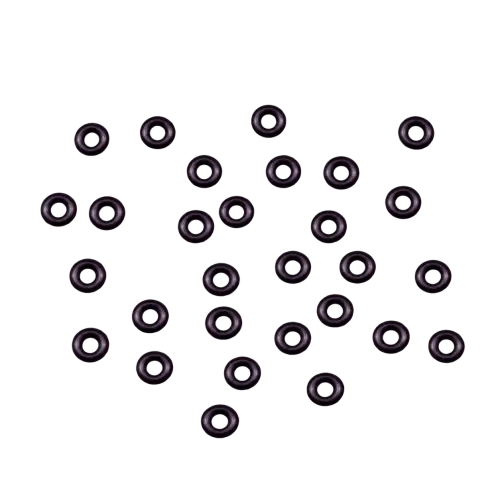
Material choice only tells half the story. A flat die-cut gasket tolerates silicone's lower tear strength far better than a thin O-ring cross-section does, where a single nick during installation becomes a leak path. That's why silicone O-rings in tight bores need more careful handling than silicone sheet gaskets do.
EPDM's better compression set makes it the safer pick for O-rings under sustained static compression over years, which is exactly the scenario in buried plumbing fittings or sealed enclosures nobody opens again. Molded profiles with sharp corners or thin ribs favor materials with higher tear strength, which is one reason some silicone designs end up with thicker cross-sections than an equivalent EPDM part would need.
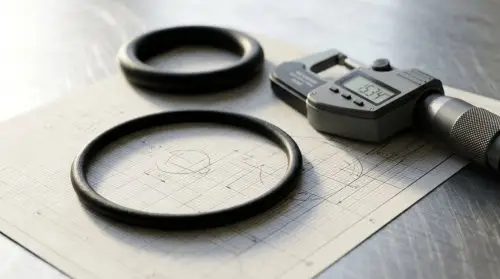
Hardness selection shifts with geometry too. Softer durometers conform better to rough or slightly out-of-round surfaces. Harder durometers hold dimensional stability in precision bores. If you're sizing an O-ring, Hongjie sizes per the AS 568A standard with both metric and inch ID and cross-section tolerances, which keeps the spec conversation consistent across suppliers. For a deeper look at how squeeze and gland fill interact with material choice, see the O-ring gland design guide, and if leaks keep showing up after install, check common O-ring failure root causes before blaming the material alone.
Silicone's lower green strength makes flash control and mold design slightly more demanding than EPDM, which can affect tooling cost on tight-tolerance parts. It's not a dealbreaker, but it's worth flagging before a quote gets finalized, not after the first tool is cut.
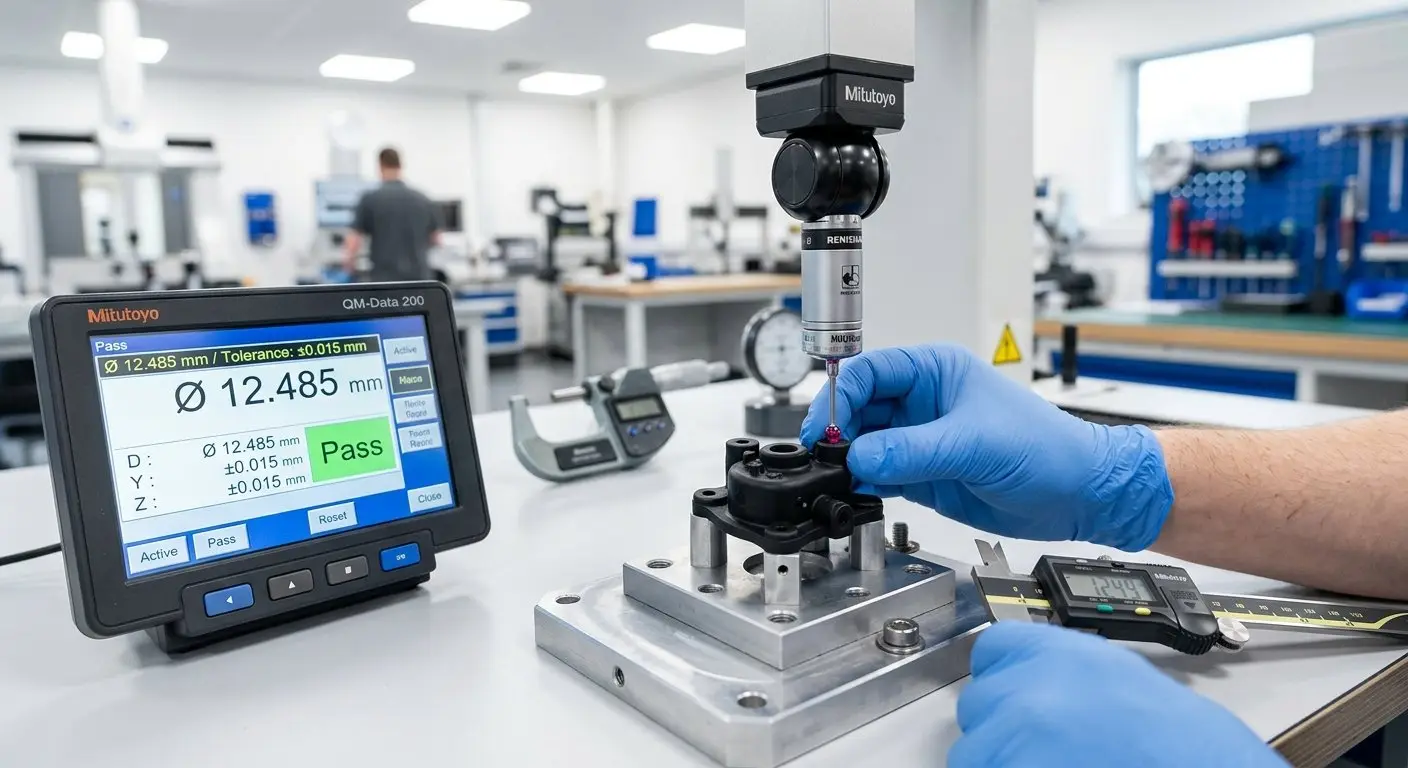
Tolerance capability depends on part size regardless of which material you pick. For parts in the 0-10mm range, standard dimensional tolerance runs ±0.10mm, with precision tolerance reaching ±0.02mm. For larger 50-100mm parts, standard tolerance is ±0.25mm, with precision tolerance down to ±0.10mm. Knowing these numbers before you spec a drawing saves a round of back-and-forth with engineering.
Both materials run on the same core molding processes, compression and injection, so switching from EPDM to silicone rarely means switching mold type. It can affect cycle time and cavity finish requirements though, especially on thin-wall parts. Quality control stays consistent regardless of material: 100% inspection on critical dimensions, statistical process control on every run, and Cpk 1.33 consistency maintained through SPC and Six Sigma methods. For teams exploring engineering support for custom molding, this is usually where material and tooling decisions get finalized together rather than in separate conversations.
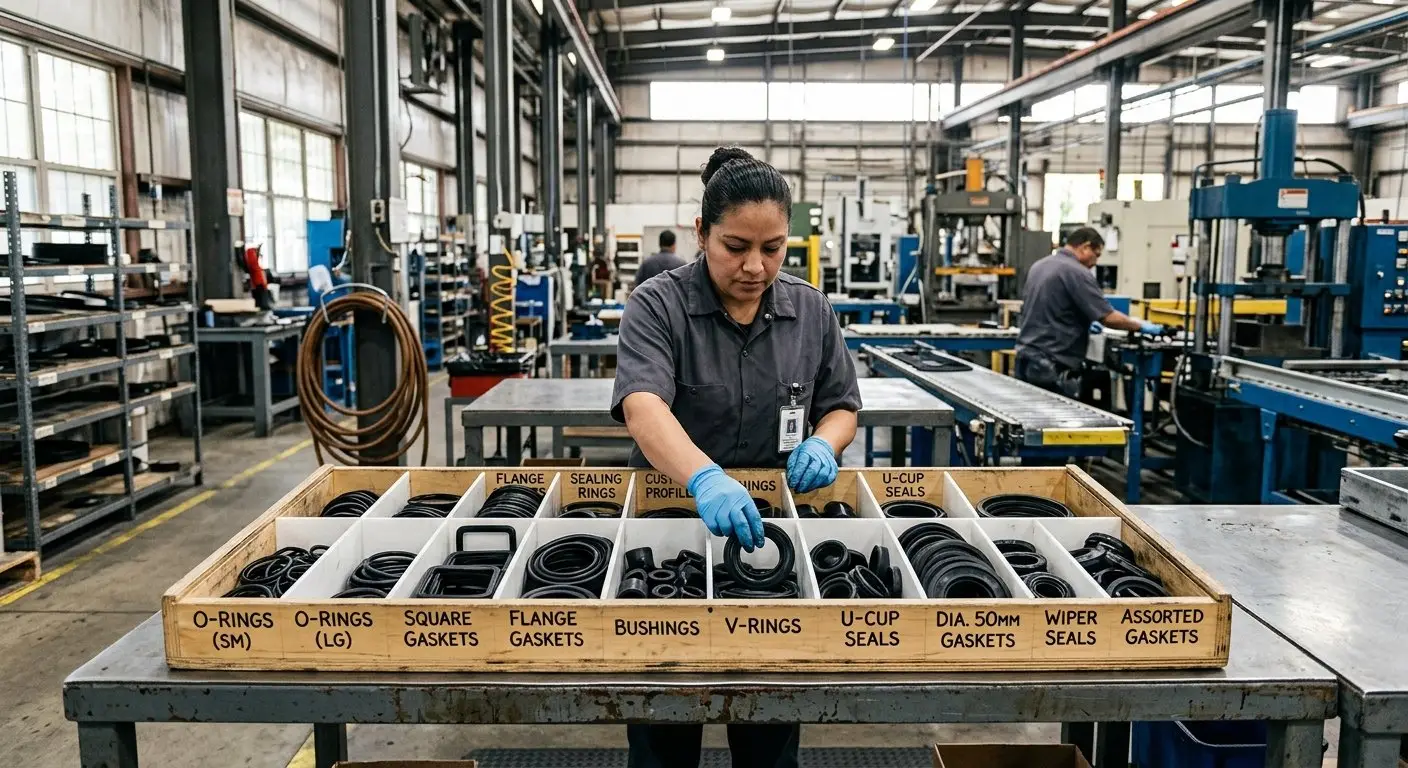
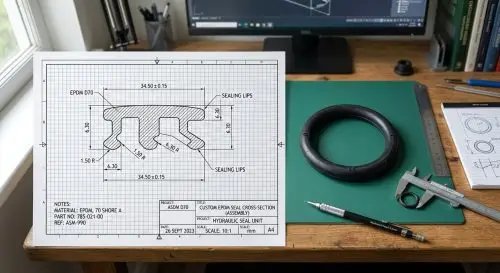
Hongjie's engineering team, with 25+ engineers and 20+ years of combined polymer expertise, responds within 24 hours with material recommendations and pricing, and offers a 24-hour evaluation window for custom-molding specification submissions. With access to 200+ proprietary rubber compounds, functional prototypes can be ready in as little as 3-5 business days, with standard prototypes in 5-7 days before any commitment to full production tooling. If you're still weighing the two materials, send the spec over through Hongjie's contact page and get a materials recommendation back before you commit to a mold.
Neither is universally better. EPDM is the stronger choice for water, steam, ozone, and outdoor weathering, while silicone is better for extreme temperature swings and biologically inert applications like medical or food contact. The right answer depends entirely on the fluids and temperatures the seal will actually face.
Yes, EPDM and silicone are chemically inert to each other and can sit in the same assembly without one degrading the other. The real concern in most designs isn't the two rubbers touching, it's whether the system fluid is compatible with each material individually.
An EPDM equivalent is rarely silicone. It's usually another EPDM compound at a different hardness, or a different elastomer like NBR or HNBR, chosen based on whichever property, oil resistance, temperature, or compression set, needs to improve for the application.


Our engineering team reviews your specs and responds within 24 hours with material recommendations and competitive pricing.