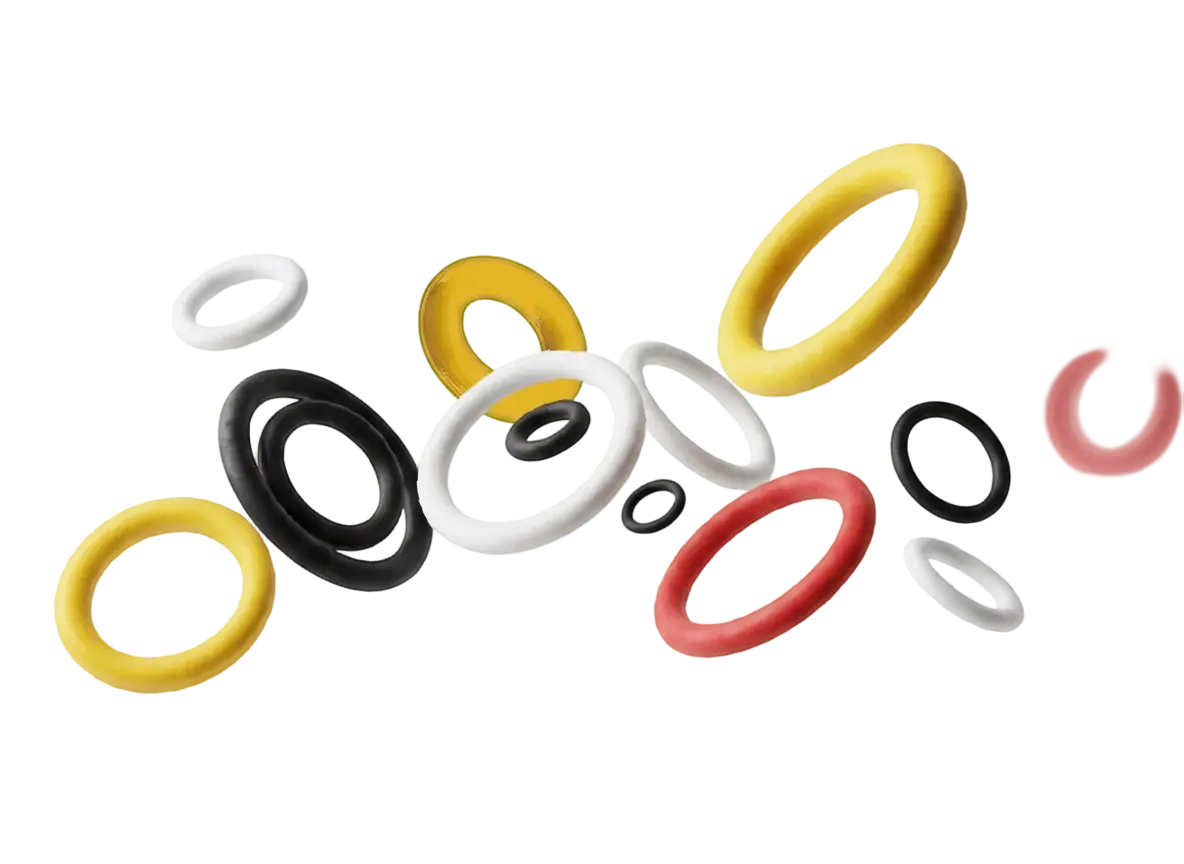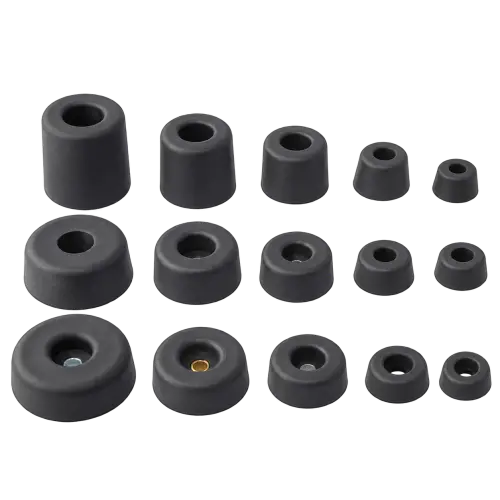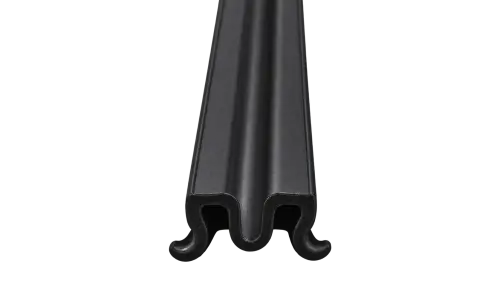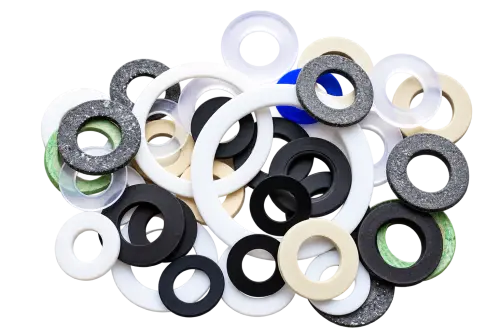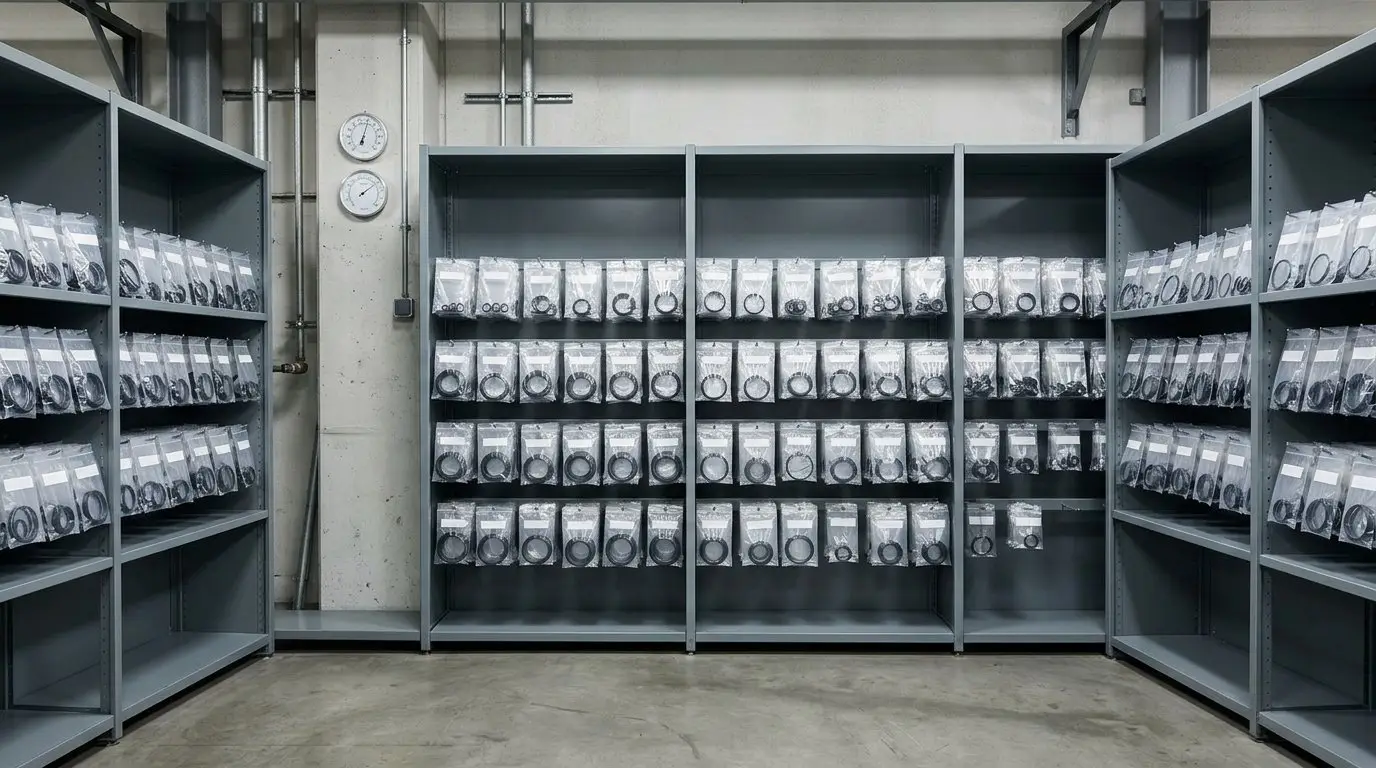
O-ring shelf life is a recommendation, not a fixed date. Stored the way SAE AS5316 (formerly ARP5316) and ISO 2230 describe, published figures run from 3 to 5 years for SBR and 5 years for millable polyurethane, up to 15 years or more for NBR, neoprene and HNBR. What actually decides whether the parts in your warehouse are still good is the cure date, the packaging, and the temperature, humidity and ozone exposure they have seen since.
Key takeaways
Shelf life is the period during which a stored, unused seal is expected to still meet its drawing after proper storage. That definition carries three conditions people drop the moment they quote a number: the seal is unused, the storage was proper, and the expectation is about the drawing rather than about a leak-free installation.
Three references do the heavy lifting. SAE AS5316, first published as ARP5316, covers storage and shelf life for elastomer seals and is the source most published tables trace back to. ISO 2230 gives general guidance on storing rubber products. ASTM D2000 line callouts enter the picture when a customer drawing invokes them for a specific compound.
All three are recommended practice. None is law, and nothing stops you or your supplier from setting a tighter internal rule. Automotive and medical buyers routinely do, because a customer drawing that states a shelf life governs over any generic table.
Shelf life runs from the cure date, not the ship date and not the invoice date. A supplier who ships three-year-old stock has shipped parts that are already three years into their life, and the paperwork will look perfectly normal. The aerospace convention described in the standard treats the last day of the cure quarter as the time of manufacture, so the reported age can sit a few weeks conservative in either direction. That is a documented convention, not an error to argue about.
Shelf life is what happens in the bag. The age-after-opening period starts when the barrier is broken and the parts meet plant air. Installed service life is a separate question with a separate section below.
Because compliance with these standards is voluntary, the figure on your incoming label is only as good as the supplier's discipline behind it. Ask for the records. Hongjie can provide material documentation, dimensional inspection reports, control plans, sample records and PPAP-related documents, and the engineering team reviews compounds against customer requirements before the first shipment, which is the point where traceability either exists or does not.
The spread from about 3 years to 15 years comes from the polymer backbone, not from the standard being inconsistent. Saturated chains resist oxygen and ozone. Unsaturated diene chains do not. The table below separates the two groups and names the storage mistake that does the most damage to each.
| Polymer | Typical published shelf life | What shortens it | Worst storage mistake for this material |
|---|---|---|---|
| NBR (nitrile) | 15 years in the published tables | Heat, oxygen, ozone, UV; hydrocarbon and solvent vapour | Storing on open shelving near a motor or stretched on a hook |
| HNBR | 15 years, same class as NBR | Long-term heat and oxygen exposure | Stacking pallets so rings take a permanent set |
| EPDM | Long-lived; figures vary by compound, confirm the data sheet | Ozone is a minor risk here, petroleum oil is the major one | Sharing a shelf with greases, oils and lubricant aerosols |
| FKM (Viton) | Long, among the most durable polymers in storage | Certain esters, amines, ketones and hot water on contact | Storing beside lubricants and assuming age cannot matter |
| FFKM | Longest class; confirm the grade data sheet | Contamination, and long dwell from over-ordering | Hoarding quantity past the review date because unit cost is high |
| Silicone (VMQ) | Long, but mechanically the weakest of the group | Compression, folding, tear, contamination pickup | Folding large rings into a small bin |
| Fluorosilicone (FVMQ) | Long, comparable to FKM with a wider cold range | Combines FKM chemical sensitivity with silicone's low tear strength | Mixed bins with plain silicone |
| Neoprene (CR) | 15 years in the published tables | Oxygen, ozone, heat, light | Daylight through an unshaded window |
| SBR | 3 years in one source, 5 in another | Oxidation, ozone, light | Holding a long stock position on open shelving |
| Polyurethane (AU millable and EU cast) | 3 years for millable in one source, 5 in another; cast types comparable or shorter | Moisture and hydrolysis far more than heat | Unbagged storage in a humid warehouse |
| Butyl (IIR) | Not consistently listed; confirm the compound data sheet | Heat and light | Assuming a mid-range figure without a data sheet |
| VAMAC (AEM) | Not consistently listed; confirm the compound data sheet | Heat, light, long dwell | Treating it as interchangeable with EPDM in storage |
Two honest notes. First, where sources disagree (SBR and millable polyurethane are the clearest examples), the compound supplier's data sheet is authoritative for that compound, because cure system and filler package move the number. Second, these are ranges, not commitments. Silicone, FKM and FFKM are missing from several published charts altogether, which is why they get their own section below.
Hongjie molds across the full material range: NBR, FKM, EPDM, silicone, FFKM, HNBR, FVMQ, neoprene, SBR, polyurethane in both AU and EU, VAMAC and XNBR, with access to 200+ proprietary compounds. The storage rules in this article apply to every one of them.
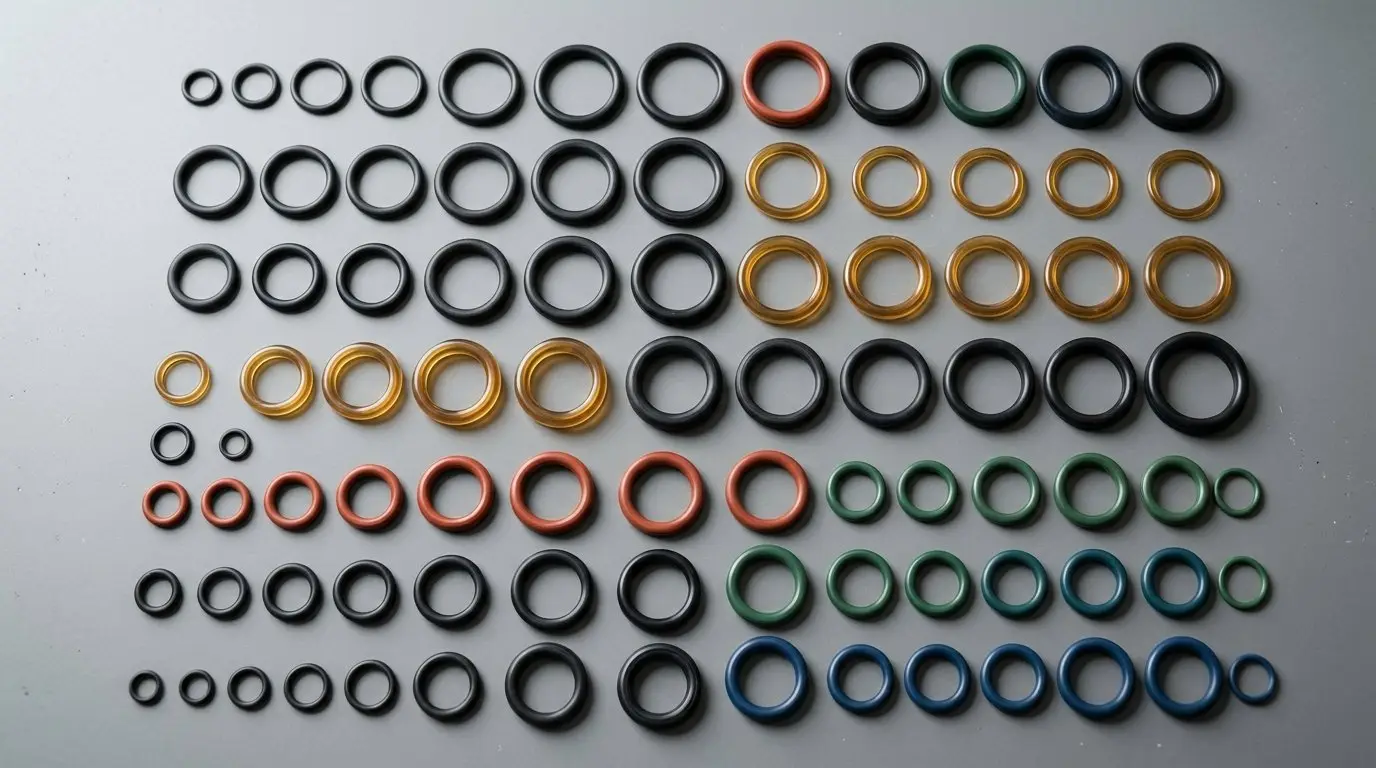
A chart tells you when to look. It does not tell you what to look for. Rubber fails in storage through a small set of mechanisms, and which one is active in your building depends on the polymer and the room.
Read that list against your own stock. If the pallet in question is NBR, the clock is running on oxidation and ozone. If it is polyurethane, the clock is running on humidity.
Translate the standard into a room spec and the conversation with a warehouse team gets much shorter. These are the physical conditions, in the order that actually causes damage.
One caution on data sheet temperatures: the -60 °C to +325 °C ratings on Hongjie's compound range, for example, describe service capability in an application, not a licence to keep stock in a hot room. Storage has its own envelope, and it is the one above.
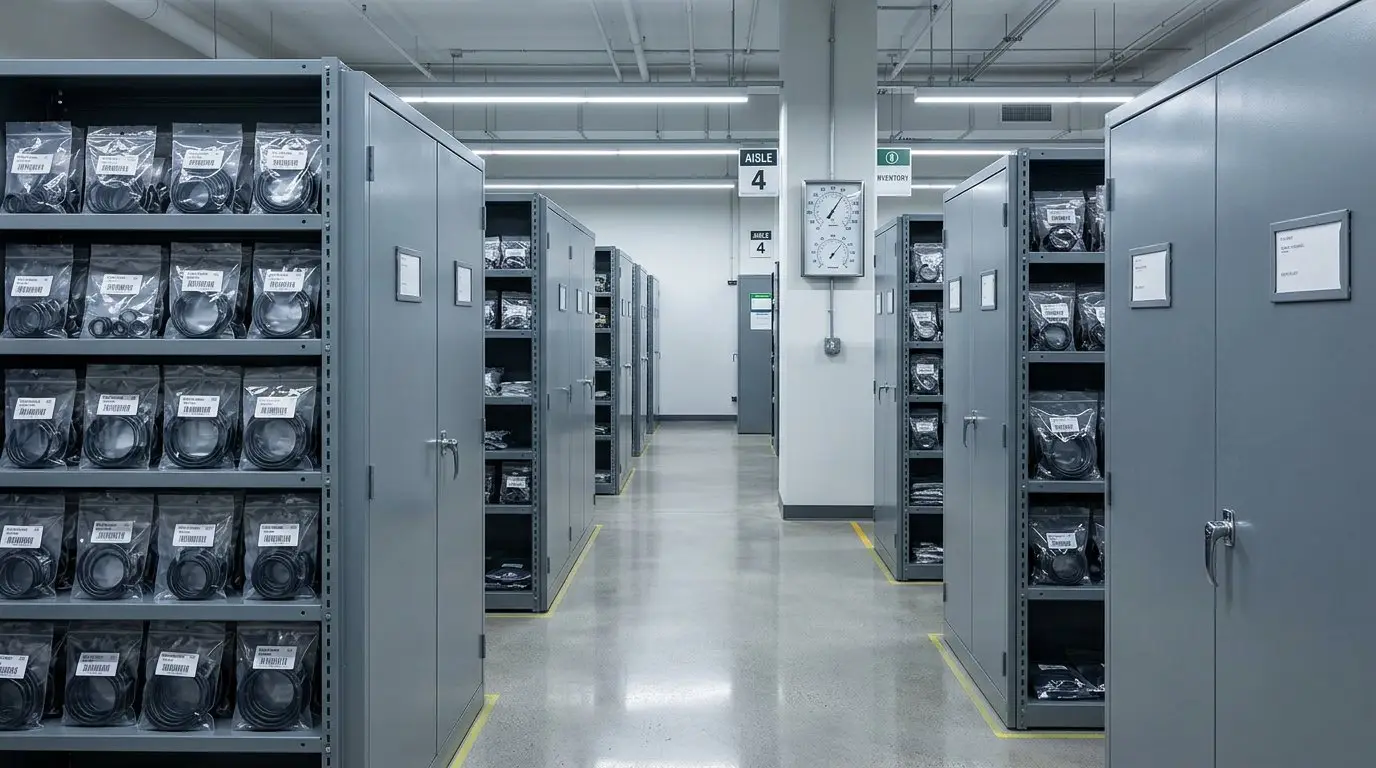
The bag and the label are part of the shelf-life system, not an afterthought bolted onto it. A perfect storage room cannot rescue a lot that arrived without a cure date.
Precision inspection at receipt closes the loop: Hongjie performs 100% inspection on critical dimensions, and offers AQL 1.0, 0.65, 0.15 or C=0 acceptance sampling so incoming verification matches the criticality of the part.
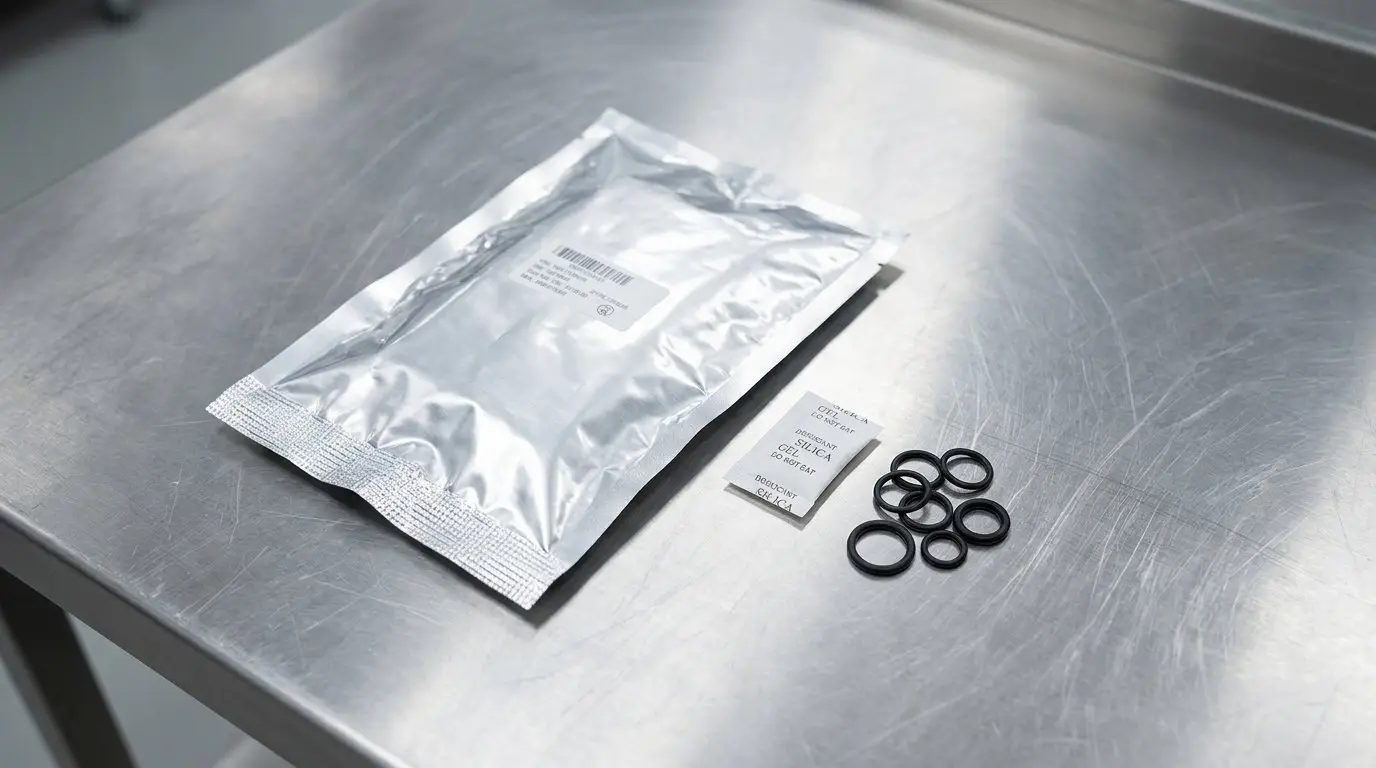
Yes, Viton has a shelf life, and it is a long one. FKM's saturated fluorocarbon backbone resists oxygen and ozone well, which is why it lands in the longest class in any table. Long is not the same as indefinite, and FKM is still vulnerable to certain esters, amines, ketones and hot water, so keep it away from lubricants and greases and do not assume a fifteen-year-old part is fine because the polymer is tough.
Hongjie precision-molds FKM, FFKM, EPDM and NBR as core materials, tests chemical compatibility against 500+ fluids, gases and chemicals, and staffs 25+ engineers with 20+ years of polymer experience, which is the depth you want when a shelf-life question turns into a compound question.
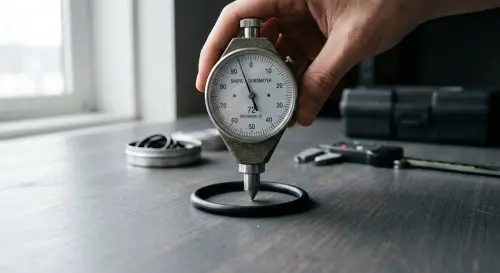
Inspection is not a gut feeling. It is a short sequence with a verdict at the end, and the verdict is what you defend later.
Then give the lot three outcomes rather than two: release to use, quarantine and re-test, or scrap. The middle option is the one most procedures forget, and it is the one that saves money on expensive compounds. Compare what you found against the root causes behind most O-ring failures; a part that failed on the shelf and a part that failed in service rarely show the same surface evidence.
Document the verdict per lot, with the checks performed and the name of the person who signed it. An undocumented release is worth nothing in an audit, and Hongjie's own inspection defaults, 100% on critical dimensions and tolerances to ±0.02 mm, show what the reference measurement should look like.
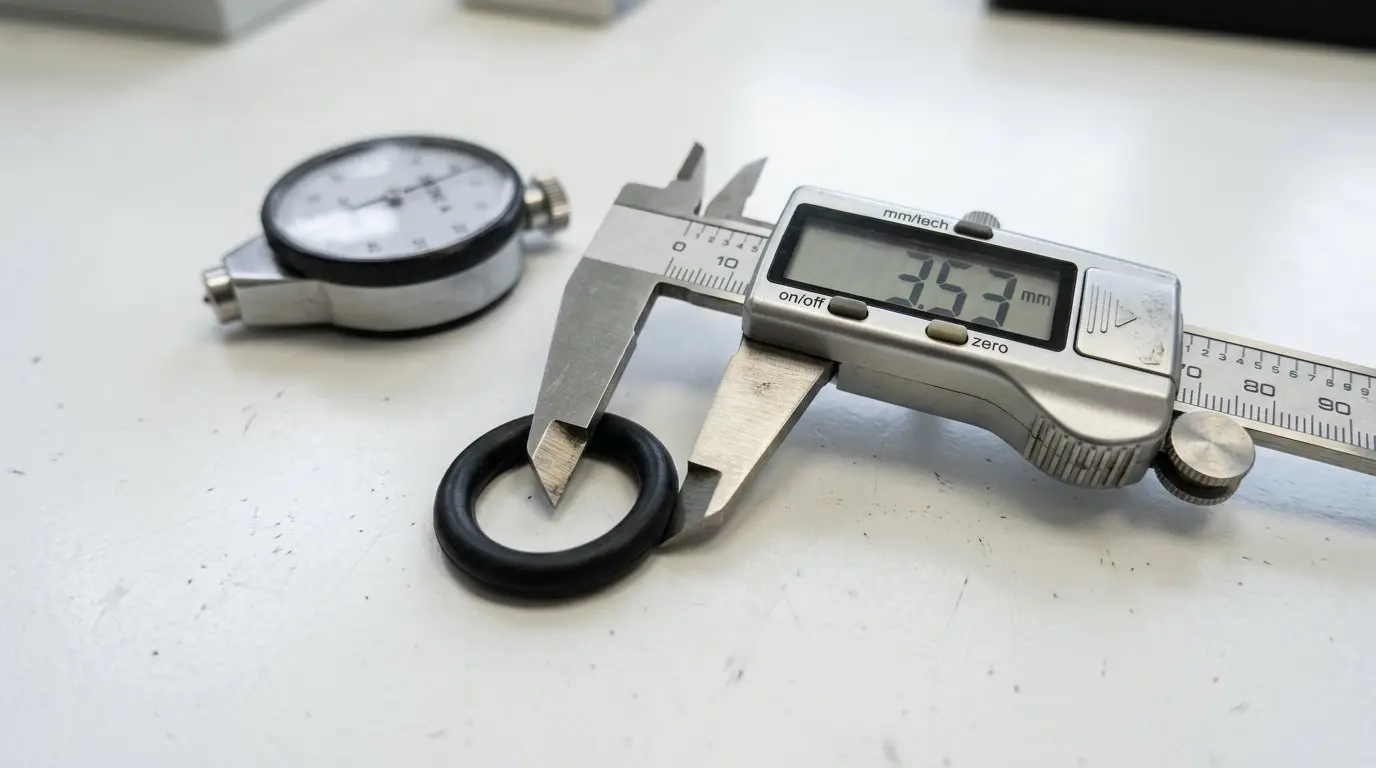
Shelf life answers one question: is this unused seal still within spec? Service life answers a completely different one: how long will an installed seal hold? Buyers and maintenance planners conflate the two constantly, and the confusion runs in both directions.
A seal that sat in a warehouse for ten years at 20 °C and then went into a 90 °C oil circuit has an unknown field life. The ten years tells you almost nothing about it, because the clock that matters restarted at installation and now runs on a different set of variables.
What actually drives installed life: fluid compatibility, continuous versus cyclic temperature, pressure cycling, extrusion gap and support, surface finish, dynamic versus static service, and installation damage. Gland design and squeeze carry enough weight to deserve separate treatment, which is why the O-ring gland design guide covers them in detail rather than folding them in here.
Replacement intervals belong to the application, not to the bag. In most static sealing applications, condition-based replacement beats a calendar: leak checks at defined intervals, hardness sampling on removed parts, and a compression set trend across successive seal changes. When the trend moves, you have warning. A calendar gives you a date and no evidence.
There is a procurement corollary that gets missed. A generous shelf life does not license a generous inventory. A seal that expires on your shelf has cost you the purchase price, the storage space and the disposal, and none of that shows up as a quality cost until someone audits the scrap bin.
Short-shelf-life materials argue for smaller, more frequent orders. That is a straight trade of unit price against scrap risk, and it is worth stating plainly to whoever owns the buying decision: Hongjie ships production runs within 15 to 20 business days with a 99.7% on-time delivery record, which makes a tighter order pattern practical rather than painful.
Here is the part you can print and hand over. Six steps, each one short enough that a warehouse team will actually follow it and specific enough that an auditor can read it back.
Re-testing to extend shelf life is legitimate when it is sampling-based and documented: pull a sample per lot, check hardness, dimensions and compression set against the drawing, run a functional or fluid-immersion test where the application warrants it, and record the extension with a new review date. Relabelling a lot without evidence is not an extension, it is a guess with paperwork attached.
Three questions, every time. Where is the cure date recorded? What is your acceptance window? What happens when a lot exceeds it? A one-page procedure answers all three. A verbal habit does not.
If your incoming lots arrive without a cure date, or with packaging documentation that changes between shipments, that is a supplier process problem rather than a warehouse problem, and no amount of internal discipline will fix it. Hongjie is IATF 16949:2016 certified for automotive, medical and industrial sealing systems, holds ISO 13485:2016 for healthcare components, reviews compounds against FDA, NSF, WRAS, REACH, RoHS or customer-specific requirements, and supplies against documented compound, inspection and PPAP records. With 3,500+ existing O-ring tools and prototypes in 5 to 7 days, custom and standard projects can be quoted against your shelf-life and traceability requirements. Send the specification and the storage policy you have to meet, and the review starts from the cure date.
In storage, published recommendations run from about 3 years for SBR and millable polyurethane to 15 years or more for NBR, neoprene and HNBR when the parts are kept cool, dark, dry, ozone-free and unstressed. Installed life is a separate question set by fluid, temperature, pressure cycling and gland design, not by the cure date.
SAE AS5316, first issued as ARP5316, is the recommended practice for storing elastomer seals and assigning shelf life by polymer family. It is advisory rather than a binding specification, so a customer drawing or contract can set a shorter window. Where it applies, shelf life counts from the cure date, not the ship date.
Yes. EPDM has a saturated backbone, so it resists oxygen and ozone far better than NBR and is normally grouped with the longer-lived polymers in storage. Its weak point is petroleum oil and grease rather than air. NBR is unsaturated, oxidises more readily, and is more sensitive to heat, light and solvent vapour while stored.
They can, because packaging slows aging rather than stopping it. A sealed moisture-barrier bag with active desiccant protects against humidity and contamination, yet oxidation continues slowly at warehouse temperature. Age from the cure date, check hardness and dimensions on a sample before issue, and treat a supplier-printed expiry as a storage claim tied to assumed conditions.


Our engineering team reviews your specs and responds within 24 hours with material recommendations and competitive pricing.